
Period Talk
Can You Pee While Wearing a Menstrual Cup?
Yes. You can urinate, have a bowel movement, and carry on with your entire day while wearing a menstrual cup. This is one of the first questions women ask when they are new to cups, and the answer is completely straightforward once you understand the basic anatomy involved. This article explains why, what the cup does and does not affect, and the small number of situations where you might want to pay attention. The Anatomy: Two Separate Openings The vagina and the urethra are distinct anatomical structures with entirely separate openings on the external vulva. The vagina is the internal canal that leads to the uterus. It is where a menstrual cup is inserted to collect flow. It runs at an angle toward the lower back. The urethra is the tube through which urine exits the bladder. Its external opening is a small, separate structure located just above the vaginal opening, below the clitoris. Urine travels from the bladder through the urethra and exits through this separate opening, entirely independent of the vaginal canal. Inserting something into the vagina has no effect on the urethra. They do not share an opening, a tube, or a connected pathway. This is confirmed directly by Nua Woman's clinical anatomy reference: your cup sits in your vagina and your pee comes out of your urethra. They are completely separate. You can pee while wearing a menstrual cup without any issue. Does Wearing a Cup Change How Urination Feels? For the vast majority of women, no. A correctly sized and correctly positioned cup is completely unfelt during all activities including urination. You should not be aware that anything is present. Some women, particularly in the early cycles of cup use, notice a slightly different sensation during urination. There are a few possible explanations. Psychological awareness. Knowing something is inside can create a heightened awareness of the pelvic area generally. This is not a physical effect of the cup. Cup too firm for your pelvic anatomy. A firmer cup exerts consistent outward pressure against the vaginal walls. If the front wall of the vaginal canal is in close proximity to the back wall of the urethra (which varies between women), a firm cup pressing against that front wall can create mild awareness during urination. This is not harmful. Switching to a softer cup such as the Collapsible Cup typically resolves it completely. Cup incorrectly sized and pressing against the urethra. A cup that is too large for your anatomy can press more forcefully than necessary against the vaginal walls and adjacent structures. The know your size guide helps identify the correct size based on your cervix height and flow. Can Urination Dislodge the Cup? No. The cup is held in place by a suction seal against the vaginal walls, not by muscular tension. Normal urination involves the bladder and the urethral sphincter, neither of which is connected to the vaginal walls where the cup seal exists. The cup does not move during normal urination. Some women worry that bearing down or relaxing the pelvic floor during urination will push the cup out. Normal urination does not require significant bearing down. The cup remains sealed during any normal bathroom activity. What About Bowel Movements? You can have a bowel movement with a menstrual cup in place. The vaginal canal and the rectum are adjacent but separated structures. Having a bowel movement does not affect the cup's position in the vast majority of cases. The exception: significant bearing down during a constipated or difficult bowel movement uses the pelvic floor muscles, which are shared between the vaginal and rectal areas. Forceful bearing down can occasionally shift a cup's position or bring it slightly lower in the canal. If your cup has moved after a bowel movement, you can simply reach in and reposition or reinsert it. This happens more commonly with softer cups, where the cup is less firmly held open against the vaginal walls. If you notice frequent shifting after bowel movements with the Collapsible Cup, a quick check after bathroom use becomes part of your routine. Do You Need to Remove the Cup Before Using the Bathroom? Not for routine urination or bowel movements. Remove it only when you are ready to empty it, which is every 8 to 12 hours depending on your flow. Some women prefer to empty and reinsert during bathroom visits simply as part of their routine, particularly in the first cycle or two when they are becoming familiar with the cup. This is entirely optional and not necessary from a hygiene or safety standpoint. Hygiene Considerations During Bathroom Use The same hygiene principles apply during bathroom visits as at any other time of cup use. Wash hands thoroughly before any cup removal or reinsertion. If the cup needs to be removed and reinserted during a bathroom visit, clean hands are the most important factor. If you are in a public bathroom and cannot access a sink before reinserting, it is acceptable to reinsert without rinsing the cup temporarily, then rinse properly at the next available opportunity. Keeping clean hands is more important than rinsing the cup in a potentially unclean sink. Specific Situations Pakistani Women Ask About At the office or university: The cup can be worn through a full working day or lecture session without removal. Many Pakistani women report this as the most practical advantage of cup use over other period products, eliminating multiple bathroom trips for product changes. During Jumu'ah or prayer: The cup collects flow and does not constitute the conditions that would affect ghusl requirements. Many Pakistani Muslim scholars confirm this. The cup can remain in place throughout prayer without issue. During travel: The cup's 12-hour wear time is particularly valuable for Pakistani women during long road journeys, flights, or situations where clean bathroom facilities may not be available. The cup remains in place and functions effectively without any bathroom access required. During physical activity including sports: Running, walking, exercising, and sports are entirely compatible with cup wear. The seal holds through all physical movement. At MomDaughts, we believe every question deserves a clear, direct answer. Confidence in every cycle.
Learn moreCan a Menstrual Cup Cause Infection or Irritation?
We have seen women hesitate to switch to a cup because of fear of infection. This is one of the most reasonable concerns someone can have about any internal period product. The good news, backed by extensive clinical research, is that menstrual cups are among the safest period products available when used correctly. This article covers what the evidence actually shows about infection risk, what TSS risk actually looks like, what causes the rare irritation that does occur, and what you need to do to keep your cup safe. What the Clinical Evidence Shows The most comprehensive review of menstrual cup safety to date, published in The Lancet Public Health and available through PMC, analysed 43 studies covering an estimated 3,300 women. This is the largest and most rigorous systematic review of menstrual cup use ever conducted. Its findings on infection risk were unambiguous: infection risk did not appear to increase with use of a menstrual cup. In fact, compared to pads and tampons, some studies in the review indicated a decreased infection risk with cup use. A study conducted in Kenya specifically found lower rates of bacterial vaginosis (BV) in menstrual cup users compared to pad users. The researchers proposed that the inert, non-absorbent medical-grade silicone of the cup may assist in maintaining a healthy vaginal pH and microbiome, rather than disrupting it the way absorbent materials can. The same review found no evidence of mechanical harm to the vaginal walls or cervix in any study that examined these tissues during follow-up. This means that years of sustained cup use did not produce structural damage to vaginal tissue in any of the studies reviewed. TSS: What Is the Actual Risk? Toxic Shock Syndrome (TSS) is the infection concern most associated with tampon use, and it is the first thing many women worry about when considering cups. For menstrual cups, the risk exists but is extremely rare and is fundamentally different from the tampon-related TSS mechanism. Tampon-associated TSS is linked to the highly absorbent synthetic fibres in certain tampons, which create an oxygen-rich environment inside the vagina that promotes Staphylococcus aureus toxin production. Menstrual cups do not absorb menstrual flow. They collect it in an inert silicone cup. The biological conditions that drive tampon-related TSS do not apply to cups in the same way. The Lancet review identified only five case reports of TSS potentially associated with menstrual cup use across all available literature. Subsequent published case reports have documented a small number of additional rare instances. In every documented case reviewed in detail, improper cleaning was a documented factor: the cup being rinsed with water only without soap between uses, soap cleaning without end-of-cycle sterilization, or extended wear beyond 12 hours without emptying. This tells us something important: cup-associated TSS is not a material failure. It is a hygiene failure. The cups in documented cases were not cleaned correctly. Correct cleaning behaviour eliminates the conditions that allow the TSS-associated bacteria to reach the concentrations that produce a toxic response. Healthline's comprehensive review of menstrual cup safety puts this clearly: you are more likely to experience minor irritation from wearing the wrong cup size than you are to develop a serious infection like TSS. What Actually Causes Irritation: The Real Culprits The Lancet systematic review identified the actual sources of irritation in cup users, and none of them are inherent to the silicone material or the cup itself. Incorrect size creating pressure points A cup that is too large for your anatomy presses against the vaginal walls and cervix with more force than the tissue is accustomed to. This sustained pressure creates localised irritation at the contact points and can produce a feeling of cramping or bladder pressure. The solution is choosing the correct size based on your cervix height and flow volume. The know your size guide walks through the self-assessment clearly. Incorrect insertion angle A cup inserted at the wrong angle sits askew in the canal, pressing unevenly against one wall rather than being centred. This creates a friction or pressure point at the wall where the cup presses hardest. Many women interpret this as an infection symptom when it is a positioning issue. Re-inserting correctly resolves it immediately. Wrong cleaning products Using scented soap, antibacterial soap, dish soap, or any cleaner not formulated for intimate use leaves chemical residue on the silicone surface. When reinserted, this residue contacts the vaginal mucosa directly. Scented ingredients cause contact irritation. Antibacterial agents disrupt the Lactobacillus bacteria that protect the vaginal environment. Glycerin at high concentrations can encourage yeast growth. Only mild, unscented, pH-neutral soap should be used for routine cleaning. If in doubt, fragrance-free micellar water or plain warm water is safer than the wrong soap. Skipping end-of-cycle sterilization Rinsing and washing during the cycle is sufficient between individual uses. But at the end of each menstrual period, before storing the cup for next month, the cup must be fully sterilized by boiling. Bacteria that survive on the cup surface during storage and are reintroduced next cycle are the source of most cup-associated hygiene issues. The Collapsible Sterilizer Cup makes this step straightforward on both stovetop and microwave, and collapses flat for storage between cycles. Airtight storage while damp Storing a cup while even slightly damp in an airtight container creates the warm, moist, sealed environment most conducive to bacterial and mould growth. Always air dry completely before storing. Always use the breathable cloth pouch provided. Never seal the cup in a plastic bag or airtight container. Silicone allergy (extremely rare) The Lancet review found three adverse events across all studies that were possibly related to silicone sensitivity, with one serious case requiring surgical reconstruction. Silicone allergy is extremely uncommon in the general population. Women who have experienced reactions to silicone in other products (certain medical devices, breast implants, certain cosmetic ingredients) should discuss cup use with a doctor before starting. Cup vs Tampon: An Honest Safety Comparison Tampons rely on absorbent fibres that absorb not only blood but also natural vaginal moisture. Extended tampon wear disrupts the natural moisture balance of the vaginal environment. The absorbent environment they create inside the vaginal canal is the same environment linked to TSS bacterial toxin production. Cups collect rather than absorb. They use inert medical-grade silicone that does not interact with vaginal chemistry. They do not absorb vaginal moisture or disrupt the natural secretion balance. The clinical evidence is consistent with this: cup users have lower rates of vaginal flora disruption than tampon users in studies that examined this directly. Your Complete Cup Safety Protocol During your cycle: Wash hands before every removal and reinsertion Empty every 8 to 12 hours (more frequently on heavy flow days) Rinse with cool water first, then wash with mild fragrance-free soap Rinse all soap residue completely before reinserting Do not exceed 12 hours of continuous wear End of cycle: Sterilize fully in the Collapsible Sterilizer Cup: boil 3 to 5 minutes on stovetop or 2 to 3 minutes in microwave until water boils Air dry completely on a clean surface Store in the breathable pouch provided, in a cool dry location What to never use on a cup: Scented or antibacterial soaps Dish soap or kitchen detergent Alcohol, bleach, or hydrogen peroxide as routine cleaners The dishwasher When to Seek Medical Advice See a doctor if you experience persistent unusual discharge, a strong odour that does not resolve after proper sterilization and cleaning, sustained pelvic pain during cup use, or any systemic symptoms such as fever, rash, or weakness alongside period symptoms. These are not expected outcomes of correct cup use and deserve medical assessment. At MomDaughts, we believe fear based on incomplete information keeps women from products that would genuinely improve their lives. Confidence in every cycle.
Learn moreIs Menstrual Cup Insertion Painful? Honest First-Timer's Guide
We have seen women buy a menstrual cup, attempt insertion once, feel resistance, and put it back in the drawer. Almost always, the problem was not the cup and not their anatomy. It was the fold, the angle, the tension, or the dryness. Understanding what actually causes insertion difficulty is what changes the experience entirely. This article explains every factor involved and exactly what to adjust. Is Menstrual Cup Insertion Supposed to Hurt? No. A correctly inserted menstrual cup should not cause pain. According to Cleveland Clinic OB/Gyn Dr. Karmon James, if you have inserted your cup properly, you should not be able to feel it at all during wear. Discomfort during the learning phase is normal. Pain is not. Some mild resistance or unfamiliar sensation during the first two or three insertion attempts is part of learning something new. What is not normal is sustained pain, sharp discomfort, a burning sensation, or pain that continues after insertion. If any of these occur, stop and adjust your approach before trying again. Research cited in WebMD confirms that most users report any discomfort is completely resolved once they learn the correct technique. The same source notes that clinical evidence shows it took most users about three menstrual cycles to become fully comfortable with insertion and removal, after which over 90% preferred cups to their previous period product. The Most Common Causes of Insertion Discomfort 1. Pelvic floor tension from anxiety This is the most common cause of first-time insertion difficulty. Anxiety about inserting anything new causes the vaginal muscles to tighten involuntarily. Tighter muscles create a narrower opening. The narrower the opening, the more resistance you feel. And the more resistance you feel, the more tense you become. This cycle is the reason many first attempts fail. The solution is not to push harder. It is to pause completely, take several slow deep breaths, and wait for the muscles to relax before trying again. Some women find it helpful to try insertion on a day when they are relaxed and unhurried rather than during a stressful first day of their period. 2. The wrong fold creating too wide an insertion point Most cup instruction guides show the C-fold as the default. In the C-fold, you press the sides of the cup together and fold it in half so the rim forms a U or C shape. While this works well for experienced users, it creates the widest insertion profile of any common fold and is the most likely to cause resistance for beginners. The punchdown fold is a significantly better choice for first-time users. Period Nirvana's cup fold guide by expert Kim Rosas describes it as the best beeginner fold precisely because the tip is narrow. To do it, push one side of the cup's rim straight down into the centre of the cup using your index finger until it nearly touches the opposite inner wall. Hold the fold at the base. The result is a narrow, pointed shape at the top that is comparable in width to a regular tampon. The 7-fold is another good option for beginners: flatten the cup, bring one corner diagonally down to the opposite base, and hold. This creates a triangular tip slightly wider than the punchdown but narrower than the C-fold. 3. Dry insertion Medical-grade silicone against dry vaginal tissue creates friction and drag. This is especially common at the start of a period before flow has fully begun, on lighter flow days, or during the very first attempts when nervousness has reduced natural lubrication. Applying a small amount of water-based lubricant to the rim and outside of the folded cup resolves this completely. Only water-based, fragrance-free lubricant is appropriate. Oil-based products degrade silicone over time. The Softfit Lubricant included in the Comfort Kit is formulated specifically for use with menstrual cups and is the safest, most effective option for Pakistani users. 4. Wrong insertion angle Many first-time users instinctively insert the cup pointing straight upward, as they imagine it should go in the same direction as a vertical cylinder. The vaginal canal actually runs at an angle toward the tailbone, not straight up. Inserting the cup at the wrong angle causes it to press against the front wall of the vaginal opening rather than gliding in along the natural axis of the canal. The correct angle is horizontal or slightly downward, aimed toward your tailbone. When you find this angle, insertion resistance drops significantly. 5. Cup too firm for your anatomy Some women have a higher sensitivity to internal pressure. A firmer cup exerts consistent outward force against the vaginal walls to maintain its shape and seal. For sensitive users, this pressure feels uncomfortable both during insertion and wear. If you consistently feel aware of the cup or experience mild cramping from a standard cup, switching to the Collapsible Cup with its ultra-soft silicone exerts significantly less outward pressure and is one of the most comfortable options for sensitive anatomy. 6. Wrong size A cup too large for your anatomy is genuinely difficult to insert regardless of technique. If you have not confirmed your cervix height, the know your size guide on the MomDaughts website walks through a simple self-measurement. For women with a low cervix or first-time users who have never used internal period products, the Short Tail Cup in XS size is specifically designed for smaller anatomy and is the easiest starting point. 7. Using an applicator for the first time For women who are completely new to internal products and find finger-guided insertion too daunting, the Comfort Kit includes Pakistan's only locally available cup applicator. The applicator holds the folded cup and guides it to the correct depth, significantly reducing the amount of direct finger contact required and making the first few insertions substantially easier. Step-by-Step Technique for Comfortable Insertion Step 1: Wash hands thoroughly. Step 2: Choose the punchdown fold. Push one side of the cup's rim down into the inside of the cup until it touches the opposite inner wall. Hold firmly at the base of the fold. This creates a narrow pointed tip at the top. Step 3: Apply a small amount of Softfit Lubricant to the rim and outer surface of the folded cup if needed. Step 4: Find a comfortable, relaxed position. Sitting on the toilet with knees spread wide, standing with one foot raised on the toilet seat, or squatting all work well. Take two or three slow deep breaths before starting. Step 5: Insert the cup horizontally, angled toward the tailbone. Keep the fold closed and maintain your grip on the base of the cup until the entire cup is inside the vaginal canal. Step 6: Once fully inside, release the fold. You may hear a soft pop or feel a gentle expansion as the cup opens. Run one finger around the outside of the cup base in a complete circle to confirm it has opened into a full round shape. Step 7: Gently rotate the cup base to confirm the seal. The stem should be fully inside the vaginal canal. If the stem protrudes and causes irritation, the cup may need to go slightly deeper or the stem may need to be trimmed at a later stage. What Normal Learning Looks Like The first insertion attempt will take the longest. Most women take 5 to 15 minutes their first time, getting the angle, fold, and relaxation all working together. The second attempt takes less time. By the third or fourth cycle, most women insert their cup in under 30 seconds without any conscious effort. This learning curve is not a sign that cups are not right for you. It is the same learning curve that exists with any new physical skill. When Insertion Difficulty Is a Medical Issue If insertion causes significant pain consistently after multiple cycles of trying different techniques, folds, and sizes, it is worth discussing with a gynaecologist. Conditions like vaginismus (involuntary pelvic floor muscle tightening), vulvodynia, endometriosis, or certain anatomical variations can make cup use genuinely more challenging and are worth addressing with a healthcare professional who can guide you through the appropriate approach. At MomDaughts, we believe the learning curve is real but short, and getting through it is worth it. Confidence in every cycle.
Learn moreCan I Wear a Menstrual Cup Overnight? 12-Hour Protection Guide
This is one of the most common questions we receive from new and existing cup users. The short answer is yes. A menstrual cup can be worn safely while you sleep. The longer answer covers how long exactly, which flow situations require emptying sooner, and what makes overnight cup wear safe compared to other period products. The Direct Answer Yes, you can wear a menstrual cup overnight. All MomDaughts menstrual cups are designed for up to 12 hours of continuous wear, which covers a full night of sleep for most people. Unlike tampons, which carry a risk of Toxic Shock Syndrome (TSS) when worn for extended periods and should not be worn longer than 8 hours, the medical-grade silicone of a menstrual cup does not create the same risk. Silicone is non-porous and does not provide a growth environment for the bacteria associated with TSS. The cup collects rather than absorbs flow, maintaining the vaginal environment more naturally. How Long Is Safe Up to 12 hours is the recommended maximum for all MomDaughts cups. For most women, this covers even a long night's sleep with margin to spare. A typical night's sleep is 7 to 8 hours. Insert the cup at bedtime, sleep through the night, and empty in the morning. This is a normal, recommended pattern of use. For women with a heavy flow, 12 hours may be too long even overnight. If your cup fills to capacity during the day in 4 to 6 hours, it will also fill in that time overnight. Women with heavy flow should check cup capacity against their flow rate rather than assuming 12 hours is always appropriate. Signs You Should Empty Sooner If your cup fills during the day within 4 to 6 hours. Heavy flow does not stop at bedtime. If you are emptying every few hours during waking hours, you need to empty before sleeping and potentially set an alarm to empty once during the night. If you wake up with leaking. Occasional overnight leaking usually means the cup has filled to capacity. This resolves by either moving to the Large size, or inserting closer to bedtime, or emptying once during the night on heaviest flow days. If you experience discomfort at night. A correctly positioned cup should be unfelt during wear, including sleep. If you notice any pressure or awareness of the cup during the night, check that it is fully open and correctly sealed. Discomfort during sleep is a sign something needs adjusting. How to Prepare for Overnight Wear Insert immediately before bed, not hours earlier. If you insert the cup at 7pm and sleep until 7am, that is 12 hours. If you insert at 10pm and wake at 6am, that is 8 hours. Insert as close to bedtime as practical to maximise your overnight window. Confirm the seal before sleeping. Insert the cup, rotate gently to confirm it has fully opened and sealed, and spend a moment in whatever sleeping position you use to confirm there is no leaking before settling in. Use a period-safe backup on the first few nights. While you are learning overnight wear with a cup, a period-safe underwear or a pantyliner as a backup gives you peace of mind until you are confident in the cup's seal in your body during sleep. Empty immediately on waking. Do not delay past waking. If you wake at 6am but stay in bed until 9am, the cup has been in for potentially 11+ hours by the time you empty it. Empty within a reasonable time of waking. Which Cup Variants Work Best Overnight Any MomDaughts cup worn correctly works for overnight use. A few considerations. For heavy flow overnight: The Large size of any variant holds more fluid than the Small. Women with heavy flow should use the Large if they want to avoid overnight emptying. For comfortable sleeping positions: Most women find the cup entirely unnoticeable during sleep regardless of position. Some women with a low cervix using the Short Tail notice slight awareness when their sleeping position changes. If this happens, it is a sign the cup is near capacity or needs to be reseated. For first-time overnight users: Any cup works, but starting on a lighter flow night during the middle of your cycle rather than your heaviest first night gives you the most comfortable learning experience. Browse all cup options in the menstrual cups collection or consult the know your size guide to select your correct size. Cup vs Tampon vs Pad for Overnight: A Comparison Product Maximum safe wear Overnight safe? TSS risk Change needed at night? Menstrual Cup 12 hours Yes Very low (silicone) Only if flow fills it Tampon 8 hours maximum With risk Yes Must change Pad No firm limit Yes No May need change on heavy nights Period underwear No firm limit Yes No Depends on capacity The cup's 12-hour safe wear time and low TSS risk profile make it the most practical internal product for overnight use. Unlike tampons which should be removed during sleep if worn for more than 8 hours, a correctly sized and sealed cup can be worn through a full night without concern. At MomDaughts, we believe correct information removes the fear that keeps women from making the switch to reusable period care. Confidence in every cycle.
Learn moreWhat Is a Foldable Sterilizer Cup and Why Every Cup User Needs One
We have seen women boil their menstrual cups in a kitchen pot, worry about the cup touching the hot metal base, and wonder if there is a better way. There is. A foldable sterilizer cup is a silicone container specifically designed to hold a menstrual cup during sterilization, whether on a stovetop or in a microwave. This article explains what it is, why it matters, and why it is worth having. What the Foldable Sterilizer Cup Is The MomDaughts Collapsible Sterilizer Cup is a collapsible, medical-grade silicone container with a lid, designed specifically to hold a menstrual cup during the end-of-cycle sterilization process. It works on both the stovetop (in boiling water) and in the microwave, and folds flat for storage between cycles. It is compatible with all MomDaughts menstrual cup variants and with most other silicone menstrual cup brands. Why Sterilization Matters A menstrual cup is an internal product that contacts the vaginal mucosa for up to 12 hours at a time over the course of an entire period. During the cycle, rinsing with mild soap and water after each removal is sufficient. But at the end of each cycle, before storing the cup for next month, the cup needs to be sterilized. Sterilization means killing the bacteria and microorganisms that have accumulated over the course of the period. Rinsing alone does not achieve this. Boiling water at 100°C is the most reliable and accessible sterilization method for silicone menstrual cups. Without sterilization between cycles, bacteria can survive on the cup surface during storage and be reintroduced to the vaginal environment when the cup is inserted next cycle. For most women this causes no immediate problem, but over time it can contribute to recurring irritation, odour, or disruption of the natural vaginal flora. Why a Dedicated Sterilizer Is Better Than a Pot Most women who sterilize their cups on the stovetop do so in a regular kitchen pot. This works, but it has disadvantages. The cup can touch the hot base. Silicone placed directly on the bottom of a hot metal pot can develop faint marks or discolouration over repeated cycles. The sterilizer cup holds the menstrual cup suspended in boiling water away from the metal surface. It requires tongs or a whisk. Without a sterilizer, you need a separate implement to keep the cup off the base and to remove it safely from hot water. It uses more water. A pot requires enough water to submerge the cup with space around it. The sterilizer cup holds just enough water to do the job, using less energy and less water. Microwave sterilization is not possible without a dedicated vessel. You cannot safely put a kitchen pot in a microwave. The sterilizer cup is microwave-safe, enabling a 2 to 3 minute microwave sterilization that is equally effective and faster than stovetop boiling. It is more discreet. In shared kitchens or family homes where privacy matters, using a dedicated collapsible sterilizer that goes away flat between cycles is significantly more discreet than boiling a cup in a visible kitchen pot. How to Use the Sterilizer Cup Stovetop method: Unfold the sterilizer cup and place the clean menstrual cup inside. Fill with water until the cup is fully submerged, approximately three-quarters full. Place on the stove on medium heat. Bring to a boil. Allow to boil gently for 3 to 5 minutes. Remove carefully using a cloth or oven mitt. The silicone will be hot. Allow to cool completely before handling the cup. Remove the cup, shake off excess water, and air dry fully. Microwave method: Unfold the sterilizer cup and place the clean menstrual cup inside. Fill with water until the cup is submerged. Place the lid on top but do not seal it. Leave a small gap to allow steam to escape. A sealed lid causes pressure buildup and overflow. Microwave on high for 2 to 3 minutes, or until water reaches a full boil. Remove carefully, allow to cool fully, and dry the cup before storing. Storing the Sterilizer Between Cycles Collapse the sterilizer cup flat once the cup has been sterilized and dried. Store it flat in a kitchen drawer or cupboard alongside the menstrual cup's storage pouch. It takes up virtually no space. Do not store the sterilizer cup while wet. Allow it to air dry fully after each use. Compatibility The MomDaughts Collapsible Sterilizer Cup is compatible with all MomDaughts cup variants including the Short Tail, Long Tail, Double Tail, and Collapsible Cup. It is also compatible with most other silicone menstrual cup brands. At MomDaughts, we believe correct care is what makes reusable period products work for years. Confidence in every cycle.
Learn moreLong Tail Menstrual Cup: What It Is and Why the Extended Stem Helps High Cervix Users
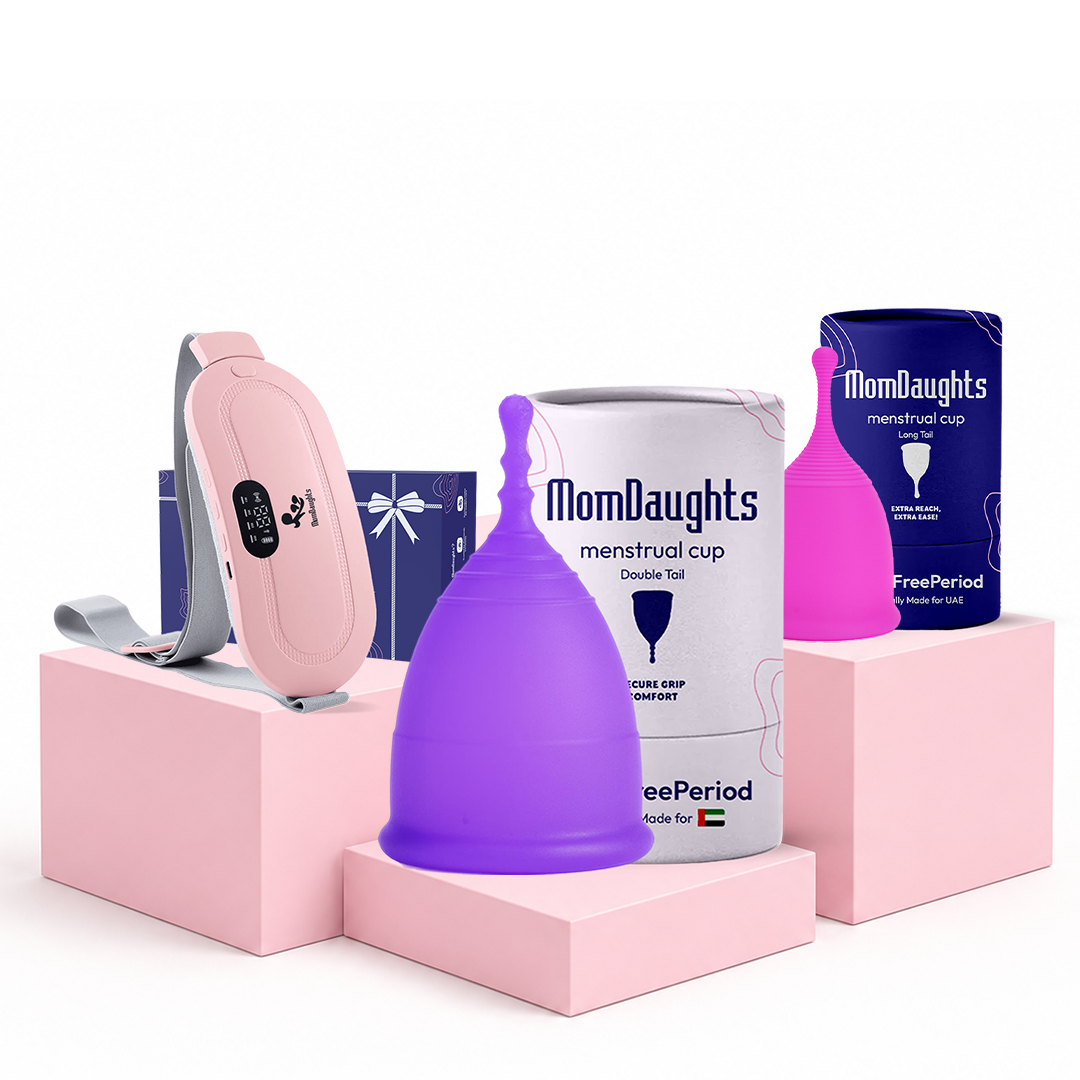
We have seen women with a high cervix try multiple cups, struggle to remove them, and conclude that cups are not for them. Almost always, the problem is not the cup itself but the stem length. Standard cups sit perfectly for women with a medium cervix. For women whose cervix sits higher, a longer stem is what makes the difference between a cup that is easy to remove and one that feels impossible to reach. The Long Tail cup exists for this specific reason. What the Long Tail Cup Is The MomDaughts Long Tail Menstrual Cup is a soft, medical-grade silicone menstrual cup with an extended single stem at the base. The longer stem provides a reach point that sits closer to the vaginal opening even when the cup itself is positioned high in the canal, making removal significantly more accessible for women with a medium-to-high cervix. Like all MomDaughts cups, it is BPA-free, hypoallergenic, and provides up to 12 hours of leakproof protection. It is reusable for up to 10 years and available in Small and Large sizes. Understanding Cervix Height The cervix is the lower part of the uterus that projects into the vaginal canal. Its position varies between women. During menstruation, the cervix typically sits slightly lower than at other times in the cycle, but it still varies significantly from person to person. Women with a high cervix have more distance between the vaginal opening and the cervix. This means that after correct insertion, a standard cup may sit so high that even bearing down fully does not bring the stem within easy reach during removal. How to check: Insert a clean finger during your period. If you have to reach past the second knuckle, or cannot feel the cervix at all with one finger, you likely have a high cervix. The know your size guide on MomDaughts provides a step-by-step self-assessment. Why an Extended Stem Makes Removal Easier During removal, the first step is locating the stem so you can break the suction seal at the base of the cup. With a standard-length stem and a high cervix, the cup sits deep enough that even after bearing down, the stem may be difficult to reach with one finger. The Long Tail's extended stem hangs lower in the canal, closer to the vaginal opening, reducing the reach required to locate and grip it during removal. Once you locate the stem, you can begin the removal process without the frustrating search that makes cup use feel difficult for high cervix users. The stem itself is not used to pull the cup out. It serves as a locator and starting point. Once located, you move your fingers up to the base of the cup, pinch to break suction, and guide the cup out from there. Choosing Your Size Small. For women who have not given birth vaginally with a light to medium flow. Large. For women who have given birth vaginally, have a heavier flow, or find the Small fills too quickly. Women with a high cervix and heavy flow benefit particularly from the Large because the cup can be worn longer without needing to be emptied as frequently. How to Insert the Long Tail Cup Wash hands. Fold using the C-fold or punchdown fold. Insert horizontally, angled toward the tailbone, and release once inside. Rotate the base gently to confirm the cup has opened and formed a suction seal. The Long Tail stem will hang inside the vaginal canal. Confirm it is fully inside and not protruding. For high cervix users, the stem typically sits well inside the canal with comfortable clearance. How to Remove the Long Tail Cup Wash hands. Bear down gently with pelvic muscles, as if going to the bathroom. This lowers the cup toward the vaginal opening. Reach for the Long Tail stem. For high cervix users, bearing down should bring the stem within comfortable reach. Once you locate the stem, move fingers upward to the base of the cup and pinch firmly to break the suction seal. Angle the cup slightly as you guide it down and out to avoid spilling. Empty, rinse, and reinsert. If the stem is still difficult to reach, bear down more firmly, hold for a few seconds, and try again. Do not pull from the stem alone without first breaking suction at the cup base. Long Tail vs Double Tail vs Short Tail Cup Cervix Height Key Feature Short Tail Low cervix Compact body and stem, fits entirely inside Double Tail Medium-high cervix Dual stem for wider, easier grip during removal Long Tail Medium-high cervix Single extended stem for maximum reach Women with a high cervix can choose between the Double Tail (wider grip, easier to locate) and the Long Tail (longer single stem, maximum reach). The right choice depends on personal preference. Browse all options in the full menstrual cups collection. At MomDaughts, we believe period care works when the product matches your anatomy. Confidence in every cycle.
Learn moreCollapsible Menstrual Cup: Pakistan's Softest Cup for Beginners and Sensitive Users
We have seen women who tried a firm menstrual cup once, found it uncomfortable, and concluded that all cups feel the same. They do not. The Collapsible Cup is made from ultra-soft silicone that is noticeably gentler than standard cups, collapses flat for travel, and comes with its own storage case that fits in any bag. It is the cup most recommended for first-time users and anyone whose body responds better to a softer feel. What the Collapsible Menstrual Cup Is The MomDaughts Collapsible Menstrual Cup is a menstrual cup made from ultra-soft, medical-grade silicone. Its defining feature is its collapsible design: unlike standard bell-shaped cups, this cup can be compressed completely flat, making it the most compact cup in the MomDaughts range when stored. It comes with a cute, compact carry case that it folds into for storage and travel. The case itself is small enough to fit in a pocket, school bag, or handbag without detection, making it the most discreet period product option in the range. Like all MomDaughts cups, it provides up to 12 hours of leakproof protection, is reusable for years, and is free from BPA, dyes, and irritating chemicals. Available in Small and Large sizes. Why Ultra-Soft Silicone Makes a Difference Standard menstrual cups have a medium to firm silicone that holds its bell shape and pops open reliably after insertion. This works well for most users but can feel too rigid for women with a sensitive bladder, pelvic floor sensitivity, or those who are simply not comfortable with a firmer internal product. Ultra-soft silicone is noticeably more pliable. It compresses more easily during insertion, feels less firm against the vaginal walls during wear, and flexes with body movement rather than holding a fixed shape against tissue. The trade-off with soft silicone cups is that they can be slightly harder to get to open fully during insertion because the material does not pop into shape with the same spring as firmer cups. The punchdown fold works best with the Collapsible Cup because it creates a smaller insertion profile and tends to open more reliably than the C-fold for soft silicone. Who the Collapsible Cup Is Best For First-time cup users who are nervous about discomfort. The softest cup in the range reduces the sensation of insertion and wear that concerns many beginners. Women who expect cups to feel like tampons are often surprised by how little they notice the Collapsible Cup once it is correctly positioned. Teens and young women. The XS and Small sizes combined with the soft silicone and compact case make this the most practical first cup for younger users. The case also provides privacy during school hours. Women with bladder sensitivity. A firmer cup pressing against the vaginal walls can sometimes create mild bladder pressure in sensitive users. Soft silicone flexes rather than pressing, significantly reducing this effect. Women who travel frequently. The collapsible design and compact case make this the most travel-friendly cup available. It takes up virtually no space and can be stored and accessed discreetly anywhere. Women who prioritize discretion. The carry case is neutral in appearance and small enough to pass as a cosmetics case. Women who are not comfortable with others knowing they use a menstrual cup appreciate this. The Challenge With Soft Cups: Opening Reliably The most common issue reported with soft collapsible cups is that the silicone does not always spring open fully after insertion, which can cause leaking. This is not a product defect. It is a technique question. For soft cups, the punchdown fold works better than the C-fold. The punchdown creates a tighter, narrower shape on insertion. Once inside, the compressed air pocket helps force the cup open more reliably than the C-fold, which releases pressure more gradually. After insertion, run a finger around the outside of the cup to check it has opened into a full circle. If any part feels dented or collapsed, press the vaginal wall away from the cup gently on that side to allow air to push it open. Care and Sterilization During the cycle: rinse with cool water and mild fragrance-free soap after each use. At end of cycle: sterilize in the Collapsible Sterilizer Cup on stovetop or microwave for 3 to 5 minutes. Air dry completely before storing in the carry case. Do not store the cup in the case while damp, and do not seal it in an airtight container. Store in a cool, dry place away from direct sunlight. At MomDaughts, we believe the softest option is often the best starting point. Confidence in every cycle.
Learn moreShort Tail Menstrual Cup: What It Is and Who It's Best For (Low Cervix Guide)
We have seen women switch to the Short Tail cup after months of discomfort with other cups, immediately notice the difference, and wonder why nobody explained cervix height to them before their first purchase. Menstrual cups are not one-size-fits-all devices. Cervix height is a real anatomical variable that determines which cup will sit correctly and which will cause problems. This article explains what the Short Tail cup is, who needs it, and how to know if it is the right choice for your anatomy. What the Short Tail Menstrual Cup Is The MomDaughts Short Tail Menstrual Cup is a medical-grade silicone menstrual cup designed specifically for women with a low cervix. It is identical in function to other menstrual cups but shorter in total body length, with a compact stem designed to sit entirely within the vaginal canal without protruding or causing irritation. It collects menstrual flow internally for up to 12 hours, forms a suction seal against the vaginal walls to prevent leaks, and is reusable for up to 10 years. It is available in three sizes: XS (Extra Small), Small, and Large, and is BPA-free, hypoallergenic, and free from dyes and harsh chemicals. What Cervix Height Means and Why It Matters The cervix is the lower part of the uterus that extends into the vaginal canal. Its position varies between women and can also change during a menstrual cycle, sitting lower during menstruation than at other times. Women with a low cervix have less space between the vaginal opening and the cervix. This means a full-length menstrual cup may not fit comfortably: it can press against the cervix, cause a feeling of pressure or fullness, or sit with the stem protruding outside the body even when the cup itself is correctly positioned. A shorter cup solves all of these problems. It leaves space between the top of the cup and the cervix, sits entirely within the canal, and allows the shortened stem to remain inside without irritation. How to Check Your Cervix Height You can measure your own cervix height easily during your period when it sits at its lowest. Wash your hands thoroughly. Insert one clean finger into the vaginal canal and feel for the cervix, which has a firm, rounded texture similar to the tip of a nose. Note how far your finger travels before reaching it. If your finger reaches the cervix at or before the first knuckle: You have a very low cervix. The Short Tail XS or Small is likely the right fit. If your finger reaches it between the first and second knuckle: You have a medium cervix. Small or Large Short Tail may work, or a medium-length cup from another variant. If your finger reaches or passes the second knuckle before feeling the cervix: You have a medium to high cervix. The Double Tail or Long Tail cup may suit you better than the Short Tail. The know your size guide on the MomDaughts website walks through this assessment in more detail. Choosing Your Size XS (Extra Small). The Short Tail is one of the only Pakistani menstrual cups available in XS size. This size is designed for teenagers, women who have not been sexually active, and women with lighter flow or very low cervix who find standard Small sizes too large. XS is the recommended starting size for young women using their first internal period product. Small. The standard first-time size for women who have not given birth vaginally. Suitable for light to medium flow and low to medium cervix users. Large. Recommended for women who have given birth vaginally, have a heavier flow, or find that the Small empties too quickly on heavy days. Signs You Need the Short Tail Cup The stem of your current cup protrudes from the body. If you have trimmed the stem of another cup repeatedly and it still sits outside, you need a shorter cup, not just a shorter stem. The Short Tail is designed to sit fully inside for low cervix users. You feel pressure or fullness at the top of the cup during wear. This often means the cup is pressing against a low-positioned cervix. A shorter cup creates clearance between the cup and the cervix. You experience persistent leaking despite a correct seal. If the cup fills and overflows faster than expected, your cervix may be sitting inside the cup rather than above it, reducing its effective capacity. A shorter, wider cup often resolves this. Removal feels difficult even when the cup is positioned correctly. With a low cervix, the cup sits lower and closer to the vaginal opening. The Short Tail's design accounts for this, making it easier to reach and remove without excessive bearing down. How to Use the Short Tail Cup Insertion. Fold the cup using the C-fold (folding the rim in half) or the punchdown fold (pushing one side of the rim into the cup). Hold the fold firmly and insert horizontally, angled toward the tailbone. Release once inside and allow the cup to open fully. Rotate gently at the base to confirm a complete seal. During wear. The Short Tail is designed to sit lower than a standard cup. Confirm that the stem is fully inside the vaginal canal. If any part of the stem protrudes and causes irritation, the cup may need to be inserted slightly more deeply, though for very low cervix users the stem may sit very close to the vaginal opening. Removal. Bear down gently with pelvic muscles to bring the cup toward the vaginal opening. Pinch the base to break suction, then guide the cup out slowly. With a low cervix, the cup is often easier to reach than with standard-length cups, making removal simpler once the suction is released. For first-time users of any cup, the Comfort Kit with its included applicator and Softfit Lubricant makes the learning phase significantly easier. Cup Care Rinse with cool water and mild fragrance-free soap after each removal during your cycle. At the end of your period, sterilize in boiling water using the Collapsible Sterilizer Cup for 3 to 5 minutes. Air dry fully before storing in the breathable pouch provided. At MomDaughts, we believe matching the cup to your anatomy, not choosing at random, is what makes reusable period care work. Confidence in every cycle.
Learn moreDouble Tail Menstrual Cup: What It Is and Who Should Use It
We have seen women choose their first menstrual cup based on price or colour and then struggle because they chose the wrong variant for their anatomy. The Double Tail cup exists as a specific solution to a specific set of needs: users who want an easier grip during removal, particularly beginners and women with a higher cervix who need a longer reach. This article explains what makes the Double Tail different, who it suits, and what to expect from it. What the Double Tail Menstrual Cup Is The MomDaughts Double Tail Menstrual Cup is a medical-grade silicone menstrual cup with a double-stem design at the base, rather than the single stem found on most cups. The two flexible stems extend from the base of the cup and provide a wider, more easily located grip point for removal. Like all MomDaughts cups, it is made from soft, BPA-free, hypoallergenic, medical-grade silicone, safe for internal use, and reusable for up to 10 years. It provides up to 12 hours of leakproof wear and is available in Small and Large sizes in Pink, Purple, and Black. The cup functions identically to other menstrual cups in all respects except removal: it collects menstrual flow internally rather than absorbing it, creates a suction-based seal against the vaginal walls, and is emptied, rinsed, and reinserted. The difference is entirely at the removal grip. Why the Double Tail Design Matters Standard menstrual cups have a single stem at the base. During removal, the user breaks the suction by pinching the base, then uses the stem as a guide to pull the cup down and out. For many women, this works well. For others, two issues arise. Difficulty locating the stem. In a relaxed pelvic floor position, the cup can sit higher than expected, particularly for women with a medium or high cervix. A single stem is narrow and can be hard to locate. The double tail's wider design is easier to locate on first contact. Insufficient grip on a single stem. For women new to cups or those with less comfort using their fingers internally, a single narrow stem provides little to hold onto when guiding the cup out. The double tail provides a wider surface area and a more intuitive grip during the descent. The design is particularly beneficial for high cervix users because the extended double tail compensates for the additional depth at which the cup sits, making the reach for removal less demanding than it would be with a short single stem. Who the Double Tail Cup Is For First-time cup users. The dual-stem design reduces one of the most common anxieties about cup use: the fear that you will not be able to get it out. The double tail is easier to locate and easier to hold, making the removal process significantly more intuitive for beginners. Women with a medium or high cervix. If your cervix sits higher than average, standard short-stemmed cups may require more internal reach during removal than is comfortable. The Double Tail's extended design reaches closer to the vaginal opening, reducing the reach required. The Long Tail cup is an alternative for very high cervix users who need the maximum stem length. Women who have tried other cups and found removal difficult. If you have used a cup before and the removal step was the challenge rather than insertion, the Double Tail is likely to improve that experience directly. Women who prefer security during the learning phase. Knowing there is a clear, wide grip point at the base of the cup reduces the anxiety that often accompanies cup use in the first few cycles. The double tail provides that reassurance. Choosing Your Size Small. Recommended for women who have not given birth vaginally, teenagers, and women with a lighter to medium flow. The Small is the standard starting size for most first-time cup users. Large. Recommended for women who have given birth vaginally, women with a heavier flow, and women whose cervix sits at a position that makes the Small feel too short. If you are unsure, consulting the know your size guide before choosing helps significantly. How to Use the Double Tail Cup Insertion. The double tail cup inserts the same way as any other menstrual cup. Wash hands thoroughly. Fold the cup using the C-fold or punchdown fold to reduce its diameter for insertion. Find a comfortable position, sitting on the toilet with knees apart or with one foot on the toilet seat. Insert the folded cup horizontally, pointing toward the tailbone. Once inside, hold the base (not the stems) and rotate the cup gently in a full circle to confirm it has fully opened and formed a seal. The stems should sit comfortably inside the vaginal canal. If they protrude and cause irritation, the cup may not be inserted deep enough. Removal. The double tail's main advantage is in this step. Wash hands. Bear down gently with pelvic muscles to bring the cup lower, toward the vaginal opening. Reach in and locate the double tail stems. The wider design makes this easier than a single stem. Pinch the base of the cup firmly to break the suction seal. Do not pull on the stems alone without first breaking suction. Angle the cup slightly as you guide it down and out to avoid spilling the contents. Empty into the toilet, rinse under running water, and reinsert. Cup Care Basics Rinse the Double Tail cup with cool water and mild fragrance-free soap after each removal during your cycle. At the end of your period, sterilize by boiling for 3 to 5 minutes in the Collapsible Sterilizer Cup or in a clean pot. Allow to air dry completely before storing in the breathable pouch provided. For first-time users who want easier insertion during the learning phase, the Softfit Lubricant applied to the rim of the folded cup reduces friction significantly. Double Tail vs Other Cup Variants Cup Best For Stem Design Double Tail Beginners, high cervix users, removal grip priority Wide dual stem Long Tail Very high cervix users, maximum reach Single long stem Short Tail Low cervix users, minimal protrusion priority Short single stem Collapsible Ultra-sensitive users, travel, extra-soft silicone preference Flat collapsible stem Browse the full menstrual cups collection to compare all variants. The know your size guide helps with size selection before purchase. At MomDaughts, we believe the right cup variant makes all the difference between a period product you love and one you abandoned. Confidence in every cycle.
Learn more