
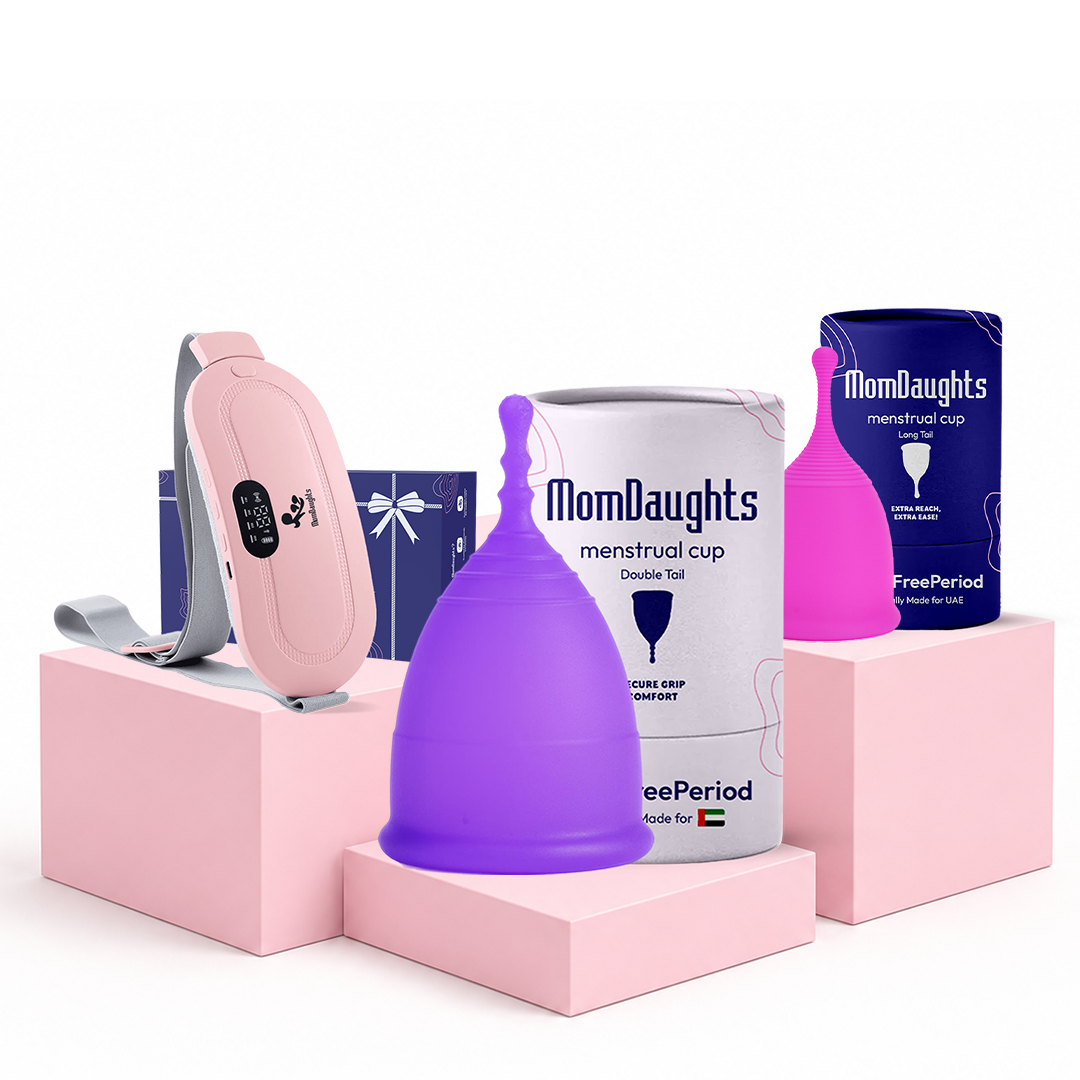
MomDaughts Long Tailed Menstrual Cup
MomDaughts Double Tail Menstrual Cup
MomDaughts Menstrual Period Heating Pad for Cramps Massage
MomDaughts Initia Mini v1 IPL Laser Hair Remover
MomDaughts 3 in 1 HIFU Anti Wrinkle Device
MomDaughts Initia Classic v2 IPL Laser Hair Remover
MomDaughts Niacinamide Zinc PCA Serum | 30ml
MomDaughts Menstrual Disc
MomDaughts Double Tail Menstrual Cup
MomDaughts Long Tailed Menstrual Cup
MomDaughts Menstrual Period Heating Pad for Cramps Massage
MomDaughts Menstrual Disc
MomDaughts Short Tail Menstrual Cup
MomDaughts Collapsible Menstrual Cup With Cute Storage Case
MomDaughts Collapsible Sterilizer Cup
Menstrual Cup Comfort Kit (Applicator + Softfit Lubricant)
MomDaughts Initia Classic v2 IPL Laser Hair Remover
MomDaughts Initia Cooling v3 IPL Laser Hair Remover
MomDaughts Initia Mini v1 IPL Laser Hair Remover
MomDaughts Niacinamide Zinc PCA Serum | 30ml
MomDaughts 7-LED Face Therapy Mask
MomDaughts 3 in 1 HIFU Anti Wrinkle Device
MomDaughts Beauty Ice Roller
MomDaughts Salicylic Skin Serum: Healthier Skin Complexion 30mL
MomDaughts Retinol Skin Serum: Smooth Skin 30mL
MomDaughts Alpha Arbutin + Vitamin C Skin Serum: Brightening Skin 30mL
MomDaughts Vitamin C Ferulic Acid Serum: Hydrated Skin 30mL
MomDaughts' Innovative Wellness Collections
Complete Cycle Comfort
Bundle up with our cup, cleanser, and sterilizer.
Mom’s Journal
Why Does My Period Hurt? How a Heating Pad Relieves Menstrual Cramps
We have seen women push through period pain for years with painkillers, hot water bottles, and lying in bed. Most do not know that the pain has a specific biological cause, that heat works against that cause directly, and that a wearable heating pad is one of the only non-drug solutions with clinical evidence behind it. This article covers all of it. Why Period Pain Happens: The Biology Period cramps, medically called primary dysmenorrhea, are not imagined and not inevitable. They have a clear biological cause. During menstruation, the lining of the uterus releases chemicals called prostaglandins. These prostaglandins trigger the uterus to contract in order to shed its lining. When prostaglandin levels are high, contractions become stronger and more frequent than necessary, restricting blood flow to the uterine muscle. Reduced blood flow means reduced oxygen supply to the tissue, a condition called ischemia, which is what produces the cramping pain you feel in your lower abdomen. The pain can radiate to the lower back and upper thighs because of the proximity of the uterus to the spine and surrounding nerves. Headache, nausea, fatigue, and bloating often accompany cramps for the same hormonal reasons. According to a systematic review published in PMC, primary dysmenorrhea is the most common gynecologic condition in women, with an estimated prevalence of 45% to 95% of all women of reproductive age. It is also the leading cause of recurrent short-term school and work absenteeism among young women. Why Heat Works Against Period Pain Heat therapy works against cramp pain through four mechanisms that directly address the biological cause described above. It increases blood flow. Heat applied to the lower abdomen causes blood vessels to dilate. Increased circulation reduces the ischemia, the oxygen deprivation, that makes uterine contractions painful. Research cited by Angelini Pharma confirms that heat can improve blood circulation in the pelvis, reducing swelling and nerve compression. It relaxes uterine muscle. Heat directly reduces muscle tension in the lower abdomen and uterus. Relaxed muscle fibres experience less severe spasm, which is the primary source of cramping pain. It helps clear prostaglandins. Improved local circulation helps remove prostaglandins from the uterine area faster. While heat does not block prostaglandin production the way ibuprofen does, better blood flow reduces the concentration of pain-triggering chemicals in the tissue. It raises the pain threshold. The sensation of warmth interferes with pain signal transmission through neural pathways, making the body more tolerant of the remaining discomfort. This is why heat feels immediately soothing even before the deeper effects on circulation and muscle tension have time to work. What the Clinical Evidence Shows Heat therapy for period pain is not folk wisdom. It is clinically studied and recommended by medical authorities including the Mayo Clinic and UpToDate, which considers it a first-line treatment for dysmenorrhea. A systematic review published in PMC covering six randomised controlled trials found that heating pads showed favorable effects on menstrual pain compared to analgesic medication in three of those trials, with a statistically significant result (n=274, p<0.001). In one trial, heat therapy outperformed acetaminophen and showed comparable effectiveness to ibuprofen for pain cluster scores. A 2024 survey-based study published in PMC of 9,144 women found that heat therapy was the most commonly used non-pharmacological strategy for period pain relief, used by 61.5% of respondents. The same study confirmed that heat therapy had similar efficacy to ibuprofen and was more effective than acetaminophen in reducing menstrual pain. This is significant because ibuprofen, the standard drug recommendation for dysmenorrhea, fails to provide adequate pain relief in approximately 18% of women according to a 2025 Frontiers in Medicine systematic review. For these women, and for those who prefer to avoid frequent painkiller use, a wearable heat device is a meaningful alternative. Hot Water Bottle vs Electric Heating Pad: Why It Matters Many Pakistani women use a hot water bottle or heated towel for period cramps. These work to some extent but have a practical limitation: they cool down within minutes, delivering inconsistent heat that requires constant reheating. Research reviewed by Angelini Pharma notes that the suggested temperature for effective heat therapy is 40 to 45°C, which allows heat to penetrate tissue to a depth of approximately 1 cm where uterine muscle tension originates. A hot water bottle starts above that range and drops below it quickly. Neither delivers consistent therapeutic temperature. A purpose-built electric heating pad maintains consistent temperature throughout your session, delivers targeted heat directly to the lower abdomen where it is needed, and can be worn discreetly under clothing during daily activity. About the MomDaughts Menstrual Heating Pad The MomDaughts Menstrual Heating Pad is built specifically for period cramp relief, not repurposed from a general back pain device. Key features that matter for period use: Heats in 5 seconds. When cramps hit, you do not want to wait. The pad reaches working temperature in 5 seconds from switch-on. Adjustable heat and vibration settings. Heat relaxes muscle; vibration massage provides an additional layer of pain relief by stimulating circulation and interrupting pain signals at the surface. Both are adjustable to your comfort level. Cordless and wearable. The 1200mAh rechargeable battery and adjustable belt strap mean you can wear it under your clothing at home, at work, in university, or while travelling. You are not restricted to lying next to a wall socket. USB rechargeable. Charges via any USB port, including a power bank or laptop. Auto shut-off safety feature. Prevents overheating and burns if you fall asleep or forget to turn it off. 12-month warranty. Full coverage on a product that is used monthly. Use 20 to 30 minutes per session. This is the recommended duration for safe, effective heat therapy without risk of skin irritation. How to Use a Menstrual Heating Pad Correctly Getting the most from heat therapy requires correct placement and appropriate settings. Placement. Position the pad on your lower abdomen, centred below the navel where the uterus sits. If lower back pain accompanies your cramps, the pad can also be moved to the lower back between abdominal sessions. Setting. Start on the lowest heat setting for your first session to assess how your skin responds. Increase gradually if needed. Never use the highest setting directly against bare skin for extended periods. Duration. 20 to 30 minutes per session is the clinically recommended window. You can repeat sessions throughout the day as needed with short breaks between them. Clothing layer. Wear the pad over a thin layer of clothing or the skin-soft contact surface provided. Do not apply the heated surface directly to broken or irritated skin. Safety notes. Do not use during pregnancy without consulting a doctor. Do not fall asleep during a session without the auto shut-off feature active. Do not use on open wounds or skin infections. Using the Heating Pad With a Menstrual Cup We have seen many women combine the heating pad with a menstrual cup during their cycle. The cup handles collection internally for up to 12 hours without leaks, while the heating pad addresses the cramping discomfort externally. The two products work independently with no interference, making this one of the more practical combinations for women who want complete period management without constant bathroom trips or painkiller dependency.
Learn moreWhat Is a Menstrual Disc? Pakistan's Only Reusable Disc Fully Explained
We have seen women discover the menstrual disc after struggling with cups for months, and switch within one cycle. We have also seen women who never liked cups take to the disc immediately. The two products look similar from the outside but work completely differently inside the body. This article explains exactly what a menstrual disc is, how it works, and who it is actually designed for. What a Menstrual Disc Is A menstrual disc is a flat, shallow, bowl-shaped period product made from medical-grade silicone. It collects menstrual fluid rather than absorbing it, making it reusable, eco-friendly, and safer for the body than disposable products containing synthetic fibres or chemicals. The key difference from a menstrual cup is not just shape. It is placement. While a cup sits low in the vaginal canal and holds itself in place using light suction against the vaginal walls, a disc sits significantly higher, in a part of the anatomy called the vaginal fornix, directly below the cervix. It is held in place not by suction but by the pubic bone, which anchors its front rim securely. This difference in position and mechanism is what gives the disc its unique advantages, and what makes it the better choice for certain women. How the Disc Works: The Anatomy Explained The vaginal fornix is the wider, arched space that surrounds the base of the cervix. According to Healthline, it is where the vaginal canal meets the cervix, and it is naturally roomier than the vaginal canal below it. When you insert a menstrual disc, you pinch it in half, guide it back and downward into this space, and tuck the front rim up behind the pubic bone. Once in place, the disc opens to conform to the natural shape of your fornix and sits like a shallow bowl collecting flow directly at the cervix. Because the vaginal fornix contains fewer nerve endings than the lower vaginal canal, research and clinical observation from Flex suggest this is one reason many users report that discs feel more comfortable to wear, particularly in the first few cycles of learning. Key Features of the MomDaughts Menstrual Disc The MomDaughts Menstrual Disc is made from ultra-soft, medical-grade silicone with a flat-fit design built for all-day comfort. Here is what it offers: Up to 12 hours of leakproof protection. The disc is designed to be worn throughout the day, overnight, and during physical activity without needing to be changed. No suction. The disc is anchored by your pubic bone, not by the vaginal walls. This means there is no pressure on the vaginal canal, no suction to break during removal, and no discomfort from improper sealing that cup users sometimes experience. Wearable during intimacy. Because the disc sits above the vaginal canal, behind the pubic bone, it does not interfere with penetrative sex. This is a feature exclusive to menstrual discs and not available with any cup or tampon. Anti-spill design with a grip-friendly notch. Removal is guided by a notch built into the rim, which reduces the messiness that comes with first-time disc use. Medical-grade silicone throughout. The material is biocompatible, hypoallergenic, BPA-free, and safe for repeated internal use. Clean with warm water and mild fragrance-free soap between uses. Sterilize by boiling for 3 to 5 minutes at the end of each cycle. Store in the breathable pouch provided. Menstrual Disc vs Menstrual Cup: The Real Differences Both products collect menstrual flow internally and are made from medical-grade silicone. Beyond that, they are quite different in how they work and who they suit. Feature Menstrual Disc Menstrual Cup Placement Vaginal fornix, below cervix Vaginal canal, lower position Held in place by Pubic bone Light suction against vaginal walls Suction None Yes Capacity Higher, typically 30-61 mL Typically 20-40 mL Wearable during intimacy Yes No Sizing More universal, fornix is similar across anatomies Multiple sizes needed, varies by anatomy IUD compatibility Safer, no suction risk Use with caution, suction may shift IUD Comfort Fewer nerve endings in fornix area More nerve endings in vaginal canal Learning curve Moderate, requires reaching further Moderate, requires correct fold and seal Research cited by Flex found that menstrual discs have the highest capacity of any period product tested, averaging 61 mL compared to 20 to 50 mL for tampons, pads, and cups. For women with a heavy flow, this significantly reduces the number of changes needed per day. Who the Menstrual Disc Is Best For Women Who Tried Cups and Found Them Uncomfortable Cup discomfort usually comes from two sources: suction pressure on the vaginal walls, or difficulty achieving the correct seal. Discs eliminate both. There is no suction and no seal to worry about. The disc rests passively in the fornix, held by anatomy rather than pressure. Women With an IUD Menstrual cups carry a small but documented risk of shifting or dislodging an IUD because of the suction created during removal. Discs carry no such risk. They use no suction and sit higher than where IUD strings typically sit in the vaginal canal. According to Hello Period, for IUD users a disc is the recommended internal collection option. Women Who Want Period Intimacy Without Mess This is the most frequently asked question about discs from Pakistani women who discover them. Because the disc sits above the vaginal canal, behind the pubic bone, it is out of the way during intimacy. The MomDaughts disc is specifically designed for this use and confirmed safe to wear during intercourse. Women With Heavy Flow The higher capacity of a menstrual disc means less frequent changes on heavy days. For working women, students, or anyone who cannot access a bathroom easily for 8 to 12 hours at a stretch, this is a practical advantage over tampons, pads, and even most cups. First-Time Internal Product Users Discs are more forgiving than cups for anatomy-related fit issues. As period education specialists at Period Nirvana note, the vaginal fornix is similar across most anatomies, which means almost all discs will fit most people adequately. Cups require sizing based on cervix height, flow volume, and pelvic floor tone. Discs remove most of that complexity. How to Insert the MomDaughts Menstrual Disc Wash your hands thoroughly before handling the disc. Pinch the disc in half so it forms a narrow shape roughly the size of a tampon. Hold the pinched disc with the catch, the soft middle, facing downward like a bowl. Find a comfortable position, sitting on the toilet or with one leg raised. Insert the disc back and downward at an angle toward your tailbone, pushing it as far back as it will go. Once the back rim is in the posterior fornix, use one finger to tuck the front rim up and behind the pubic bone. You should not feel it when it is correctly placed. If the disc feels uncomfortable, it has not been tucked behind the pubic bone fully. Remove it gently, reinsert, and check the tuck. How to Remove It Cleanly Removal is the part that takes the most practice with a disc. Keep it as level as possible to avoid spilling. Sit on the toilet before attempting removal. Insert your index finger and hook it under the front rim of the disc. If you cannot reach it easily, bear down with your pelvic muscles as if going to the bathroom. This lowers the disc toward the vaginal opening. Slide the disc out horizontally, keeping it level. Empty into the toilet, rinse with warm water, and reinsert or store. The grip-friendly notch on the MomDaughts disc is designed specifically to assist with this step, making it easier to locate and hook the rim on the first try. Disc and Cup: Can You Use Both? Yes. Many women use the disc on heavier days for its higher capacity and comfort, and switch to a cup on lighter days when a smaller, lower-profile product suits them better. The menstrual care collection includes both options, and pairing them with the Softfit Lubricant makes insertion of either product noticeably easier, especially during the learning phase.
Learn moreIs a Menstrual Cup Safe for Unmarried Girls in Pakistan?
We hear this question every week. It comes from teenagers whose period just got started. It comes from university students. It comes from mothers asking on behalf of their daughters. The concern is always the same: will a menstrual cup affect virginity, and is it permissible for an unmarried girl to use one? This article answers both questions with medical facts and the correct Islamic context, so you can make a properly informed decision. The Short Answer Yes. A menstrual cup is safe for unmarried girls and teenagers. It does not affect virginity. This is confirmed by medical science and supported by Islamic scholarship. What Actually Happens to the Hymen Most of the concern around menstrual cups for unmarried girls is tied to the hymen, so it helps to understand what the hymen actually is. The hymen is a thin, flexible piece of tissue at the opening of the vagina. It is not a seal, and it does not fully block the vaginal opening. If it did, menstrual blood could not flow out at all. For most girls, by the time their first period arrives, the hymen is already partially open or has naturally worn away from everyday movement, sport, cycling, or simply growing up. According to WebMD, reviewed by a medical doctor in 2025, placing a menstrual cup in the vagina is safe from a girl's very first period. In some cases it may stretch the hymen slightly, but the same can happen from dancing, gymnastics, or riding a bicycle. This is a normal part of growing up, not a sign of anything else. Does a Menstrual Cup Affect Virginity? No. Virginity is defined by sexual intercourse, not by the state of the hymen. These are two separate things. Islamic scholars are clear on this point. The fuqaha (Islamic jurists) state that if a woman's hymen is broken due to any reason other than sexual intercourse, including sports, injury, medical examination, or use of menstrual products, she is still considered a virgin in Islamic law. Imam al-Mawsili states in al-Ikhtiyar: a woman who lost her virginity due to jumping, injury, or age is considered a virgin. Islam commands the husband not to suspect wrongdoing on the part of his spouse based on physical evidence. This is confirmed by multiple sources of Islamic scholarship including IslamWeb's fatwa on menstrual cup use, which states that use of a menstrual cup is permissible as long as there is no harm. The concern is cultural, not religious. And the medical facts support the Islamic position fully. Is It Safe for Teenagers Specifically? Yes, and for several reasons that make menstrual cups particularly suitable for younger users. Medical-grade silicone is completely safe. The cups in the menstrual care collection are made from 100% medical-grade silicone. This means no dyes, no harsh chemicals, no allergens. For a teenager whose body is still developing, this matters. The XS and Small sizes are designed for first-time users. Younger girls and those who have never given birth should start with the smallest available size. The Short Tail Menstrual Cup in XS is specifically designed for lighter flow and smaller anatomy. It is softer, easier to fold, and more comfortable for beginners. Cups are worn for up to 12 hours. For a student at school or university who cannot change pads frequently, this is a practical advantage. No mid-class bathroom trips, no embarrassing leaks, no bulky packaging in a school bag. Practical Guidance for First-Time Teen Users Starting with a menstrual cup takes a little practice. Here is what helps: Choose the right size first. Before ordering, use the cup size quiz to confirm which size fits your body. For teenagers, the answer is almost always the smallest available option. Use the comfort kit. The Menstrual Cup Comfort Kit includes an applicator and SoftFit lubricant designed specifically for first-time insertion. A small amount of water-based lubricant on the rim makes the process significantly easier. Give yourself two or three cycles. Most new users find the first cycle a learning experience. By the second or third, insertion and removal become routine. This is true for users of all ages. Clean correctly between uses. Rinse with mild soap and water after each use. At the end of your cycle, sterilize using boiling water or the Collapsible Sterilizer Cup for a mess-free option. What to Tell Your Parents We have seen many teenagers want to try a menstrual cup but feel uncertain about how to bring it up at home. A straightforward approach tends to work best. Share the Islamic scholarly position on the topic. Explain that multiple fuqaha confirm this is permissible and does not affect virginity. Share this article. The medical facts and the religious context together tend to resolve most concerns that parents have. Key Takeaways A menstrual cup is safe for unmarried girls and teenagers from their very first period It does not affect virginity, medically or Islamically The hymen and virginity are two separate things, confirmed by both science and Islamic scholarship Start with the XS or Small size and use a lubricant for easier first insertion The Comfort Kit is designed specifically for beginners and first-time users
Learn more
'Cause Mom Knows Better
Built for Every Woman
We believe every woman deserves access to exceptional, affordable care that truly understands her. From our thoughtfully designed menstrual cups to nourishing skin serums, every MomDaughts product is created with your comfort, confidence, and well-being in mind.
A chance conversation between a mother and daughter sparked a mission: to create affordable, honest, and effective wellness products for women—starting with menstrual care and growing into a holistic self-care brand.
Yes! We prioritize safety, sustainability, and comfort. Our menstrual cups are made with medical-grade silicone, and our skincare line is crafted with clean, skin-loving ingredients.
We’re not just a business—we’re a story born from real needs and real conversations. Every product is developed with empathy, tested by women, and designed to support your wellness journey without breaking the bank.
Yes, we ship to most countries worldwide. International shipping rates and delivery times vary by location.