We have seen women reach for ibuprofen every single month for years without knowing that a non-drug alternative with comparable clinical evidence exists and is already used by 61.5% of women globally as their primary pain management strategy. Heat therapy for menstrual cramps is not traditional folk wisdom being passed off as medicine. It is a physiologically documented mechanism with multiple randomised controlled trials confirming its effectiveness. This article explains the science fully and addresses every common safety question.
Why Period Pain Happens: The Biology
Menstrual cramps, medically called primary dysmenorrhea, have a clear biological cause. During menstruation, the uterine lining releases prostaglandins, hormone-like compounds that signal the uterus to contract in order to shed its lining. When prostaglandin levels are high, these contractions become stronger and more frequent than necessary for normal shedding.
Strong uterine contractions restrict blood flow to the uterine muscle. Reduced blood flow means reduced oxygen delivery to the tissue, a condition called uterine ischemia. Ischemic muscle tissue produces pain through the same mechanism as the chest pain in a heart attack: the tissue is not getting enough oxygen and signals distress. This is what produces the cramping pain felt in the lower abdomen.
The pain can radiate to the lower back and upper thighs because the uterus is anatomically proximate to the spine and surrounding nerves. Headache, nausea, and fatigue often accompany cramps for the same prostaglandin-mediated hormonal reasons.
According to a systematic review published in PMC, primary dysmenorrhea is the most common gynecologic condition in women of reproductive age, with an estimated prevalence of 45 to 95% of all women at some point in their reproductive lives. It is also the leading cause of recurrent short-term school and work absenteeism among young women globally.
How Heat Works Against This Pain
Heat therapy addresses the biological cause of period pain through three interconnected mechanisms.
Vasodilation. Heat applied to the lower abdomen causes blood vessels in the area to dilate. Increased circulation reduces the ischemia that makes uterine contractions painful. More blood flow means more oxygen delivery to the contracting muscle, which is exactly the deficit causing the pain. Research cited by Angelini Pharma confirms that heat therapy improves blood circulation in the pelvis, reducing swelling and congestion that compresses local nerves and amplifies pain.
Muscle relaxation. Heat directly reduces tension in the smooth muscle fibres of the uterus and the skeletal muscles of the lower abdominal wall. Less muscle tension means less severe spasm, which is the immediate source of the cramping sensation. This relaxation effect begins within minutes of heat application.
Pain threshold elevation. Warmth interferes with pain signal transmission through the neural pathways from the uterus to the brain, effectively raising the pain threshold. This is why heat produces immediate comfort even before the deeper vascular and muscular effects have fully developed.
Prostaglandin clearance. Improved local blood circulation increases the rate at which prostaglandins are cleared from the uterine tissue through normal vascular turnover. While heat does not block prostaglandin synthesis the way ibuprofen does, reducing prostaglandin concentration in the tissue by improving clearance reduces the intensity of the contractions they trigger.
The effective temperature range for these mechanisms is 40 to 45°C, which Angelini Pharma's research confirms penetrates approximately 1 cm into tissue, reaching the depth where uterine muscle tension originates. Lower temperatures may provide comfort without deep tissue penetration. Higher temperatures risk burns without proportionally greater benefit.
What the Clinical Evidence Shows
Heat therapy for period pain is one of the best-supported non-pharmacological interventions in gynaecology.
A systematic review published in PMC covering six randomised controlled trials (RCTs) is the most rigorous analysis available. Its findings were significant: three of the RCTs compared heating pads directly against analgesic medication and found heating pads outperformed the medication (n=274, SMD -0.72, 95% CI -0.97 to -0.48, p<0.001). This is a statistically significant result confirming heat therapy as at least equivalent to analgesic medication for primary dysmenorrhea management.
A 2024 survey-based study published in PMC covering 9,144 women across multiple countries found that heat therapy was the single most commonly used non-pharmacological strategy for period pain relief, used by 61.5% of respondents. The study confirmed comparable efficacy to ibuprofen and superior efficacy compared to acetaminophen.
This is relevant because NSAIDs (non-steroidal anti-inflammatory drugs) like ibuprofen fail to provide adequate pain relief for approximately 18% of women with dysmenorrhea, as documented in multiple clinical reviews. For these women, and for any woman who prefers to reduce regular painkiller use, heat therapy is a validated clinical alternative, not a consolation option.
Is Heat Therapy Safe? Complete Safety Answer
Yes, with correct usage. Heat therapy is non-invasive, has no systemic side effects, does not interact with any medications, and is appropriate for daily use throughout the menstrual period. No documented cases of adverse effects from correctly applied menstrual heat therapy appear in the clinical literature.
Safe usage guidelines:
-
Use for 20 to 30 minutes per session. This is the clinically recommended window for effective tissue penetration without skin irritation risk
-
Allow the skin to cool to normal temperature between sessions before reapplying
-
Never use directly on open wounds, infected skin, or active dermatitis
-
Do not fall asleep during a session without an auto-shutoff device
-
Pregnant women should consult a doctor before using heat on the abdomen during pregnancy, as uterine heat in early pregnancy carries specific considerations
-
Start on the lowest heat setting and increase gradually based on your skin's response
Hot Water Bottle vs Electric Heating Pad: The Practical Difference
Most Pakistani women use a hot water bottle for cramp relief and have done so for generations. It provides some benefit. But it has limitations that an electric heating pad does not.
A hot water bottle starts at an inconsistent and often too-high temperature and drops below the therapeutic 40 to 45°C range within 10 to 15 minutes. It cannot be worn under clothing while moving. It requires boiling water and constant reheating for extended sessions. It provides no temperature control.
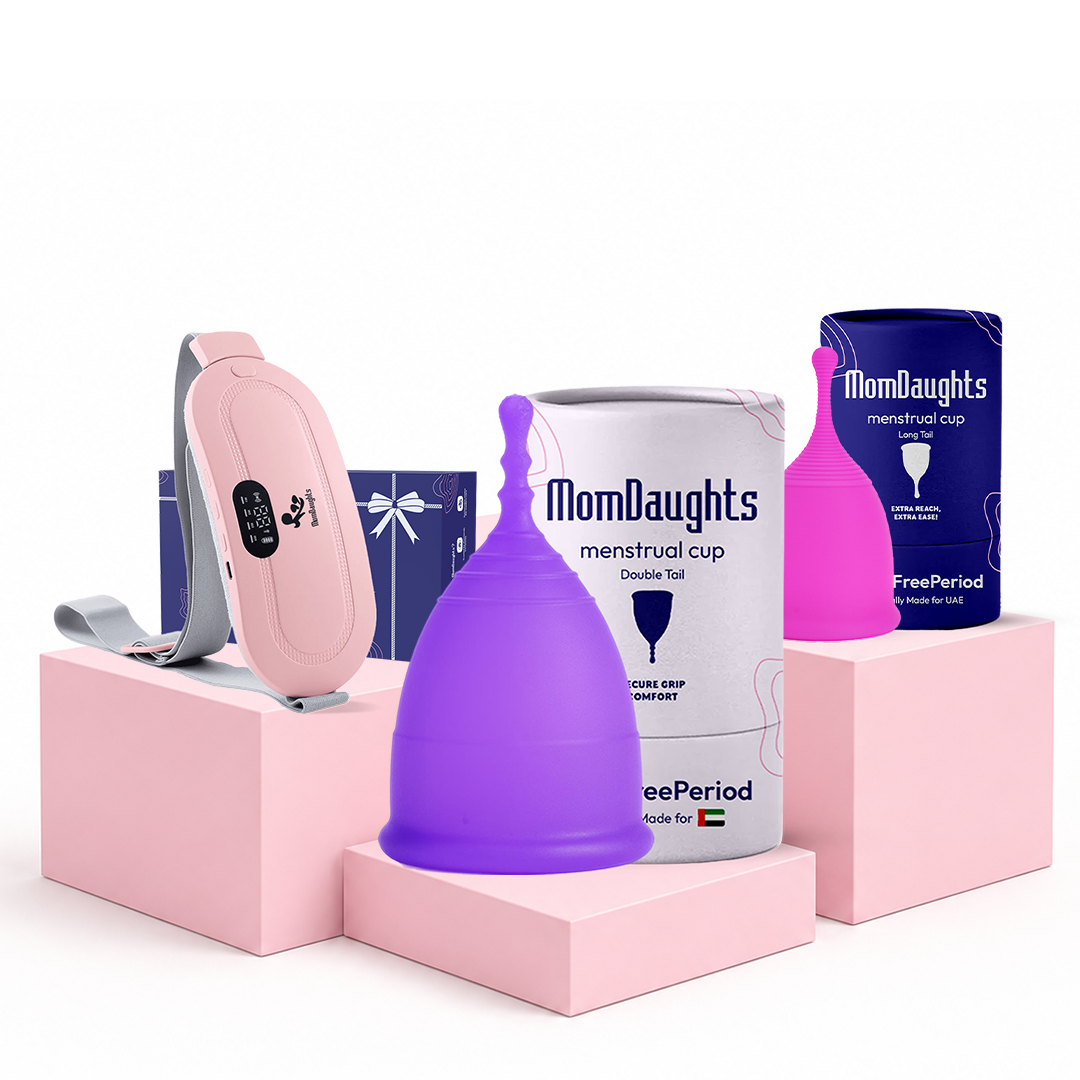
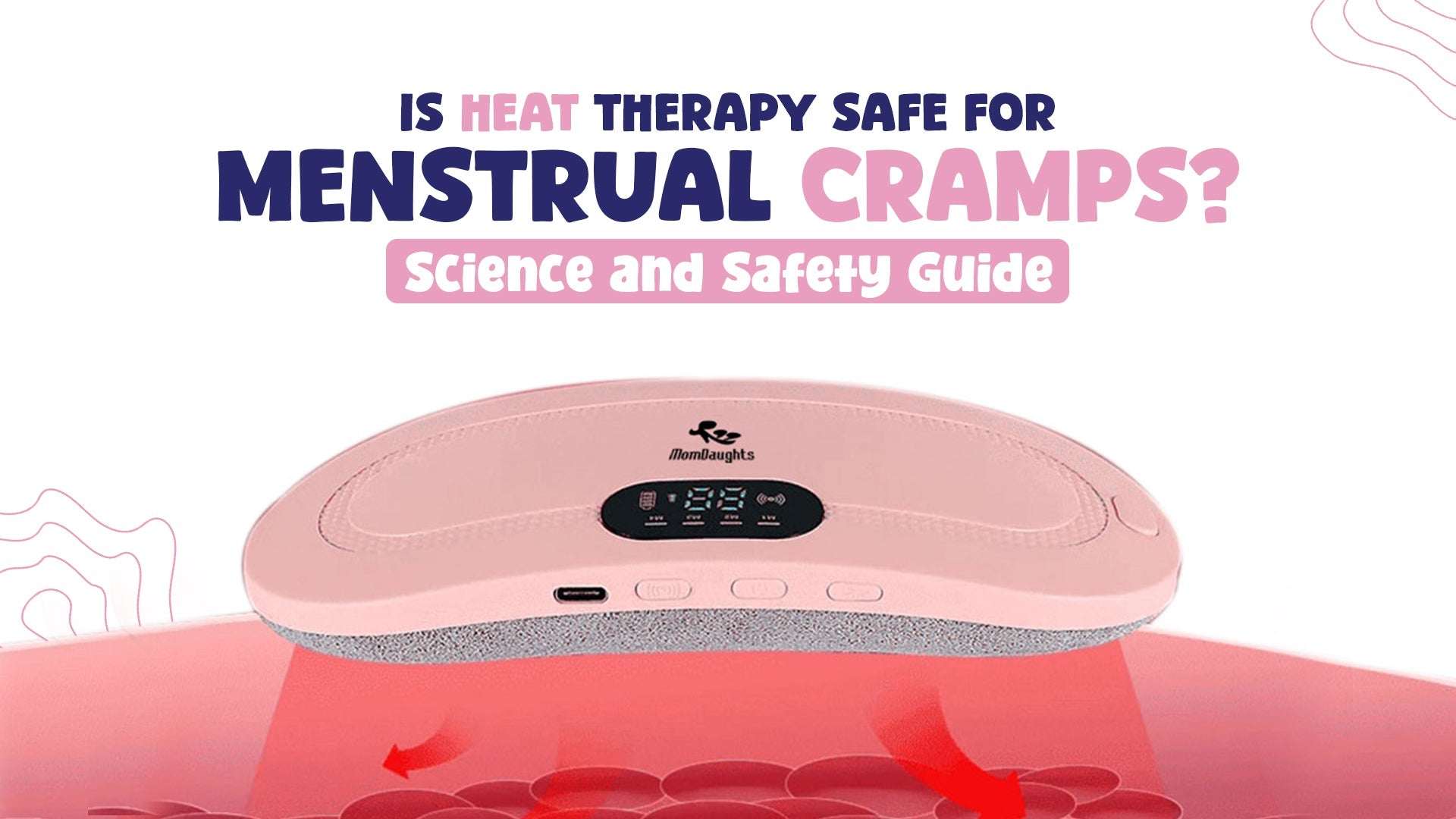
The MomDaughts Menstrual Heating Pad maintains consistent temperature within the therapeutic range throughout the session, heats in 5 seconds, operates on a 1200mAh rechargeable USB battery, includes adjustable heat and vibration settings for additional muscle relief, is slim enough to wear under clothing at work or university, and has an auto-shutoff safety feature. It delivers the 20 to 30 minute consistent therapeutic sessions that the clinical evidence is based on, rather than the declining heat of a cooling water bottle.
The vibration component provides an additional layer of benefit beyond heat: gentle mechanical stimulation of the abdominal area further promotes circulation and provides counter-stimulation that reduces pain signal intensity.
Heat Therapy and Ibuprofen Together
Heat therapy and NSAIDs work through entirely different mechanisms and are safe to use simultaneously. Ibuprofen blocks prostaglandin synthesis at the hormonal level. Heat therapy addresses the vascular, muscular, and neural consequences of prostaglandin activity. Using both together produces better pain management than either alone for most women with moderate to severe dysmenorrhea.
For women who want to reduce their monthly ibuprofen dose, starting with heat therapy and adding ibuprofen only if the heat does not provide sufficient relief is a reasonable evidence-based approach.
At MomDaughts, we believe every woman deserves to understand what works and why. Confidence in every cycle.