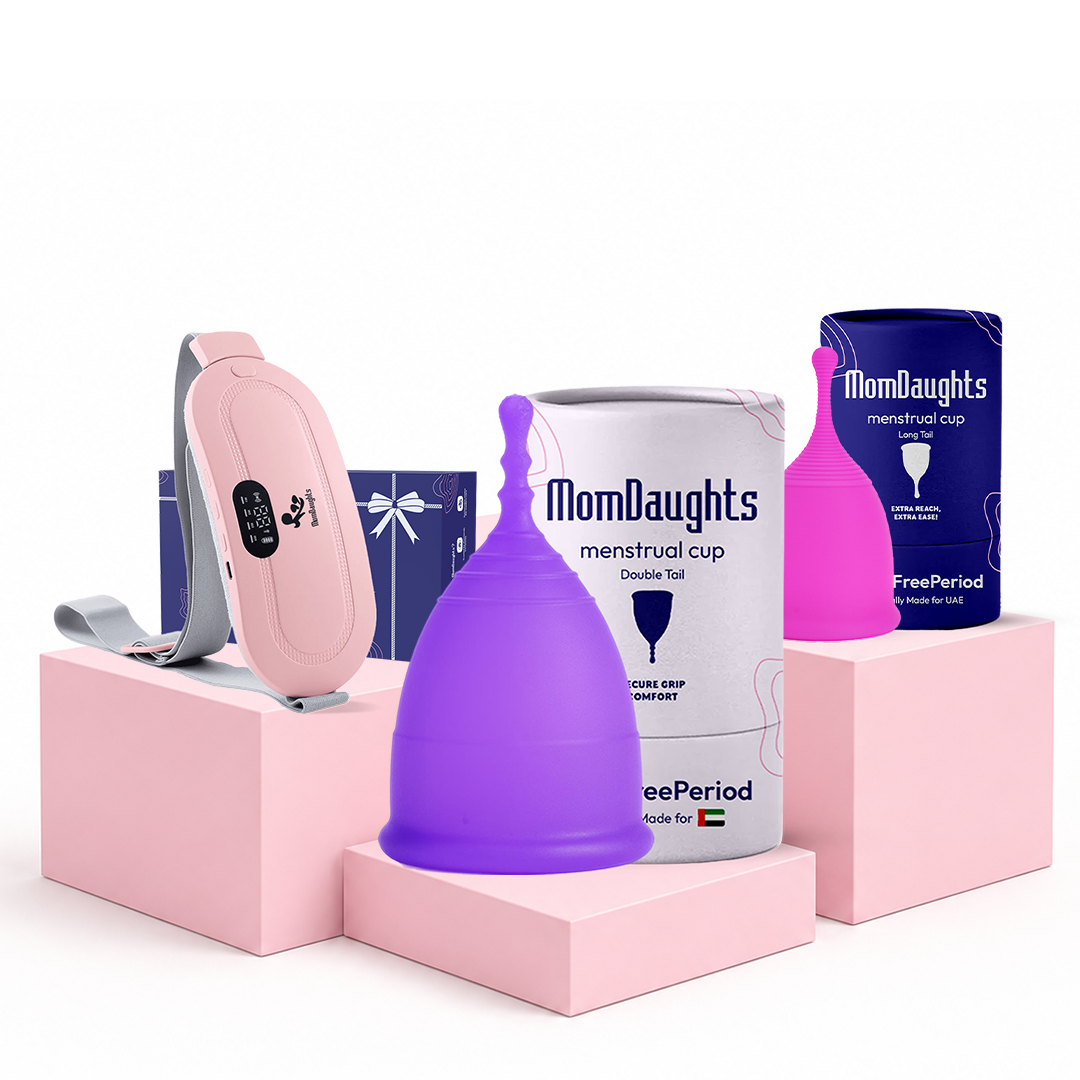

We have seen women ask this question before buying almost every MomDaughts product: "what does medical-grade silicone actually mean, and how is it different from the silicone in a kitchen spatula?" It is a completely reasonable question. The words medical-grade, FDA-cleared, BPA-free, and ISO-certified appear on packaging without any explanation of what they mean or why they matter. This article explains each certification clearly.
What Silicone Actually Is
Silicone is a synthetic polymer made from silicon (a naturally occurring element), oxygen, carbon, and hydrogen. Its molecular backbone is a chain of silicon-oxygen bonds, which gives it chemical stability, flexibility, heat resistance, and biological inertness. It does not react with bodily fluids, does not absorb moisture or odour the way natural rubber or plastic does, and does not degrade rapidly with repeated cleaning and sterilization.
These properties are why silicone is used in medical implants, surgical tubing, catheters, baby bottle nipples, and menstrual products. The material itself is well-tolerated by the human body, but not all silicone is manufactured to the same purity standard.
The Three Levels of Silicone: What Makes Them Different
Industrial or general-purpose silicone is used in construction sealants, automotive gaskets, and industrial applications. It may contain additives, fillers, or processing aids that are appropriate for industrial use but not for human contact. It is not tested or certified for safety near or inside the body.
Food-grade silicone meets FDA requirements for contact with food, following 21 CFR 177.2600 standards. It is free from harmful additives, handles heat safely, and does not interact with food. It is used in baking moulds, spatulas, and baby feeding products. It is not tested for internal human contact or contact with blood and mucous membranes.
Medical-grade silicone is the highest standard. According to research on medical silicone standards, medical-grade silicone is formulated and tested specifically for use in medical and healthcare environments where it contacts the human body, bodily fluids, or mucosal tissue. It must meet FDA regulations and pass international standards including ISO 10993 biocompatibility testing and USP Class VI certification. These standards confirm the material does not cause cytotoxicity (cell damage), sensitization, irritation, or systemic toxicity.
All MomDaughts menstrual cups, the Menstrual Disc, and the cup Lubricant and Comfort Kit components are made from medical-grade silicone. This is not a marketing claim. It is a material specification with documented testing requirements behind it.
What ISO 10993 Means
ISO 10993 is the international standard series titled Biological Evaluation of Medical Devices. It defines the testing framework for evaluating whether a material is safe for contact with the human body.
Testing under ISO 10993 covers multiple biological safety endpoints depending on the type and duration of body contact. For products used internally (like menstrual cups) or in contact with mucosal tissue, the relevant tests include cytotoxicity (does the material damage cells), sensitization (does it cause allergic reactions), genotoxicity (does it damage DNA), and systemic toxicity (does it produce harmful effects beyond the local contact area).
Research published by Elastoproxy on medical silicone standards confirms that medical-grade silicones must pass ISO 10993 biocompatibility testing to establish human tissue and fluid contact safety. ISO 10993 is required by regulatory bodies in the US, EU, and most global markets for any material that contacts human tissue.
What USP Class VI Means
USP Class VI is a standard defined by the United States Pharmacopeia (USP), an independent non-profit organisation whose standards are recognised by the FDA. Class VI is the most stringent category for biocompatible materials in the USP classification system.
To pass USP Class VI, a material must pass three specific animal-based biological tests: systemic toxicity injection testing, intracutaneous reactivity testing, and implantation testing. A material that passes all three is confirmed safe for human internal use, safe for direct contact with mucosal tissue, and free from extractable compounds at levels that would cause biological harm.
Elastostar's medical silicone guide confirms that USP Class VI is the gold standard for silicone used in internal medical devices and that passing both USP Class VI and ISO 10993 represents the highest available safety confirmation for human-contact materials.
What FDA-Cleared Means for a Device
This is the certification that generates the most confusion. The FDA does not "approve" silicone as a raw material. Instead, it grants clearance to finished medical devices through a process called 510(k) clearance.
510(k) clearance means a manufacturer has demonstrated to the FDA that their finished device is substantially equivalent in safety and effectiveness to a legally marketed device already on the market. For a product like a menstrual cup or IPL device to be FDA-cleared, the manufacturer must prove the device is safe for its intended use, including evidence that all materials contacting the body meet biocompatibility requirements.
Research on FDA silicone standards confirms that FDA clearance for a finished device is different from FDA approval of the raw silicone material. Both are relevant. The silicone material should meet FDA food contact standards (21 CFR 177.2600) and biocompatibility standards (ISO 10993 or USP Class VI). The finished device should have 510(k) clearance from the FDA for its intended use category.
MomDaughts IPL devices carry FDA clearance for at-home hair removal. MomDaughts cup products are made from FDA-compliant medical-grade silicone meeting the relevant biocompatibility standards.
What BPA-Free Means
BPA (Bisphenol A) is a chemical used in the production of certain plastics, particularly polycarbonate plastics and epoxy resins. It is a known endocrine disruptor, meaning it interferes with hormonal signalling in the body. Exposure to BPA has been linked in multiple studies to hormonal disruption, developmental issues, and increased cancer risk.
BPA is not an ingredient in silicone. Silicone and BPA-containing plastics are entirely different material categories. When a silicone product is labelled BPA-free, it is technically accurate, but the label is primarily intended to reassure consumers who may not know the difference between silicone and plastic.
The more meaningful assurance for a silicone internal product is the ISO 10993 and USP Class VI testing, which confirms the absence of any extractable compounds at harmful levels, not just BPA specifically. BPA-free is a floor, not a ceiling. Medical-grade certification with ISO 10993 and USP Class VI is the comprehensive safety confirmation.
Platinum-Cured vs Peroxide-Cured Silicone
One additional distinction matters for internal products. Medical-grade silicone can be manufactured using two curing methods: platinum-cured and peroxide-cured.
Platinum-cured silicone uses platinum as a catalyst during the curing process. It produces very low extractable residues and is the preferred choice for internal medical devices and products that contact mucosal tissue. Most high-quality menstrual cups use platinum-cured silicone.
Peroxide-cured silicone uses organic peroxides as catalysts, which can leave by-product residues in the finished material. While these residues are generally low and may be acceptable for some applications, they are less desirable for products used internally. Platinum-cured is the gold standard for internal intimate products.
Why This Matters for Pakistani Women Specifically
Pakistan's consumer product market contains a significant proportion of unverified imports sold on platforms including Daraz and small online stores. Products labelled as "silicone" or even "medical-grade silicone" without verifiable certification documentation may not meet the actual standards those terms imply. Low-quality silicone used in internal products carries real risks of chemical irritation, allergic reaction, and microbiological contamination.
Purchasing from a brand that can document its silicone certifications and whose products carry verifiable FDA clearance or compliance provides meaningful protection against these risks.
Which MomDaughts Products Use Medical-Grade Silicone
All of the following use certified medical-grade, BPA-free silicone:
-
All menstrual cup variants: Short Tail, Long Tail, Double Tail, Collapsible Cup
-
Comfort Kit applicator components
Frequently Asked Questions
Is medical-grade silicone safe for internal use? Yes. Medical-grade silicone passes ISO 10993 biocompatibility testing and USP Class VI certification specifically for human body contact including internal mucosal contact. It is the same material used in internal medical devices like catheters and implants.
What is the difference between FDA-cleared and FDA-approved for a product? FDA-cleared applies to medical devices that have demonstrated substantial equivalence to existing cleared devices. FDA-approved applies to pharmaceuticals and high-risk devices requiring more extensive clinical trials. For home-use period and IPL devices, FDA clearance is the relevant and meaningful standard.
Is BPA-free enough to confirm a silicone product is safe? BPA-free confirms the absence of a specific plasticiser that is not used in silicone anyway. For internal products, ISO 10993 testing and USP Class VI certification are the more meaningful safety confirmations because they cover all extractable compounds at harmful levels, not just BPA.
Can silicone cause allergic reactions? Silicone allergy exists but is extremely rare. The Lancet's systematic review of 43 menstrual cup studies found only three cases of possible silicone sensitivity across thousands of users. If you have a known sensitivity to silicone-containing products, discuss cup use with a doctor before starting.
At MomDaughts, we believe safety certifications should be explained, not just displayed. Confidence in every cycle.