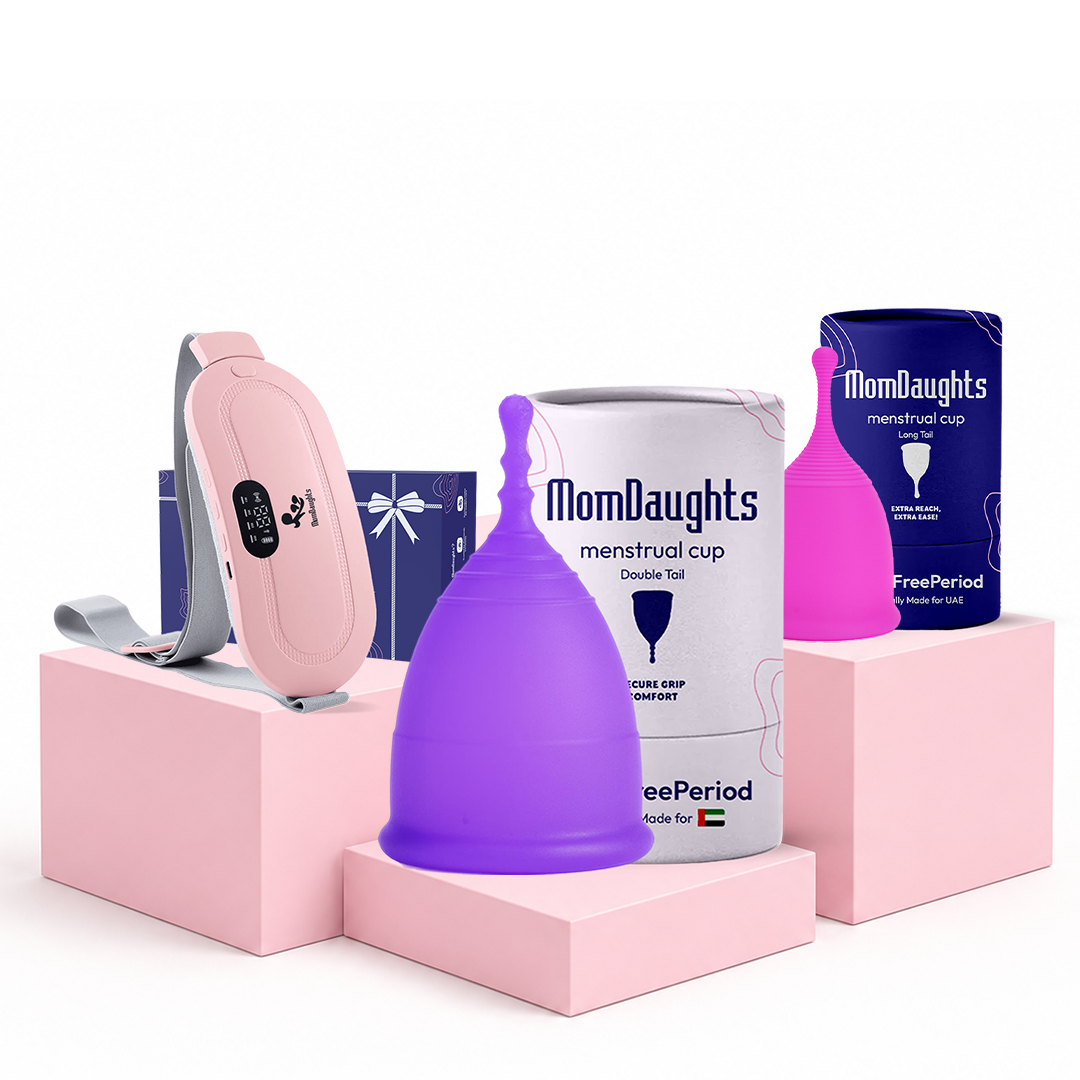

Yes. You can urinate, have a bowel movement, and carry on with your entire day while wearing a menstrual cup. This is one of the first questions women ask when they are new to cups, and the answer is completely straightforward once you understand the basic anatomy involved. This article explains why, what the cup does and does not affect, and the small number of situations where you might want to pay attention.
The Anatomy: Two Separate Openings
The vagina and the urethra are distinct anatomical structures with entirely separate openings on the external vulva.
The vagina is the internal canal that leads to the uterus. It is where a menstrual cup is inserted to collect flow. It runs at an angle toward the lower back.
The urethra is the tube through which urine exits the bladder. Its external opening is a small, separate structure located just above the vaginal opening, below the clitoris. Urine travels from the bladder through the urethra and exits through this separate opening, entirely independent of the vaginal canal.
Inserting something into the vagina has no effect on the urethra. They do not share an opening, a tube, or a connected pathway. This is confirmed directly by Nua Woman's clinical anatomy reference: your cup sits in your vagina and your pee comes out of your urethra. They are completely separate. You can pee while wearing a menstrual cup without any issue.
Does Wearing a Cup Change How Urination Feels?
For the vast majority of women, no. A correctly sized and correctly positioned cup is completely unfelt during all activities including urination. You should not be aware that anything is present.
Some women, particularly in the early cycles of cup use, notice a slightly different sensation during urination. There are a few possible explanations.
Psychological awareness. Knowing something is inside can create a heightened awareness of the pelvic area generally. This is not a physical effect of the cup.
Cup too firm for your pelvic anatomy. A firmer cup exerts consistent outward pressure against the vaginal walls. If the front wall of the vaginal canal is in close proximity to the back wall of the urethra (which varies between women), a firm cup pressing against that front wall can create mild awareness during urination. This is not harmful. Switching to a softer cup such as the Collapsible Cup typically resolves it completely.
Cup incorrectly sized and pressing against the urethra. A cup that is too large for your anatomy can press more forcefully than necessary against the vaginal walls and adjacent structures. The know your size guide helps identify the correct size based on your cervix height and flow.
Can Urination Dislodge the Cup?
No. The cup is held in place by a suction seal against the vaginal walls, not by muscular tension. Normal urination involves the bladder and the urethral sphincter, neither of which is connected to the vaginal walls where the cup seal exists. The cup does not move during normal urination.
Some women worry that bearing down or relaxing the pelvic floor during urination will push the cup out. Normal urination does not require significant bearing down. The cup remains sealed during any normal bathroom activity.
What About Bowel Movements?
You can have a bowel movement with a menstrual cup in place. The vaginal canal and the rectum are adjacent but separated structures. Having a bowel movement does not affect the cup's position in the vast majority of cases.
The exception: significant bearing down during a constipated or difficult bowel movement uses the pelvic floor muscles, which are shared between the vaginal and rectal areas. Forceful bearing down can occasionally shift a cup's position or bring it slightly lower in the canal. If your cup has moved after a bowel movement, you can simply reach in and reposition or reinsert it.
This happens more commonly with softer cups, where the cup is less firmly held open against the vaginal walls. If you notice frequent shifting after bowel movements with the Collapsible Cup, a quick check after bathroom use becomes part of your routine.
Do You Need to Remove the Cup Before Using the Bathroom?
Not for routine urination or bowel movements. Remove it only when you are ready to empty it, which is every 8 to 12 hours depending on your flow.
Some women prefer to empty and reinsert during bathroom visits simply as part of their routine, particularly in the first cycle or two when they are becoming familiar with the cup. This is entirely optional and not necessary from a hygiene or safety standpoint.
Hygiene Considerations During Bathroom Use
The same hygiene principles apply during bathroom visits as at any other time of cup use. Wash hands thoroughly before any cup removal or reinsertion. If the cup needs to be removed and reinserted during a bathroom visit, clean hands are the most important factor.
If you are in a public bathroom and cannot access a sink before reinserting, it is acceptable to reinsert without rinsing the cup temporarily, then rinse properly at the next available opportunity. Keeping clean hands is more important than rinsing the cup in a potentially unclean sink.
Specific Situations Pakistani Women Ask About
At the office or university: The cup can be worn through a full working day or lecture session without removal. Many Pakistani women report this as the most practical advantage of cup use over other period products, eliminating multiple bathroom trips for product changes.
During Jumu'ah or prayer: The cup collects flow and does not constitute the conditions that would affect ghusl requirements. Many Pakistani Muslim scholars confirm this. The cup can remain in place throughout prayer without issue.
During travel: The cup's 12-hour wear time is particularly valuable for Pakistani women during long road journeys, flights, or situations where clean bathroom facilities may not be available. The cup remains in place and functions effectively without any bathroom access required.
During physical activity including sports: Running, walking, exercising, and sports are entirely compatible with cup wear. The seal holds through all physical movement.
At MomDaughts, we believe every question deserves a clear, direct answer. Confidence in every cycle.