We have seen women abandon their menstrual cups not because the cup failed them, but because they were unsure whether they were cleaning it correctly. The cleaning process is simpler than most people expect, and doing it right makes a significant difference both in hygiene and in how long the cup lasts. This guide covers every step, every method, and every common mistake.
The Two-Level Cleaning System
Menstrual cup care works on two levels, and understanding the difference helps everything else make sense.
During your cycle: Rinse and wash the cup each time you empty it. This removes menstrual fluid, reduces bacteria, and keeps the cup comfortable to reinsert. This does not need to be a full sterilization every time.
At the end of your cycle: Sterilize the cup fully before storing it for next month. This kills the bacteria and microorganisms that build up over the course of a full period, ensuring the cup is completely clean and safe for its next use.
According to Saalt's comprehensive cup care research, sanitizing reduces microorganisms to a safe level, while sterilization eliminates them entirely. Full sterilization is recommended once per cycle, at the end of the period, not necessarily after every single removal.
Step 1: During Your Cycle (Every Time You Empty the Cup)
Wash Your Hands First
Always wash your hands with soap and water before removing or reinserting the cup. This is the single most important hygiene step in the entire process. The cup itself can be perfectly clean, but dirty hands introduce bacteria at the point of contact.
Remove and Empty
Hold the base of the cup firmly, break any suction seal by pinching lightly, and pull down gently. Empty the contents into the toilet. Do not pull from the stem alone.
Rinse Under Running Water
Rinse the cup thoroughly under cold or lukewarm running water to remove all visible menstrual fluid. Use your fingers to wipe the inside and outside of the cup. Cold water first is helpful because hot water can cause protein in blood to bind to the silicone surface, making staining more likely.
Wash With Mild Soap
Apply a small amount of mild, fragrance-free, pH-neutral soap to the cup and wash thoroughly. Pay attention to the rim, the suction holes near the rim, and the stem. These small holes can trap residue if not cleaned carefully. A soft toothbrush kept specifically for cup cleaning is useful for the holes.
Do not use:
-
Scented soaps or body washes (fragrance residue can irritate)
-
Antibacterial soaps (kills protective bacteria when reinserted)
-
Oil-based products (degrade silicone over time)
-
Harsh chemical cleaners
Rinse Completely and Reinsert
Rinse all soap residue off the cup thoroughly. Any soap remaining on the cup can cause irritation. Reinsert using your usual fold method.
Step 2: End of Cycle Sterilization
At the end of your period, before storing the cup for next month, sterilize it fully. Boiling is the most effective and most reliable method.
Method 1: Collapsible Sterilizer Cup on the Stovetop
The MomDaughts Collapsible Sterilizer Cup is designed specifically for this. It eliminates the need to use a kitchen pot, keeps your cup contained and safe during boiling, and collapses flat for easy storage between cycles.
How to use on stovetop:
-
Unfold the sterilizer cup and place on a flat, heat-safe surface.
-
Place your clean menstrual cup inside the sterilizer.
-
Fill with enough water to fully submerge the cup, approximately three-quarters full.
-
Place on the stove on medium heat and bring to a boil.
-
Allow to boil gently for 3 to 5 minutes.
-
Remove carefully from heat using a cloth or oven mitt as the silicone will be hot.
-
Allow to cool completely before touching the cup.
-
Remove the cup, shake off excess water, and allow to air dry fully before storing.
The sterilizer keeps your cup off the bottom of the pot, preventing direct contact with the hot metal surface which can cause discolouration over time.
Method 2: Sterilizer Cup in the Microwave
The collapsible sterilizer is microwave-safe, which is practical when you prefer a faster method or do not want to use a gas flame.
-
Place your clean menstrual cup inside the unfolded sterilizer.
-
Fill with water until the cup is submerged.
-
Place the lid on top but do not seal it fully. Leaving a small gap prevents pressure build-up from steam and stops the water overflowing.
-
Microwave for 2 to 3 minutes, or until the water comes to a full boil.
-
Use care when removing from the microwave as the container and water will be very hot.
-
Allow to cool fully before handling.
Method 3: Boiling in a Pot (Without a Sterilizer)
If you do not have a sterilizer, a regular pot works. Fill with enough water to fully submerge the cup, bring to a boil, and add the cup. Use a pair of metal tongs or a small whisk to keep the cup suspended in the water and off the bottom of the pot. Boil for 5 minutes. This method works but is less convenient and carries a small risk of the cup touching the hot pot base.
What NOT to Do When Cleaning Your Cup
These are the most common mistakes that damage the silicone or reduce hygiene.
Do not use alcohol. Alcohol disinfects but damages silicone over time, making it sticky and porous. A porous surface is harder to clean and harbours bacteria more easily.
Do not use harsh or scented soaps. Fragrance and antibacterial agents leave residue that irritates the vaginal environment and can disrupt natural flora.
Do not put in the dishwasher. Dishwashing detergents contain enzymes and chemicals that are corrosive to silicone and leave chemical residues that are unsafe for internal use.
Do not use hydrogen peroxide regularly. A small soak in 3% hydrogen peroxide a few times per year can remove staining, but frequent use degrades the silicone material over time.
Do not store in an airtight container. This is one of the most commonly overlooked mistakes. Sealing a cup in an airtight bag or container traps moisture and creates conditions where bacteria and mould grow. Always store in the breathable cloth pouch provided.
Do not microwave without water. A dry cup in the microwave will burn and warp the silicone.
Storage Between Cycles
After the end-of-cycle sterilization, allow the cup to air dry completely before storing. Damp storage in any container, even the breathable pouch, can introduce moisture-related bacterial growth.
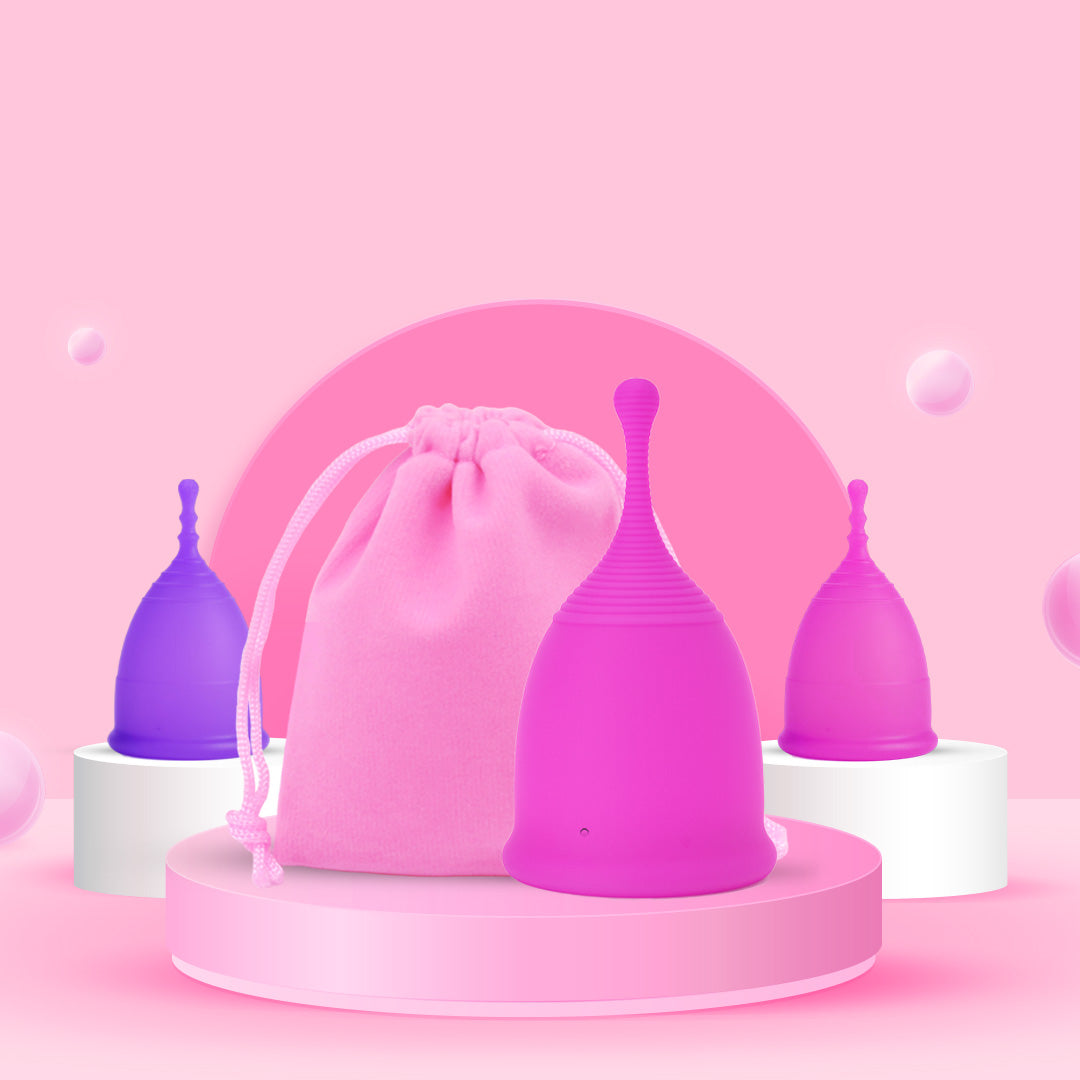
Once fully dry, store the cup in the breathable cotton or mesh pouch provided with the cup. Keep in a cool, dry place away from direct sunlight. UV exposure and heat can degrade silicone over extended periods.
Do not store with strong-smelling products. Silicone is slightly porous and can absorb strong odours from nearby substances.
When to Replace Your Cup
Medical-grade silicone cups are designed to last for years with correct care, but they do not last forever. Inspect your cup at the start of every cycle for:
Stickiness or tackiness on the surface. This indicates the silicone has begun to degrade, often from incorrect cleaning products.
Discolouration beyond light staining. Some yellowing is normal over time and does not affect safety. Dark brown or black patches, particularly inside the cup, indicate bacterial or mould growth and mean the cup should be replaced.
Any tears, cracks, or chips. These compromise the seal and create surfaces where bacteria cannot be removed by cleaning.
Persistent odour after sterilization. If the cup retains odour even after a full boil cycle, the silicone may have absorbed residue from incorrect cleaning products.
The menstrual cups collection includes the full range of MomDaughts cup options if replacement is needed. Pairing any cup with the Collapsible Sterilizer Cup makes the end-of-cycle sterilization process straightforward every month.
Cleaning Your Cup While Away From Home
Cleaning the cup in a public bathroom or shared space does not need to be complicated. During your cycle, if a sink is not accessible when you need to empty the cup, wiping the inside with clean toilet paper and rinsing with a bottle of clean water you carry is sufficient as a temporary measure. Follow up with a proper soap and water wash at the next available opportunity.
Use a portable, collapsible sterilizer at the end of the cycle even while travelling. The Collapsible Sterilizer Cup folds flat to fit in any bag and works in both microwave and stovetop settings, making it practical for hostel kitchens, family visits, or any away-from-home situation.
At MomDaughts, we believe the small details of care are what make reusable period products work long-term. Confidence in every cycle.