This is the question we hear most from women considering IPL for the first time. And it deserves an honest answer, not a marketing promise. So here it is: IPL is not painless for everyone in every area, but it is significantly more comfortable than waxing, far less sharp than threading on sensitive areas, and manageable enough that most women complete their full course without stopping.
This article gives you a realistic, area-by-area breakdown, explains what factors affect how much you feel, and tells you what actually helps.
What IPL Actually Feels Like: The Honest Description
Multiple independent sources and consumer summaries from 2025 and 2026 consistently describe the IPL sensation the same way: a brief warm snap, like a mild rubber-band flick against the skin, that peaks for a fraction of a second and disappears immediately.
A January 2026 pain review covering consumer and clinical data rated typical IPL at 2 to 4 out of 10 for most body areas. Sensitive spots can climb higher, particularly in the first one or two sessions when hair is coarser.
After the flash, most women feel a brief warmth in the treated area, similar to skin that has had mild sun exposure for a short time. This fades within minutes.
What IPL does not feel like is waxing. Waxing physically tears hair from the root, which triggers a sharp, sustained pulling pain that lasts during and after the strip. IPL is a flash. One moment it is there, then it is gone.
Pain Level by Body Area: What to Expect
Not all areas feel the same. The difference comes down to skin thickness, nerve density, and hair coarseness. Here is an honest, area-by-area guide.
|
Body Area |
Typical Sensation |
Why |
|
Legs (shins, calves) |
Mild warmth, barely noticeable |
Thicker skin, lower nerve density |
|
Arms and forearms |
Mild warm flick |
Similar to legs, comfortable throughout |
|
Underarms |
Mild to moderate snap |
Thinner skin, hair often coarser early on |
|
Upper lip |
Moderate warm snap |
Thin skin, more nerve endings |
|
Chin and jaw |
Moderate |
Similar to upper lip, settles after sessions 3 to 4 |
|
Bikini line |
Moderate to strong in first sessions |
Very thin skin, high nerve density, coarse hair |
|
Back and shoulders |
Mild |
Thicker skin, fewer nerve endings |
The bikini line and upper lip tend to be the areas women find most noticeable, and both are also areas where sensation reduces significantly after the first few sessions as hair becomes finer and sparser.
What Makes IPL More or Less Comfortable
Several factors determine how much you feel during a session. Most of them are within your control.
Intensity Setting
Starting on the lowest intensity setting for your first session is the most important step for comfort. The sensation increases with intensity level. Starting low lets your skin adjust and helps you identify the threshold that is effective without being uncomfortable. Increase gradually over subsequent sessions.
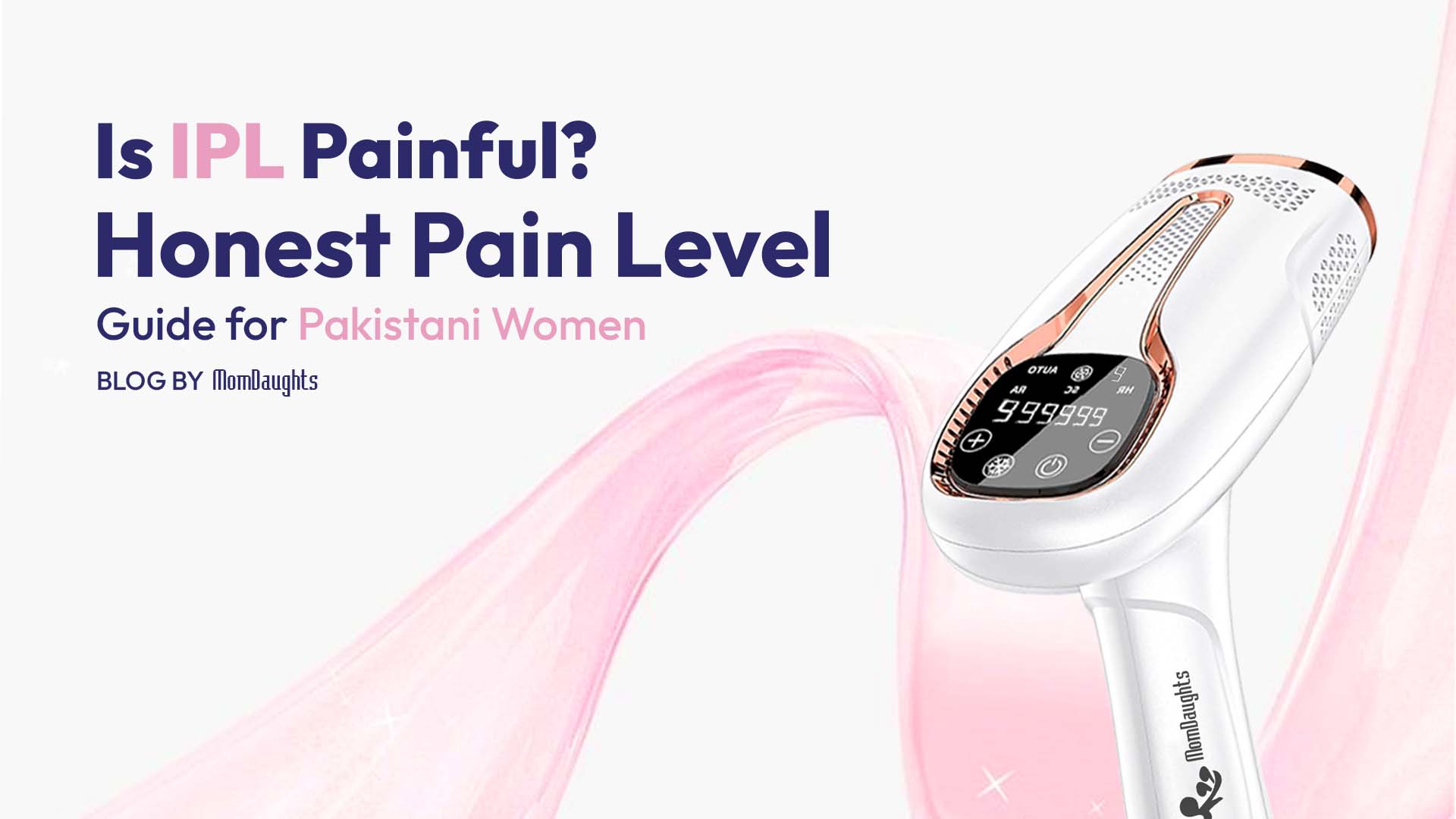
The MomDaughts Classic V2 offers 5 adjustable intensity levels and includes a built-in smart skin sensor that reads your skin tone and recommends the appropriate setting automatically, removing the guesswork that causes first-time users to start too high.
Cooling Technology
The most significant factor in IPL comfort is cooling. Devices with built-in ice-cool or contact-cooling technology reduce the surface skin temperature before the flash, significantly softening the warm snap sensation.
The MomDaughts Initia Cooling V3 is designed specifically for this. Its advanced ice-cool technology cools the skin surface at the point of contact, making it noticeably more comfortable in sensitive areas including the upper lip, underarms, and bikini line. Women who have previously found those areas too uncomfortable on other devices consistently report a different experience with the Cooling V3.
Hair Thickness at the Time of Treatment
Always shave 24 hours before your IPL session. Shaving removes surface hair while leaving the root intact, which is what IPL targets. If hair is unshaved, the light hits the surface hair shaft first, which can cause a burning sensation on the surface rather than deep targeting. This surface burn is uncomfortable and also wastes the flash energy on hair above the skin rather than on the follicle below.
Never wax, thread, or pluck before IPL. These remove the root that IPL needs, and they introduce additional irritation to the skin just before light treatment.
Skin Hydration and Condition
Dry skin or skin with active irritation feels more during IPL. Moisturising the skin in the days leading up to your session and avoiding anything that causes inflammation, including harsh exfoliants or sunburn, in the 48 hours before treatment reduces how much you feel.
Skin Tone
IPL uses light to target melanin in hair follicles. On lighter skin tones with darker hair, the contrast is high and the device targets the follicle cleanly. On medium skin tones, the device still works effectively, but there is less contrast between skin and hair, which means the surrounding skin absorbs slightly more energy. Starting on lower intensity and using a device with skin tone detection reduces this effect significantly.
The Portable Mini V1 includes both auto and manual modes and 5 intensity levels, making it straightforward to start conservatively and adjust based on your skin's response across different body areas.
IPL vs Waxing vs Threading: Honest Comfort Comparison
Pakistani women often ask this directly, so here is the comparison without softening it.
|
Method |
Sensation During |
Sensation After |
Duration of Discomfort |
|
IPL |
Brief warm snap, peaks for under 1 second |
Mild warmth for a few minutes |
Under 5 minutes total |
|
Waxing |
Sharp pulling pain during strip removal |
Redness, stinging, skin sensitivity |
20 minutes to several hours |
|
Threading |
Repeated sharp pinching |
Redness, sensitivity, sometimes swelling |
10 to 30 minutes |
|
Shaving |
None |
Potential razor burn, ingrown hairs |
Variable |
According to Braun's IPL education resource, the primary difference women notice is the absence of pulling. Waxing rips hair from the root mechanically, which causes a sustained sharp pain. IPL uses light energy, which the skin processes as a brief thermal sensation, not a mechanical force.
Most women who switch from waxing to IPL describe the experience as dramatically more comfortable, even in sensitive areas, after the first couple of sessions.
What Happens If IPL Feels Too Strong
If a session feels more than mildly uncomfortable, do not push through. Discomfort beyond a 4 to 5 out of 10 is a signal to adjust your approach, not your pain tolerance.
Lower the intensity. Drop one intensity level. You can increase again in subsequent sessions once your skin has adjusted.
Check that you shaved correctly. Missed patches of surface hair cause sharp burning at the skin surface rather than the deeper follicle sensation.
Allow longer between sessions if skin is irritated. The recommended gap between sessions is approximately one week. Treating irritated or sunburned skin increases discomfort significantly.
For the bikini area specifically: Use manual mode rather than auto mode. Manual mode gives you control over exactly when the flash fires, so you can position the device carefully in sensitive areas and avoid overlapping treatment zones.
Consider the Cooling V3 for sensitive areas. If you are using the Classic V2 or Portable Mini and finding specific areas consistently uncomfortable, the Cooling V3 ice-cool technology makes a measurable difference in those exact areas.
Does the Sensation Get Better Over Sessions?
Yes, consistently and for a clear reason. As you complete more sessions, the hair in each treated area becomes progressively finer and sparser. Finer hair contains less melanin, which means the light pulse has less pigment to absorb energy from. Less energy absorption means less heat at the follicle, which means less sensation.
Most women report that by sessions 4 to 6, the areas that felt most noticeable in session 1 have become barely perceptible. The bikini line, which many find the most intense early on, typically becomes one of the easier areas to treat by the midpoint of a course.
At MomDaughts, we believe honest information helps women make better decisions for their bodies. Confidence in every step.