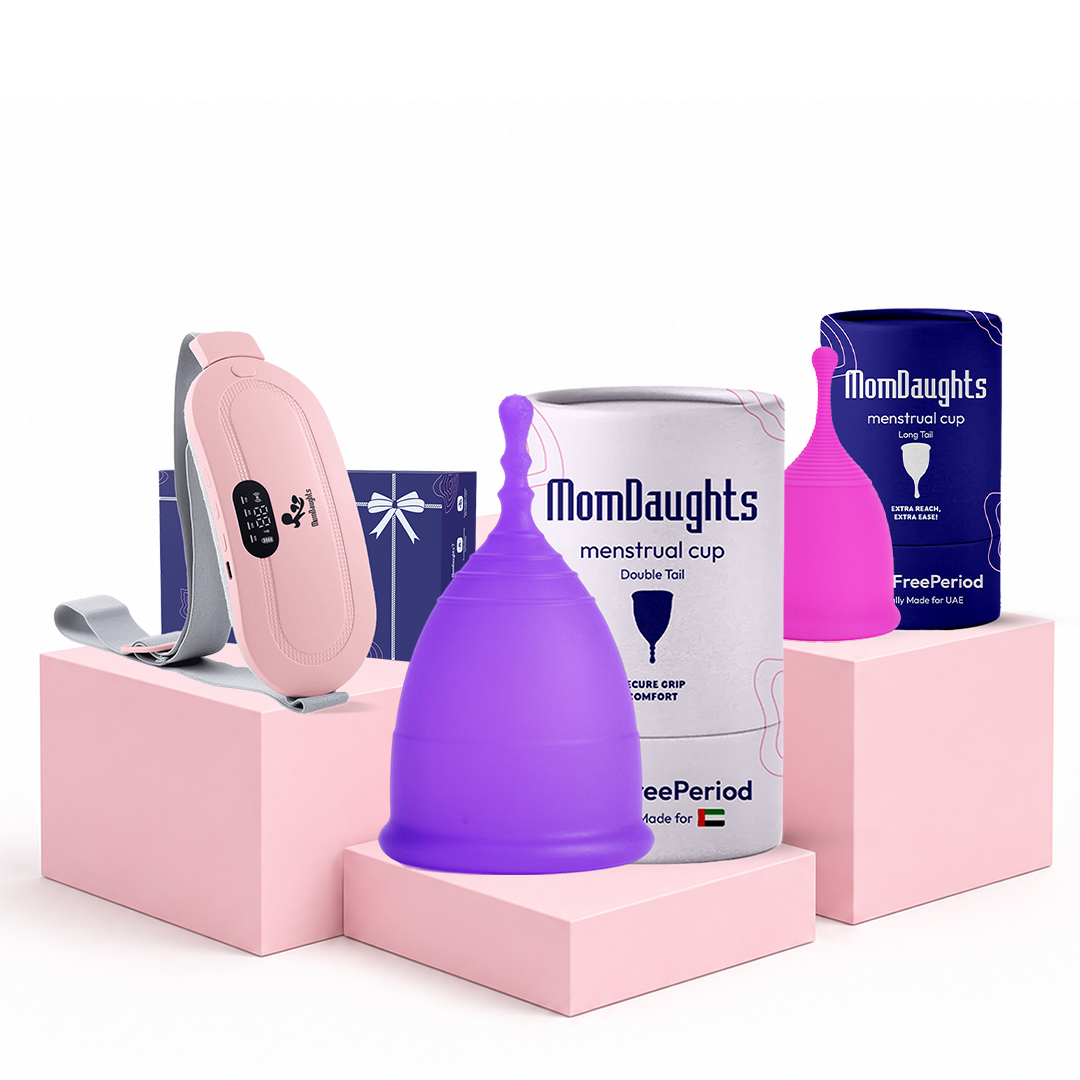
Imagine getting through your workday, university classes, or a good night's sleep without constantly worrying about changing your period product. That's one reason why menstrual cups have become a popular alternative to disposable pads and tampons.
But if you're new to using a menstrual cup, you probably have questions. How long can you leave a menstrual cup in? Is it safe to wear it overnight? What happens if you forget to empty it?
Here's the short answer: A menstrual cup can generally be worn for up to 8–12 hours, depending on the manufacturer's instructions and your menstrual flow. However, 12 hours is the maximum recommended wear time for MomDaughts' cups, not a target you should always aim for. If you have a heavy menstrual flow, you may need to empty your cup much sooner.
At MomDaughts, we believe period care should begin with the right information. Understanding how to use, empty, clean, and maintain your menstrual cup can help you feel more comfortable and confident throughout your period.
Let's break down everything you need to know about menstrual cup wear time, safety, overnight use, and proper care.
1. How Many Hours Can You Wear a Menstrual Cup?
For many menstrual cups, the recommended maximum wear time is up to 12 hours before emptying and cleaning the cup according to its instructions. Your ideal emptying schedule, however, depends on how heavy your flow is and how much fluid your particular cup holds.
Unlike disposable pads, which absorb menstrual blood externally, a menstrual cup collects menstrual fluid inside the vagina.
Here's a quick guide:
| Situation | Recommended approach |
|---|---|
| Light menstrual flow | You may be able to wear your cup for longer intervals, up to the product's stated maximum. |
| Moderate menstrual flow | Empty the cup as needed and never exceed the MomDaughts recommended maximum wear time. |
| Heavy menstrual flow | Empty it more frequently to prevent overflowing and leakage. |
| Overnight use | Empty and clean it before sleeping and again after waking, within the recommended wear time. |
| Beyond 12 hours | Avoid exceeding the recommended maximum, even if the cup does not feel full. |
Remember: Your cup's capacity and the amount of time it can safely remain inserted are two different things. A higher-capacity cup may collect more menstrual fluid, but that does not automatically mean you can leave it in for longer.
Always follow the instructions provided with your specific menstrual cup.
2. Why Shouldn't You Leave a Menstrual Cup In for Too Long?
Menstrual cups are reusable period products, but they still require proper hygiene and regular emptying.
Leaving a cup inserted beyond its recommended wear time may increase the risk of hygiene-related problems. Blood and bodily fluids can accumulate, and poor handling or inadequate cleaning can introduce harmful microorganisms.
Here are three important reasons to respect the recommended time limit.
A. To Maintain Proper Menstrual Hygiene
Your menstrual cup comes into contact with menstrual fluid and vaginal secretions. Regular emptying and proper cleaning help maintain hygiene throughout your period.
Leaving your cup in longer than recommended, especially without following the cleaning instructions, is not a good hygiene practice.
B. To Reduce the Risk of Infection
Incorrect use, inadequate cleaning, and prolonged wear may increase the risk of complications. Washing your hands before handling the cup and cleaning it properly after emptying are essential habits.
A menstrual cup does not eliminate the risk of infection simply because it is reusable or made from silicone.
C. To Reduce the Risk of Toxic Shock Syndrome (TSS)
Toxic Shock Syndrome (TSS) is a rare but potentially life-threatening illness associated with certain bacterial toxins. Although it is commonly discussed in connection with tampon use, cases associated with menstrual cups have also been reported.
The risk is rare, but it should not be ignored.
To help reduce risk:
-
Wash your hands before inserting or removing your cup.
-
Follow the manufacturer's instructions for wear time.
-
Empty and clean your cup at the recommended intervals.
-
Sterilise it between periods as directed.
-
Stop using the cup and seek urgent medical attention if you develop concerning symptoms such as sudden fever, vomiting, diarrhoea, dizziness, fainting, or a widespread rash.
The key takeaway is simple: A menstrual cup is designed for convenient period care, not unlimited wear.
3. Can You Sleep With a Menstrual Cup In?
Yes, many people can safely sleep with a menstrual cup inserted, provided they follow the product's instructions and stay within its maximum recommended wear time.
For someone who sleeps for seven to nine hours, overnight use may fit within the recommended limit of a cup that permits up to 12 hours of wear.
How to Use a Menstrual Cup Overnight
Follow these steps for a more comfortable night:
Step 1: Wash your hands.
Always wash your hands thoroughly with soap and water before handling your menstrual cup.
Step 2: Empty your cup before bed.
Remove the cup, empty its contents, and rinse or clean it according to the product instructions.
Step 3: Reinsert it correctly.
Make sure the cup is comfortably positioned and has opened as intended. If you experience discomfort, do not ignore it.
Step 4: Check the timing.
Remember when you inserted the cup so you can remove and empty it before reaching the maximum recommended wear time.
Step 5: Empty it when you wake up.
Remove the cup, empty the collected fluid, and clean it before reinserting it if your period is continuing.
What If You Have Heavy Periods at Night?
If you have a heavy menstrual flow, your cup may fill before you wake up. You might need to empty it during the night or choose additional period protection.
If you're repeatedly experiencing leaks overnight, consider tracking your flow, checking your insertion technique, and reviewing whether the cup's capacity and fit are suitable for you.
You do not have to sacrifice sleep to use a menstrual cup, but your period care routine should always prioritise comfort and safety.
4. How Does Heavy Menstrual Flow Affect Menstrual Cup Wear Time?
Heavy menstrual flow is one of the main reasons you may need to empty your cup earlier than expected.
For example, if your cup starts leaking after four hours on the second day of your period, it may be filling up faster than it does on lighter days. Waiting until the 12-hour mark could lead to more leakage.
Signs You May Need to Empty Your Cup More Frequently
Look out for these signs:
-
Your cup regularly leaks despite being inserted correctly.
-
You notice blood leaking after a few hours of wear.
-
Your cup is close to its capacity when you remove it.
-
Your menstrual flow is noticeably heavier on particular days.
A menstrual cup's capacity varies by model and size. Knowing how much your cup holds and tracking when it fills can help you develop a routine that suits your cycle.
Does a Larger Menstrual Cup Mean Longer Wear Time?
Not necessarily.
A larger-capacity cup may collect more menstrual fluid before it needs emptying. However, it does not extend the manufacturer's maximum recommended wear time.
The right cup depends on several factors, including your anatomy, cervix height, menstrual flow, comfort, and the design of the cup.
If you experience unusually heavy periods, need to change period products very frequently, or regularly bleed through your products, consider consulting a healthcare professional. Heavy bleeding can sometimes require medical evaluation.
5. What Happens If You Accidentally Leave Your Menstrual Cup In for More Than 12 Hours?
First, don't panic.
If you realise you've exceeded the recommended wear time, remove the cup as soon as you can, provided you can do so comfortably. Empty it and clean it according to the MomDaughts' instructions before deciding whether to reuse it.
Avoid leaving it in for longer simply because you feel fine or because the cup does not appear full.
What Should You Do Next?
-
Wash your hands thoroughly.
-
Remove the cup gently.
-
Empty and clean it according to its care instructions.
-
Pay attention to how you feel afterwards.
-
Contact a healthcare professional if you develop symptoms or are concerned about possible complications.
If you experience sudden fever, vomiting, diarrhoea, dizziness, fainting, confusion, or a rash, seek urgent medical care. These symptoms can indicate a serious condition, including TSS, and should not be dismissed.
Do not wait for every symptom to appear before seeking help.
Accidentally exceeding the wear time does not automatically mean you will develop an infection. The important thing is to remove the cup promptly, follow proper hygiene, and seek medical attention if concerning symptoms develop.
6. How to Clean a Menstrual Cup Properly
Correct cleaning is essential for safe menstrual cup use. Your cleaning routine will vary depending on whether you are emptying your cup during your period or preparing it for storage between cycles.
During Your Period
Follow these basic hygiene practices:
-
Wash your hands before and after handling the cup.
-
Remove the cup gently and empty the collected menstrual fluid into the toilet.
-
Rinse and clean the cup according to the manufacturer's instructions.
-
Reinsert it only when it is clean and comfortable to use.
-
If you cannot access clean water in a public bathroom, follow your cup's specific guidance for cleaning in such situations.
Avoid using harsh household cleaners, fragranced soaps, or chemicals that may irritate sensitive tissues or damage the cup.
Between Periods
At the end of your cycle, clean and sterilise your menstrual cup according to the manufacturer's directions. Some cups can be boiled in water for a specified period, while others have different care requirements.
Never assume that all menstrual cups can be cleaned in exactly the same way.
After cleaning, allow the cup to dry as instructed and store it in a suitable, clean, breathable container. Avoid storing it in a damp, airtight environment unless the manufacturer specifically recommends it.
How Often Should You Sterilise a Menstrual Cup?
Many reusable menstrual cups require sterilisation between periods. Follow the exact instructions for your product, including the recommended method and duration.
Remember that rinsing a cup during your period and sterilising it between cycles are not necessarily the same process.
Proper care helps maintain the cup's condition and supports better menstrual hygiene.
7. Menstrual Cup vs Tampons: How Long Can You Wear Each?
If you're comparing reusable menstrual cups with tampons, wear time is an important difference to understand.
A menstrual cup collects menstrual fluid, while a tampon absorbs it. Both require correct use and regular replacement or emptying.
| Feature | Menstrual cup | Tampon |
|---|---|---|
| How it works | Collects menstrual fluid | Absorbs menstrual fluid |
| Typical maximum wear time | Up to 8–12 hours, depending on product instructions | Generally 4–8 hours; never exceed 8 hours |
| Reusable? | Yes, if designed for reuse and properly maintained | Usually single-use |
| Requires cleaning? | Yes | No washing; discard after use |
| Can it be used overnight? | Yes, within the product's recommended wear time | Yes, if used correctly and within the recommended limit |
The US Food and Drug Administration (FDA) advises changing tampons every four to eight hours and never wearing one for more than eight hours. Menstrual cup instructions vary by product, so check the specific recommendations for your cup.
Neither option is automatically right for everyone. Your personal comfort, flow, health needs, and preferences all matter.
8. Why Is My Menstrual Cup Leaking Before 12 Hours?
If your menstrual cup leaks after only a few hours, it does not necessarily mean the cup is faulty or that you are using it incorrectly.
Several factors may contribute to leakage.
A. Your Cup Is Full
On heavier days, your cup may reach capacity well before the recommended maximum wear time. Empty it more frequently and track how quickly it fills.
B. The Cup Has Not Opened Properly
A cup that has not fully opened after insertion may not collect menstrual fluid as intended. Learning the correct folding and insertion technique can help.
C. The Cup Does Not Fit You Properly
A cup's size, shape, firmness, and length can affect comfort and performance. If you experience repeated leakage despite correct insertion, consider whether another size or design may be more suitable.
D. Your Cervix Position Affects the Fit
The cervix can sit at different heights, including at different points during your cycle. Its position may influence how a cup fits and how comfortably you can insert or remove it.
E. You're Still Learning to Use It
It can take a few cycles to become familiar with inserting, removing, and positioning a menstrual cup. Be patient with yourself and follow the manufacturer's instructions.
If leakage persists, or if insertion causes significant pain, seek advice from a qualified healthcare professional.
9. How Long Does a Reusable Menstrual Cup Last?
One of the advantages of a reusable menstrual cup is that it can be used across multiple menstrual cycles, potentially reducing the number of disposable period products you need.
However, the lifespan of a cup depends on its material, construction, maintenance, and the manufacturer's recommendations.
Some reusable cups are designed to last several years, but you should not assume that every cup has the same lifespan.
Inspect your cup regularly. Replace it if you notice cracks, tears, damaged surfaces, persistent deterioration, or other changes that make it unsuitable for use.
Discolouration may occur over time, but appearance alone cannot determine whether a cup is safe. Follow the manufacturer's guidance if you notice unusual changes, persistent odours, or damage.
Proper cleaning and storage are important for maintaining your cup, but they do not make a damaged product safe to use indefinitely.
10. Is a Menstrual Cup a Good Choice for Period Care in Pakistan?
For people in Pakistan looking for an alternative to disposable period products, a menstrual cup may offer practical benefits.
More Time Between Changes
Depending on your flow and the cup's capacity, a menstrual cup may allow longer intervals between bathroom visits than some disposable products.
This can be helpful during work, university, commuting, or travel, provided you have a suitable opportunity to empty and clean it.
Reusable Period Care
A reusable menstrual cup can reduce the need to purchase disposable products every month. Its overall value depends on the product's price, lifespan, and how well it suits your needs.
A More Informed Period Routine
Understanding your menstrual flow, learning how your cup fits, and developing a suitable cleaning routine can help you make informed decisions about period care.
Comfort and Confidence
When used correctly, a well-fitting menstrual cup can be a comfortable option for many people. However, every body is different, and it is completely reasonable to choose another period product if a cup does not suit you.
At MomDaughts, our goal is to make menstrual care conversations more accessible, practical, and stigma-free. We believe every woman deserves accurate information so she can choose the period care option that works best for her.
Explore MomDaughts menstrual care products: https://momdaughts.com/
Final Thoughts: Use Your Menstrual Cup With Confidence
So, how long can you leave a menstrual cup in? For many cups, the maximum recommended wear time is up to 12 hours, but your flow, comfort, and the manufacturer's instructions should guide your routine.
Remember these essential points:
-
Never exceed your cup's recommended maximum wear time.
-
Empty it earlier if you have a heavy flow.
-
Follow the correct cleaning and sterilisation instructions.
-
Do not ignore persistent pain, unusual symptoms, or repeated leakage.
-
Seek urgent medical care if you experience symptoms that could indicate a serious infection.
Period care is not about following one routine that works for everyone. It is about understanding your body, choosing suitable products, and using them safely.
At MomDaughts, we're here to support more informed period-care choices through education, practical guidance, and products designed with women's needs in mind.
Ready to explore a reusable period-care option? Discover the MomDaughts menstrual cup collection and find out more about choosing and using a cup that suits your needs.
Visit: https://momdaughts.com/
Editorial note for MomDaughts: This article is for general educational purposes and is not a substitute for professional medical advice. Wear-time recommendations and cleaning procedures can vary by menstrual cup model. Always follow the instructions supplied with your product.