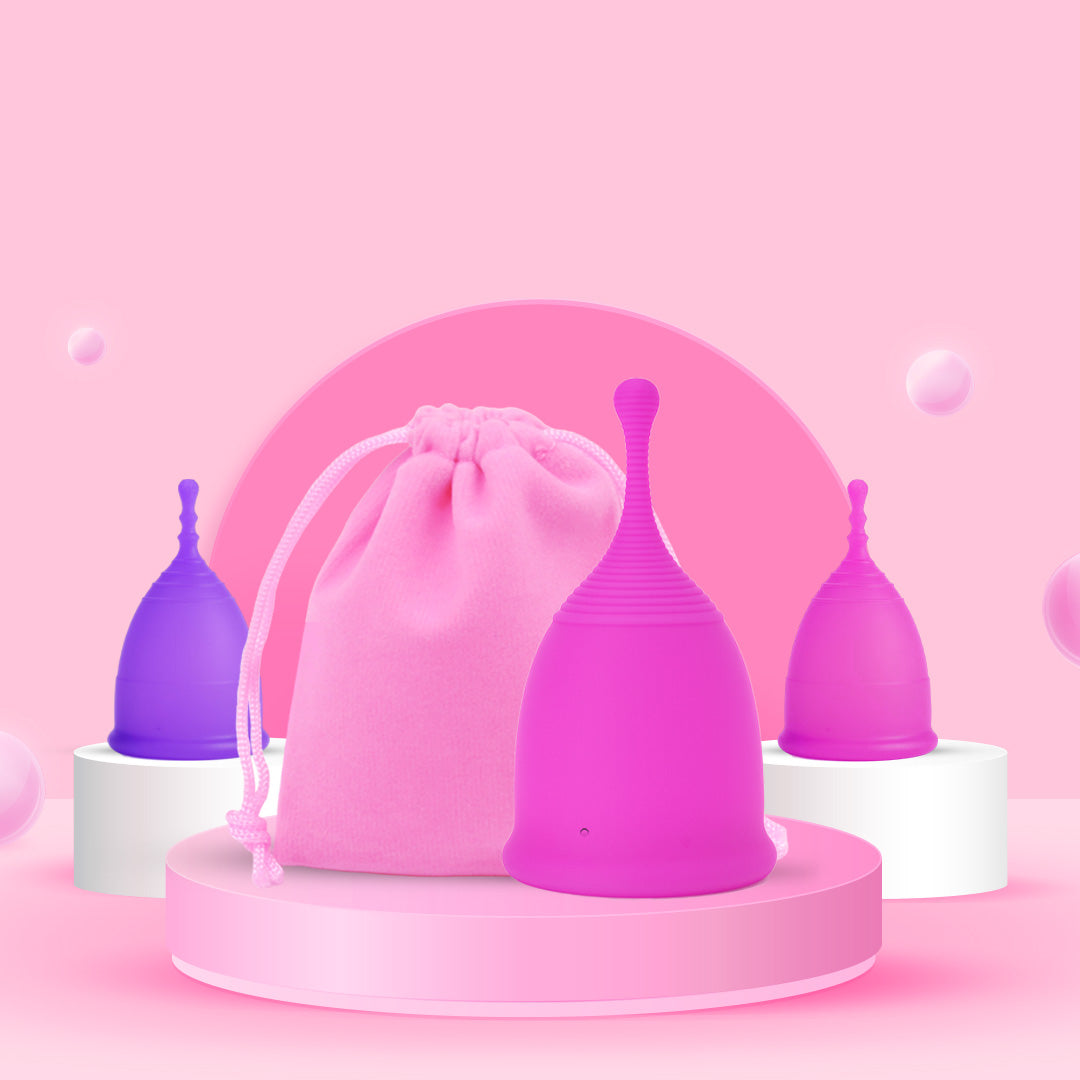
We have seen women buy a menstrual cup, attempt insertion once, feel resistance, and put it back in the drawer. Almost always, the problem was not the cup and not their anatomy. It was the fold, the angle, the tension, or the dryness. Understanding what actually causes insertion difficulty is what changes the experience entirely. This article explains every factor involved and exactly what to adjust.
Is Menstrual Cup Insertion Supposed to Hurt?
No. A correctly inserted menstrual cup should not cause pain. According to Cleveland Clinic OB/Gyn Dr. Karmon James, if you have inserted your cup properly, you should not be able to feel it at all during wear. Discomfort during the learning phase is normal. Pain is not.
Some mild resistance or unfamiliar sensation during the first two or three insertion attempts is part of learning something new. What is not normal is sustained pain, sharp discomfort, a burning sensation, or pain that continues after insertion. If any of these occur, stop and adjust your approach before trying again.
Research cited in WebMD confirms that most users report any discomfort is completely resolved once they learn the correct technique. The same source notes that clinical evidence shows it took most users about three menstrual cycles to become fully comfortable with insertion and removal, after which over 90% preferred cups to their previous period product.
The Most Common Causes of Insertion Discomfort
1. Pelvic floor tension from anxiety
This is the most common cause of first-time insertion difficulty. Anxiety about inserting anything new causes the vaginal muscles to tighten involuntarily. Tighter muscles create a narrower opening. The narrower the opening, the more resistance you feel. And the more resistance you feel, the more tense you become. This cycle is the reason many first attempts fail.
The solution is not to push harder. It is to pause completely, take several slow deep breaths, and wait for the muscles to relax before trying again. Some women find it helpful to try insertion on a day when they are relaxed and unhurried rather than during a stressful first day of their period.
2. The wrong fold creating too wide an insertion point
Most cup instruction guides show the C-fold as the default. In the C-fold, you press the sides of the cup together and fold it in half so the rim forms a U or C shape. While this works well for experienced users, it creates the widest insertion profile of any common fold and is the most likely to cause resistance for beginners.
The punchdown fold is a significantly better choice for first-time users. Period Nirvana's cup fold guide by expert Kim Rosas describes it as the best beeginner fold precisely because the tip is narrow. To do it, push one side of the cup's rim straight down into the centre of the cup using your index finger until it nearly touches the opposite inner wall. Hold the fold at the base. The result is a narrow, pointed shape at the top that is comparable in width to a regular tampon.
The 7-fold is another good option for beginners: flatten the cup, bring one corner diagonally down to the opposite base, and hold. This creates a triangular tip slightly wider than the punchdown but narrower than the C-fold.
3. Dry insertion
Medical-grade silicone against dry vaginal tissue creates friction and drag. This is especially common at the start of a period before flow has fully begun, on lighter flow days, or during the very first attempts when nervousness has reduced natural lubrication.
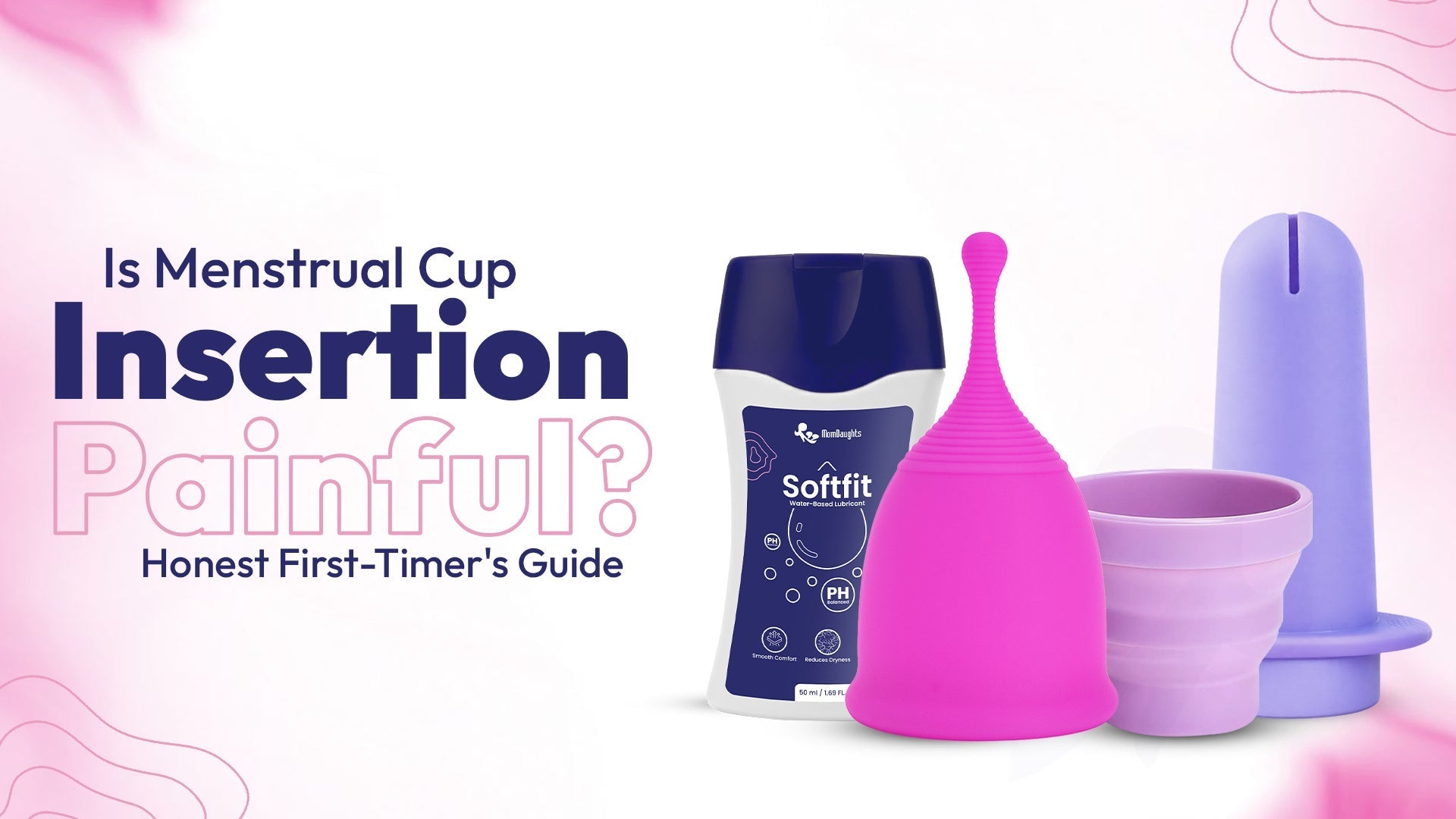
Applying a small amount of water-based lubricant to the rim and outside of the folded cup resolves this completely. Only water-based, fragrance-free lubricant is appropriate. Oil-based products degrade silicone over time. The Softfit Lubricant included in the Comfort Kit is formulated specifically for use with menstrual cups and is the safest, most effective option for Pakistani users.
4. Wrong insertion angle
Many first-time users instinctively insert the cup pointing straight upward, as they imagine it should go in the same direction as a vertical cylinder. The vaginal canal actually runs at an angle toward the tailbone, not straight up. Inserting the cup at the wrong angle causes it to press against the front wall of the vaginal opening rather than gliding in along the natural axis of the canal.
The correct angle is horizontal or slightly downward, aimed toward your tailbone. When you find this angle, insertion resistance drops significantly.
5. Cup too firm for your anatomy
Some women have a higher sensitivity to internal pressure. A firmer cup exerts consistent outward force against the vaginal walls to maintain its shape and seal. For sensitive users, this pressure feels uncomfortable both during insertion and wear. If you consistently feel aware of the cup or experience mild cramping from a standard cup, switching to the Collapsible Cup with its ultra-soft silicone exerts significantly less outward pressure and is one of the most comfortable options for sensitive anatomy.
6. Wrong size
A cup too large for your anatomy is genuinely difficult to insert regardless of technique. If you have not confirmed your cervix height, the know your size guide on the MomDaughts website walks through a simple self-measurement. For women with a low cervix or first-time users who have never used internal period products, the Short Tail Cup in XS size is specifically designed for smaller anatomy and is the easiest starting point.
7. Using an applicator for the first time
For women who are completely new to internal products and find finger-guided insertion too daunting, the Comfort Kit includes Pakistan's only locally available cup applicator. The applicator holds the folded cup and guides it to the correct depth, significantly reducing the amount of direct finger contact required and making the first few insertions substantially easier.
Step-by-Step Technique for Comfortable Insertion
Step 1: Wash hands thoroughly.
Step 2: Choose the punchdown fold. Push one side of the cup's rim down into the inside of the cup until it touches the opposite inner wall. Hold firmly at the base of the fold. This creates a narrow pointed tip at the top.
Step 3: Apply a small amount of Softfit Lubricant to the rim and outer surface of the folded cup if needed.
Step 4: Find a comfortable, relaxed position. Sitting on the toilet with knees spread wide, standing with one foot raised on the toilet seat, or squatting all work well. Take two or three slow deep breaths before starting.
Step 5: Insert the cup horizontally, angled toward the tailbone. Keep the fold closed and maintain your grip on the base of the cup until the entire cup is inside the vaginal canal.
Step 6: Once fully inside, release the fold. You may hear a soft pop or feel a gentle expansion as the cup opens. Run one finger around the outside of the cup base in a complete circle to confirm it has opened into a full round shape.
Step 7: Gently rotate the cup base to confirm the seal. The stem should be fully inside the vaginal canal. If the stem protrudes and causes irritation, the cup may need to go slightly deeper or the stem may need to be trimmed at a later stage.
What Normal Learning Looks Like
The first insertion attempt will take the longest. Most women take 5 to 15 minutes their first time, getting the angle, fold, and relaxation all working together. The second attempt takes less time. By the third or fourth cycle, most women insert their cup in under 30 seconds without any conscious effort.
This learning curve is not a sign that cups are not right for you. It is the same learning curve that exists with any new physical skill.
When Insertion Difficulty Is a Medical Issue
If insertion causes significant pain consistently after multiple cycles of trying different techniques, folds, and sizes, it is worth discussing with a gynaecologist. Conditions like vaginismus (involuntary pelvic floor muscle tightening), vulvodynia, endometriosis, or certain anatomical variations can make cup use genuinely more challenging and are worth addressing with a healthcare professional who can guide you through the appropriate approach.
At MomDaughts, we believe the learning curve is real but short, and getting through it is worth it. Confidence in every cycle.