We have seen women use their HIFU device on the forehead and cheeks, not knowing that the jawline and neck are actually the areas where HIFU produces its most visible and most clinically consistent results. This article gives you the area-specific technique for the five facial zones that benefit most from HIFU, with the correct stroke direction and intensity approach for each.
Why Jawline and Neck Respond Best to HIFU
HIFU works by delivering focused ultrasound energy to the SMAS layer at 4.5mm depth and the deep dermis at 3mm depth, triggering collagen contraction and new collagen synthesis. The areas where this mechanism produces the most visible results are those where gravity-driven skin laxity is most evident: the jawline, jowls, lower cheeks, and neck.
The 2025 PubMed systematic review of 45 HIFU clinical trials specifically identified the lower face, neck, and periorbital regions as showing the greatest improvements in skin laxity from HIFU, with overall improvements ranging from 18 to 30%. These are the areas where SMAS laxity directly drives visible sagging, and where SMAS-level energy delivery (at 4.5mm) produces the most structurally meaningful response.
For Pakistani women who notice the jawline softening and the under-chin area gaining fullness in their 30s and 40s, HIFU targeting these zones specifically addresses the structural cause of those changes.
Preparing for an Area-Specific HIFU Session
Step 1: Cleanse the face thoroughly. Remove all makeup and skincare products.
Step 2: Apply HIFU Conductive Gel generously to the treatment area. The gel layer should be visibly coating the skin, approximately 2 to 3mm thick. The device must always be moving on a gel-covered surface.
Step 3: Select intensity. Start at a lower setting for the first session in each area. Increase gradually over subsequent sessions as your skin adjusts.
Step 4: Work one zone at a time. Complete one area fully before moving to the next. Add more gel to each zone as you begin it.
Zone-by-Zone Technique Guide
Zone 1: Jawline
The jawline is the primary HIFU target for most women over 35.
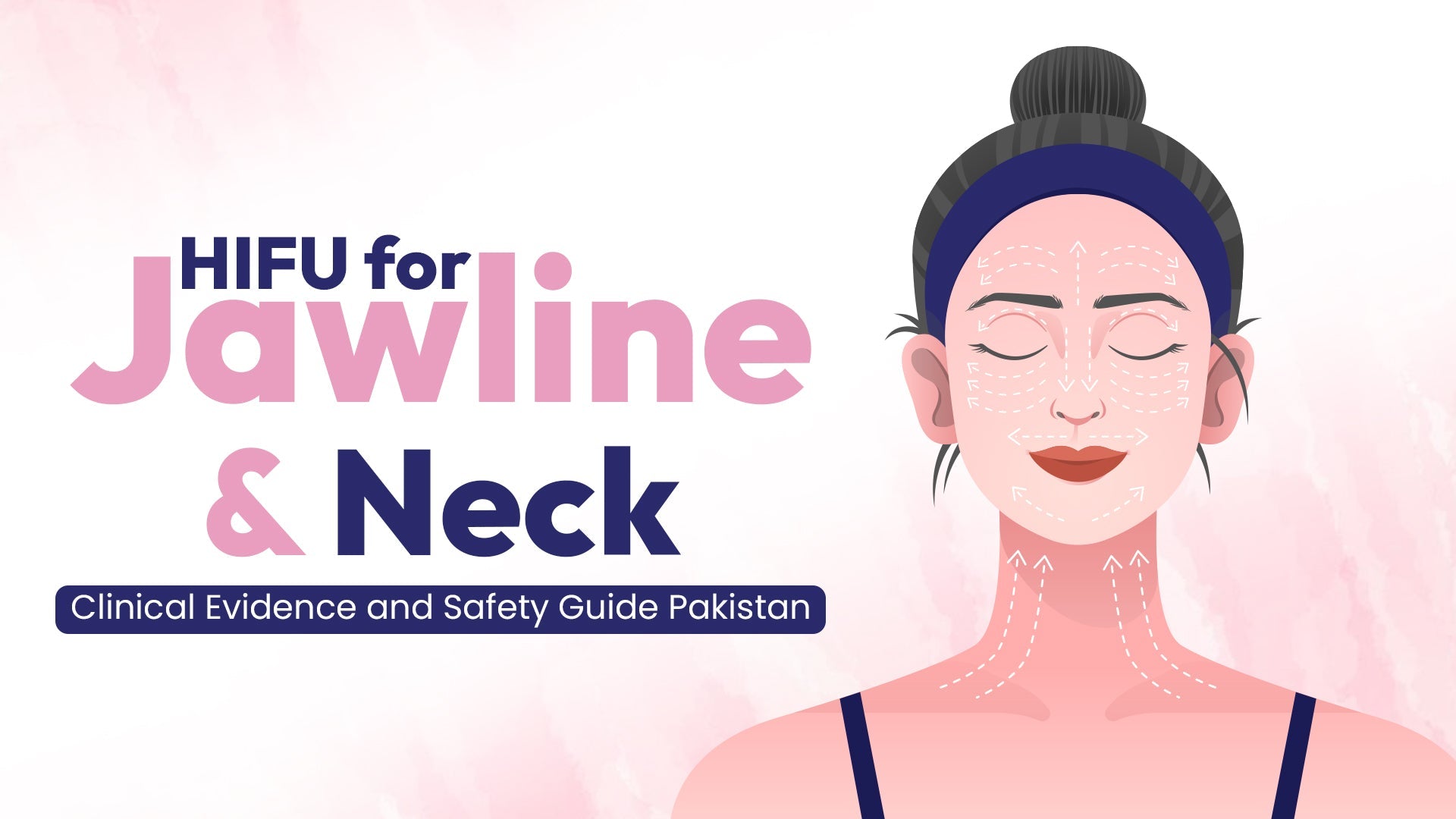
Starting point: The chin. Direction: From the chin, glide upward and outward toward the earlobe in a smooth, continuous motion. Each stroke should travel the full length of the jawline in one movement rather than short overlapping strokes. Overlap: After each stroke, reposition the device slightly upward or downward to create a slight overlap with the previous stroke. This ensures complete coverage along the jawline. Speed: Slow, consistent speed. Approximately 2 to 3 seconds per centimetre. Too fast and the energy does not penetrate fully. Too slow and you risk concentrating energy in one area. Strokes per side: 6 to 10 overlapping strokes per side (left jaw, right jaw) covering the full length from chin to earlobe.
Zone 2: Jowl Area (Lower Cheek)
The jowl area is where the lower cheek meets the jawline and is a primary area of visible softening in women over 35.
Direction: From the corner of the mouth, glide upward and outward toward the cheekbone. Overlap pattern: Work in upward-outward strokes, slightly overlapping each previous stroke, covering the lower cheek from the nasolabial fold line outward to the jaw edge. Goal: Lifting strokes in an upward-outward direction follow the natural vector of the SMAS, encouraging the energy to work in the direction that tightens rather than pulling downward.
Zone 3: Under-Chin and Upper Neck
The under-chin area, where fullness or looseness often develops first, is one of the most responsive HIFU zones.
Direction: From the central under-chin point, glide outward toward the left and right sides of the neck. Then from the chin downward toward the collarbone. Coverage: Treat the entire under-chin area and continue down the anterior neck to approximately mid-neck level. Avoid: Do not treat directly over the thyroid area (lower front neck, approximately where a necklace would rest). Treat the sides of the neck and the upper neck while avoiding the thyroid zone.
Zone 4: Neck (Lateral)
The sides of the neck are visible in full-face photographs and contribute significantly to an overall lifted appearance.
Direction: From the earlobe downward toward the collarbone on each side. Then upward strokes from the collarbone toward the chin. Overlap: Overlapping downward and upward strokes ensure full coverage of the lateral neck surface.
Zone 5: Periorbital Area (Under-Eye and Outer Eye)
This zone requires significantly lighter touch and lower intensity than the jawline and neck.
Direction: From the inner corner of the eye outward toward the temple, following the orbital bone margin. Do not treat directly over the eye socket. Intensity: Use the lowest setting for this zone regardless of what setting you have reached on the jawline. The skin around the eye is thinner and more sensitive. Do not treat: The upper eyelid or directly over the eye.
Complete Session Sequence
For a full lower-face and neck lifting session, treat the zones in this order:
-
Jawline (both sides)
-
Jowl area (both sides)
-
Under-chin
-
Lateral neck (both sides)
-
Periorbital (both sides, lower intensity)
Total session time at this sequence with appropriate gel application: 20 to 30 minutes.
Pairing HIFU With Topical Skincare
Immediately after each HIFU session, the skin is slightly more receptive to topical ingredients. Apply Hyaluronic Acid serum immediately after the session for enhanced hydration. For the evening session routine, apply Retinol serum after the HA to add surface cell turnover and collagen support from the topical layer while HIFU addresses the deeper structural collagen.
Session Frequency for Jawline and Neck
Initial course: once every 7 to 10 days for 4 to 6 sessions. Results develop progressively over 8 to 12 weeks as collagen forms. Maintenance: once monthly after the initial course. Many women find that jawline and neck results are among the most sustained of any HIFU treatment area, with visible improvement maintained for 6 to 12 months between maintenance courses.
Frequently Asked Questions
Why does the jawline respond so well to HIFU?
HIFU energy at 4.5mm depth reaches the SMAS layer, which provides the fibromuscular support for the lower face. When SMAS collagen contracts and new collagen is synthesised here, the lifting effect is structurally meaningful. The jawline is directly supported by the SMAS, which is why this area shows the most consistent and satisfying HIFU results.
How many HIFU sessions does it take to see jawline tightening?
Initial tightening from collagen contraction can be noticed after the first session. The more significant cumulative improvement from new collagen synthesis develops over 8 to 12 weeks. Most women notice a clearly visible difference in jawline definition by the third to fourth session.
Can HIFU reduce under-chin fullness?
HIFU primarily tightens and lifts skin laxity rather than reducing fat volume. For mild to moderate under-chin laxity, HIFU produces visible tightening. For significant fat volume in the under-chin area, HIFU alone may not produce the same degree of change. Both goals can be pursued together, with HIFU addressing laxity and other interventions addressing volume if needed.
At MomDaughts, we believe precision technique produces better results than general use. Confidence in every step.