We have seen women choose not to start IPL specifically because they are afraid of burns or pain. This fear is not irrational. Early home IPL devices and clinical IPL treatments done without adequate skin preparation did produce discomfort and occasionally surface reactions. Ice-cool technology in IPL devices exists specifically to address this problem. This article explains how the technology works at the physics level, why it makes a measurable difference in practice, and when it matters most for Pakistani users.
How IPL Creates Heat at the Skin Surface
To understand why cooling helps, you need to understand where IPL heat comes from. IPL sends a broad spectrum light pulse into the skin. The melanin in the hair follicle absorbs this light and converts it to heat. This heat at the follicle level is what damages the dermal papilla and disrupts future hair growth.
The problem is that light does not instantly disappear as soon as it reaches the follicle. Some energy is scattered and absorbed by the skin surface and the superficial dermis during the light's path to the follicle. This surface energy absorption produces the thermal sensation felt during IPL treatment: the warm snap that users describe.
For most body areas where skin is moderately thick and nerve endings are less concentrated, this surface thermal sensation is mild. For areas with thinner skin and higher nerve density, including the upper lip, underarms, and bikini line, the surface thermal sensation is more noticeable. These are also the areas where Pakistani women most commonly seek hair removal.
Without cooling, users treating these sensitive areas face a choice between lower intensity (which reduces effectiveness) and higher intensity (which increases discomfort). This trade-off is what makes many women either under-treat these areas or avoid IPL on them entirely.
How Ice-Cool Technology Solves This
Ice-cool technology, also called contact cooling or cryogen cooling depending on the device and manufacturer, involves a mechanism that reduces the temperature of the skin surface at the contact point before the light pulse fires.
When the skin surface is pre-cooled before the flash, the thermal baseline is lower. The same flash energy that would produce a sharp sensation on uncooled skin produces a significantly reduced sensation on pre-cooled skin, because the temperature peak experienced by the surface nerve endings is lower even when the energy delivered to the deeper follicle is identical.
This is the key point: cooling reduces the surface thermal sensation without reducing the energy reaching the follicle. The follicle still receives the heat required for effective treatment because light penetrates through the cooled surface into the deeper dermis. The cooling effect does not travel deep enough to protect the follicle. It only reduces the surface sensation.
Research on IPL device application confirmed in MDPI's 2025 review of aesthetic device safety notes that insufficient contact between the device head and the skin is a primary cause of improper treatment outcomes. Cooling technology maintains consistent, firm skin contact during treatment, which directly improves both safety and effectiveness.
What the MomDaughts Cooling V3 Offers
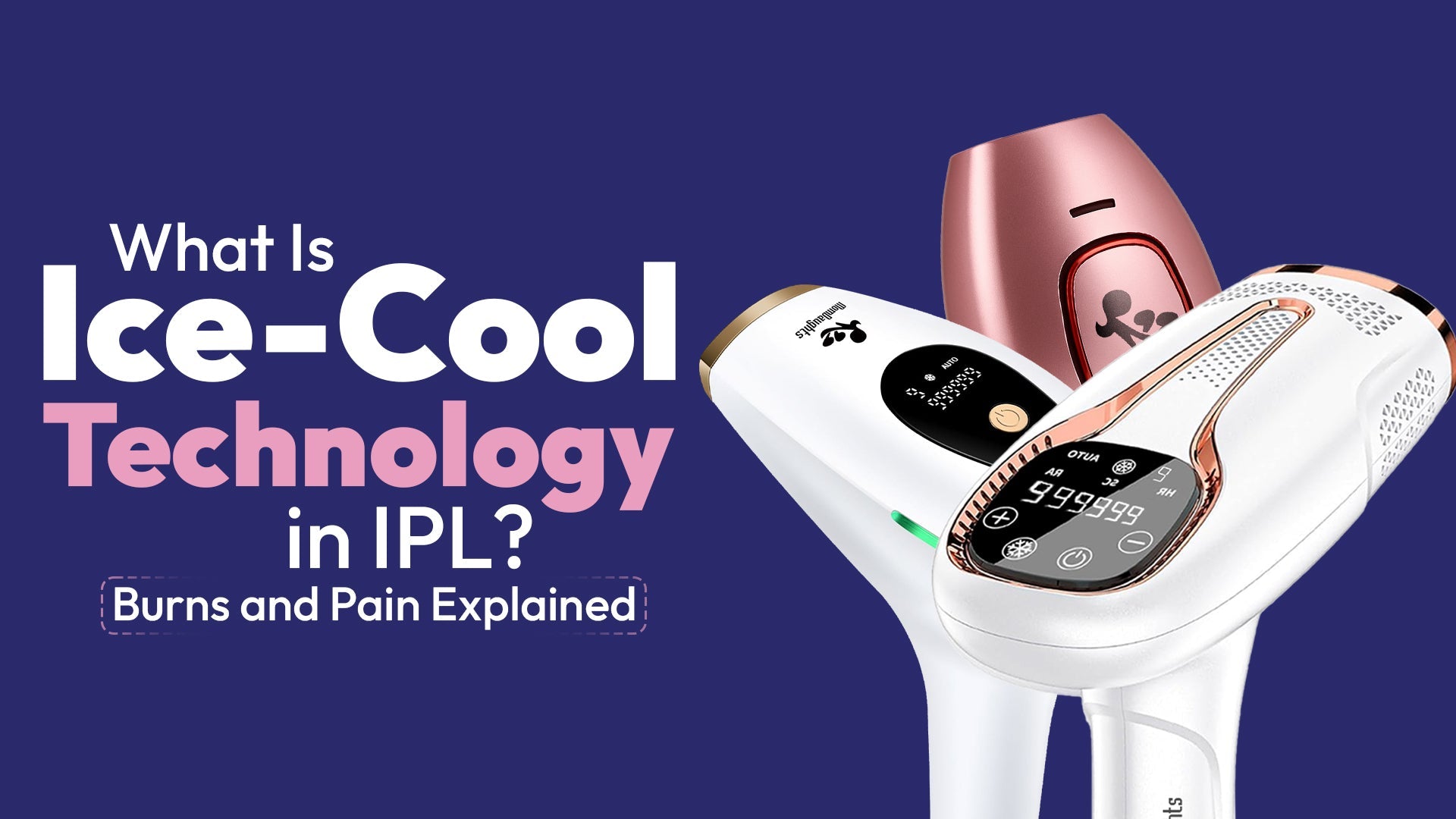
The MomDaughts Initia Cooling V3 IPL is the only device in the MomDaughts IPL range that incorporates ice-cool technology. It represents a specific upgrade for users whose primary concern is comfort during treatment, particularly in sensitive areas.
Key specifications beyond the cooling technology:
-
9 adjustable intensity levels, the widest control range in the MomDaughts range
-
Smart skin sensor that reads skin tone and recommends appropriate settings automatically
-
3-in-1 functions: hair removal, skin rejuvenation, and acne care modes
-
Up to 999,999 flashes providing years of full-body sessions
-
12-month warranty
-
Auto and manual flash modes for large areas and sensitive zones respectively
The 9 intensity levels are also significant. The Classic V2 and Portable Mini V1 offer 5 intensity levels. With cooling allowing higher intensities on sensitive areas without proportional discomfort increase, the 9 levels give Cooling V3 users significantly finer control over their treatment intensity and therefore their results on those areas.
Areas Where Cooling Makes the Biggest Difference
Upper lip. The skin here is the thinnest on the face. The hair is typically dark and coarse, absorbing more light energy. This combination produces the most intense IPL sensation of any common treatment area without cooling. Cooling V3 users consistently describe the upper lip as manageable with cooling, after previously finding it too uncomfortable on non-cooled devices.
Underarms. Thin skin, closely packed hair follicles, and sweat gland activity in the skin make underarms one of the more sensitive areas. In the early sessions of an IPL course when hair is at its coarsest, cooling makes a noticeable difference here.
Bikini line. The combination of thin skin, high nerve density, and coarse hair makes this the area most commonly cited by Pakistani women as too uncomfortable to treat without cooling. The Cooling V3 with its ice-cool contact head makes this area significantly more approachable.
Any area for women with naturally sensitive skin. Women who react to heat more than average, who have experienced redness or irritation from IPL before, or who describe their skin as heat-sensitive generally benefit from cooling technology across all treatment areas.
When the V2 or V1 Is Sufficient
For women primarily treating large, lower-sensitivity areas like legs, arms, and back, the cooling technology provides comfort improvement but is not essential. The Classic V2 with its smart skin sensor and the ortable Mini V1 with its compact design are both effective for these areas.
Browse all three options in the full IPL collection to match your treatment priorities to the right device.
Safety Practices That Apply Regardless of Cooling
Ice-cool technology improves comfort but does not replace fundamental IPL safety practices. These apply to every device.
Shave 24 hours before each session, never wax or thread. Do a patch test on a small area 24 hours before your first full session. Start on the lowest intensity setting in any new area. Never treat over tattoos, dark moles, active skin conditions, or recently tanned skin. Do not treat the same spot twice in a single session. Use manual mode for all facial and sensitive areas.
At MomDaughts, we believe comfort and effectiveness should not be a compromise. Confidence in every step.