If you loved your menstrual cup before pregnancy, it's natural to wonder when you can use it again after having your baby. But here's the most important thing to know before we go any further: the bleeding you experience right after birth is not a period, and it's not something a menstrual cup is meant for.
That bleeding is called lochia, and your body needs time and, ideally, a green light from your healthcare provider before any internal product, including a menstrual cup, is appropriate again. This guide walks you through what's actually happening in your body after birth, why patience matters, and how to think about returning to your cup once you've healed.
This article is for general education and isn't a substitute for medical advice. Always check with your doctor, midwife, or gynecologist about what's right for your recovery.
First, Understand Postpartum Bleeding
What Is Lochia?
Lochia is the vaginal discharge your body produces after childbirth as your uterus heals and clears itself of the tissue, blood, and mucus left over from pregnancy (Cleveland Clinic). Think of it as part of your body's natural repair process, not a period.
Lochia typically moves through three stages (Baylor Scott & White Health):
- Lochia rubra (roughly the first few days): Bright red blood with small clots, similar to a heavy period.
- Lochia serosa (roughly the next one to two weeks): The bleeding lightens, changing from dark red to pink or brown, with more fluid and less blood.
- Lochia alba (the final stage): A light yellow or white discharge made up mostly of white blood cells and mucus.
Altogether, most women experience postpartum bleeding for about four to six weeks, though it can last up to eight weeks depending on delivery method and individual healing. It's also common for bleeding to ease off and then briefly pick up again, especially with increased activity or breastfeeding, since nursing triggers a hormone response that causes uterine contractions.
And a C-section doesn't spare you from this process the uterus still needs to heal internally regardless of how your baby was delivered, so lochia occurs after a C-section too, though it may sometimes be lighter than after a vaginal birth.
How Is Lochia Different From a Period?
A period is the shedding of your uterine lining as part of your regular menstrual cycle, once your hormones and cycle have re-established themselves. Lochia is a healing process your body is closing off the wound left where the placenta was attached and clearing residual pregnancy tissue. It's heavier at first, changes color and consistency over time, and eventually tapers off before your first true period arrives, sometimes weeks or months later.
Because lochia comes from an internal healing wound, it needs to be treated differently from a regular period which is exactly why the products you use during this time matter.
Can You Use a Menstrual Cup After Giving Birth?
In short: not right away. During the early postpartum weeks, your vagina, cervix, and uterus are actively healing, and inserting anything internally including a menstrual cup can interfere with that process and raise your risk of infection.
The pregnancy support charity Tommy's advises that you shouldn't use a tampon or menstrual cup until after your six-week postnatal check, because there is still a wound where the placenta was attached to the uterine wall, and using internal products before that wound has healed can increase your risk of infection (Tommy's).
This isn't about being overly cautious it's about giving healing tissue the time it genuinely needs. During early recovery, pads or postpartum-specific products that sit externally are the safer choice, whether you had a vaginal birth or a C-section.
When Can You Start Using a Menstrual Cup Again?
There's no single universal date that applies to everyone, and any source that promises one is oversimplifying. What most healthcare guidance agrees on is this:
- Internal products are generally not recommended until at least the six-week mark, and specifically not until you've had your postnatal checkup and your provider has confirmed you're healed.
- Healing timelines are individual. Some women may need longer, depending on their delivery, any tearing or stitches, and how their body recovers.
- Your period returning is a separate milestone from being medically cleared for internal products you may get clearance before your period comes back, and that's fine, but the clearance is the deciding factor, not the calendar.
The safest approach is simple: ask your healthcare provider at your postpartum check whether you're ready for internal products, rather than assuming a fixed number of weeks applies to you.
Does Vaginal Birth Change Menstrual Cup Use?
A vaginal birth involves significant stretching and sometimes tearing of the vaginal tissue and pelvic floor. Depending on your delivery, you may have:
- Vaginal tears that are healing
- Stitches from an episiotomy or tear repair
- General soreness, swelling, or tenderness
- Temporary changes in pelvic floor strength or sensation
None of this means something is "wrong" with your body it's a normal part of recovery. But it does mean insertion may feel different than it used to, and it's another reason to wait for your provider's go-ahead. Once you're cleared, some women find their comfort with a cup is exactly the same as before; others need a little time to reacquaint themselves with insertion and removal. Both are normal, and neither is something to worry about.
What About a C-Section?
It's a common myth that a C-section means you skip postpartum bleeding or vaginal healing altogether you don't. Your uterus still needs to heal internally regardless of how your baby was delivered, and lochia still occurs. On top of that, you're also recovering from abdominal surgery, which brings its own healing timeline and its own reasons to avoid unnecessary strain.
So even after a C-section, the same principle applies: internal products should wait until your provider confirms you've healed, not just until the incision looks fine on the outside.
What About Breastfeeding?
Breastfeeding can affect when your period returns, which in turn affects when you might start thinking about cup use for period care again. Breastfeeding raises levels of the hormone prolactin, which suppresses ovulation this is part of why many breastfeeding mothers experience a delayed return of their periods, a phenomenon sometimes called lactational amenorrhea.
That said, it's important not to rely on this as birth control. A Cochrane review on this method notes that breastfeeding without supplementary feeds delays the return of fertility and periods as a natural, physiological effect, but this protection depends on specific conditions being met and isn't guaranteed for every mother (Cochrane). In practice, ovulation can return before your first postpartum period does, so if you want to avoid pregnancy, it's worth discussing contraception options with your provider rather than assuming breastfeeding alone will prevent it.
In practical terms: some breastfeeding mothers don't see their period return for several months, while others resume cycles much sooner. There's no way to predict it exactly, and it doesn't affect the timeline for when internal products are safe after birth that's governed by healing, not by breastfeeding.
Your First Period After Childbirth
Once your cycle does return, don't be surprised if it feels different from what you remember. Common changes include:
- Flow: It may be heavier or lighter than your pre-pregnancy periods, at least for the first cycle or two.
- Duration: Your period might run longer or shorter than usual.
- Cramps: Some women notice stronger cramping initially; others notice less.
- Regularity: Your cycle may take a few months to settle into a predictable rhythm, especially if you're breastfeeding.
This variability is normal as your hormones recalibrate. If anything feels alarming rather than simply "different" for example, soaking through pads rapidly or passing large clots that's a reason to contact your provider rather than wait it out.
How to Safely Return to Using a Menstrual Cup
Once you've been medically cleared and your period has returned, here's how to ease back into cup use comfortably:
- Get the go-ahead first. Don't guess confirm with your healthcare provider that you're fully healed and cleared for internal products.
- Start gently. Insertion may feel different than before pregnancy, especially after a vaginal delivery. Take your time, use a comfortable position, and don't rush.
- Listen to your body. Mild unfamiliarity is normal; pain is not. If insertion or wear is uncomfortable, stop and try again another day, or check in with your provider.
- Reassess comfort, not just size. Childbirth can change vaginal tone and pelvic floor sensation temporarily, which may affect how a cup feels this doesn't necessarily mean you need a different size, just a bit of an adjustment period.
- Prioritize hygiene. Wash your hands before insertion and removal, and sterilize your cup according to the manufacturer's instructions before your first postpartum use.
Signs You Should Stop Using the Cup and Contact Your Doctor
Stop use and reach out to your healthcare provider promptly if you notice:
- Pain, sharp discomfort, or difficulty with insertion or removal that doesn't ease up
- Unusually heavy bleeding, or bleeding that suddenly becomes much heavier
- Soaking through more than one pad an hour, or passing unusually large clots (March of Dimes)
- A fever of 100.4°F (38°C) or higher
- Foul-smelling vaginal discharge
- Severe belly pain that doesn't go away
- Dizziness or fainting
These are among the CDC's recognized urgent maternal warning signs, and can indicate infection, delayed healing, or other complications that need prompt medical attention (CDC Hear Her Campaign) please don't wait them out.
Why Consider a Menstrual Cup Once You're Ready?
Once your body has healed and your provider has confirmed you're ready, a menstrual cup can be a practical, sustainable option for managing your periods going forward. Many women appreciate that a well-fitted cup:
- Reduces single-use waste compared to disposable pads or tampons
- Can be worn for extended periods compared to some disposable products, cutting down on how often you need to think about it
- Is reusable over time with proper care, which can be more cost-effective long term
That said, a cup isn't the right fit for every body or every stage of recovery, and that's okay pads, period underwear, and cups can all be valid choices depending on what feels right for you.
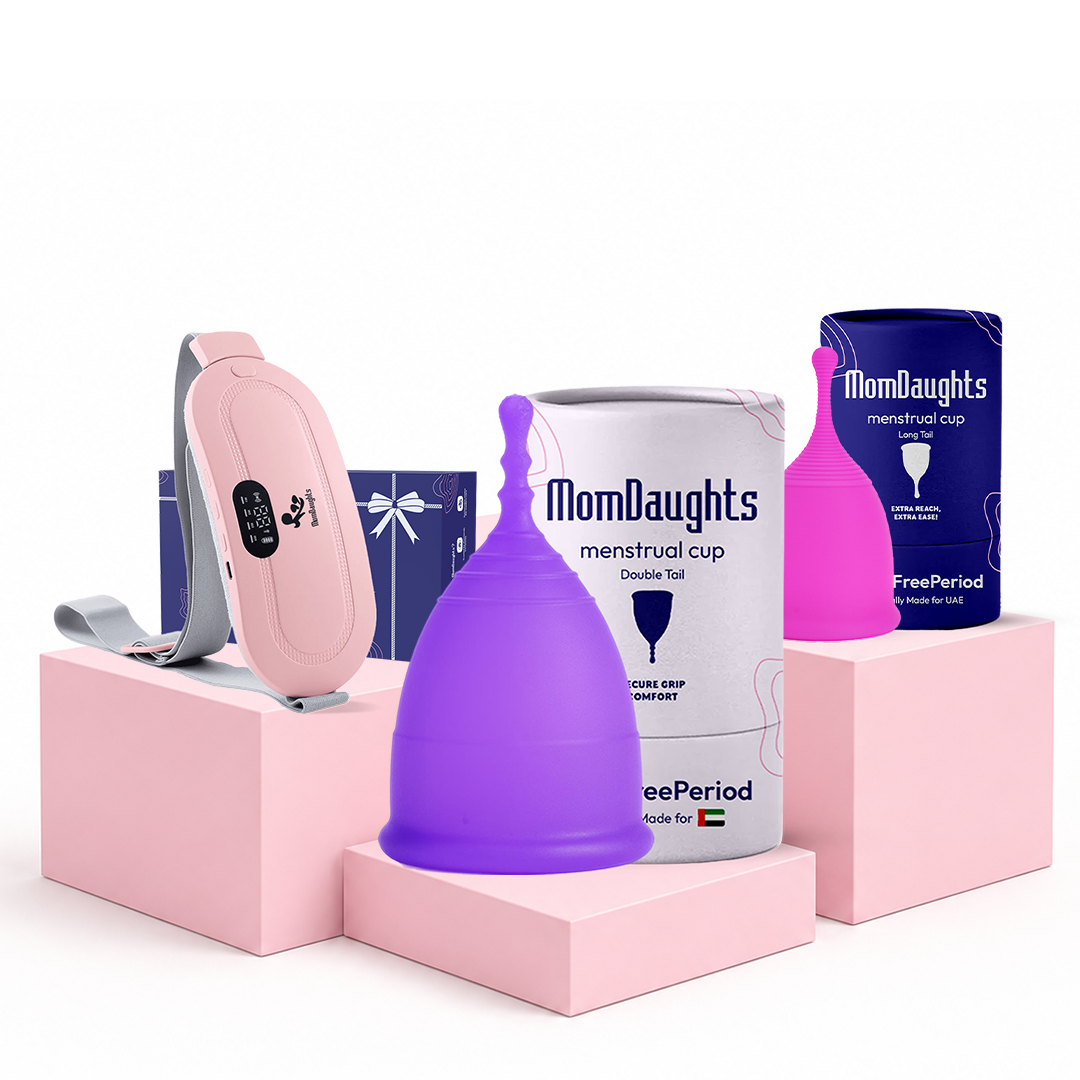
MomDaughts Menstrual Cups
Once you've been cleared by your healthcare provider, your postpartum bleeding has resolved, and your period has returned, a reusable menstrual cup is one option worth considering as part of your period-care routine.
MomDaughts menstrual cups are made from medical-grade silicone and designed to be reused cycle after cycle with proper care, offering an alternative to disposable pads and tampons. Depending on the specific MomDaughts cup you choose, different size options are available so you can pick what suits your body and flow comfort and fit matter more than assuming you automatically need a particular size after childbirth. When used and worn according to the product instructions, a cup can offer extended wear between changes, and with simple cleaning between cycles, it's designed to be part of a low-waste, budget-conscious period routine.
Ready to explore reusable period care? Discover MomDaughts menstrual cups and find an option that fits your routine.
This article is for general educational purposes and does not replace personalized medical advice. Always consult your doctor, midwife, or gynecologist about your individual postpartum recovery and when internal menstrual products are appropriate for you.
Sources referenced: Cleveland Clinic, Baylor Scott & White Health, Tommy's (UK pregnancy charity), Cochrane Library, CDC Hear Her Campaign, March of Dimes.