Navigating the world of period care can often feel like an overwhelming journey, particularly when making the switch to period cups. They're eco-friendly, cost-effective, and can be a true lifesaver. However, like any period care solution, they come with their own set of challenges. In this post, we'll walk through some common problems users face with period cups and offer practical solutions to enhance your menstrual experience.
Problem 1: Insertion Challenges
For many, inserting a period cup can be tricky at first. It's all about finding the right technique and being patient with yourself during the learning phase.
Solution:
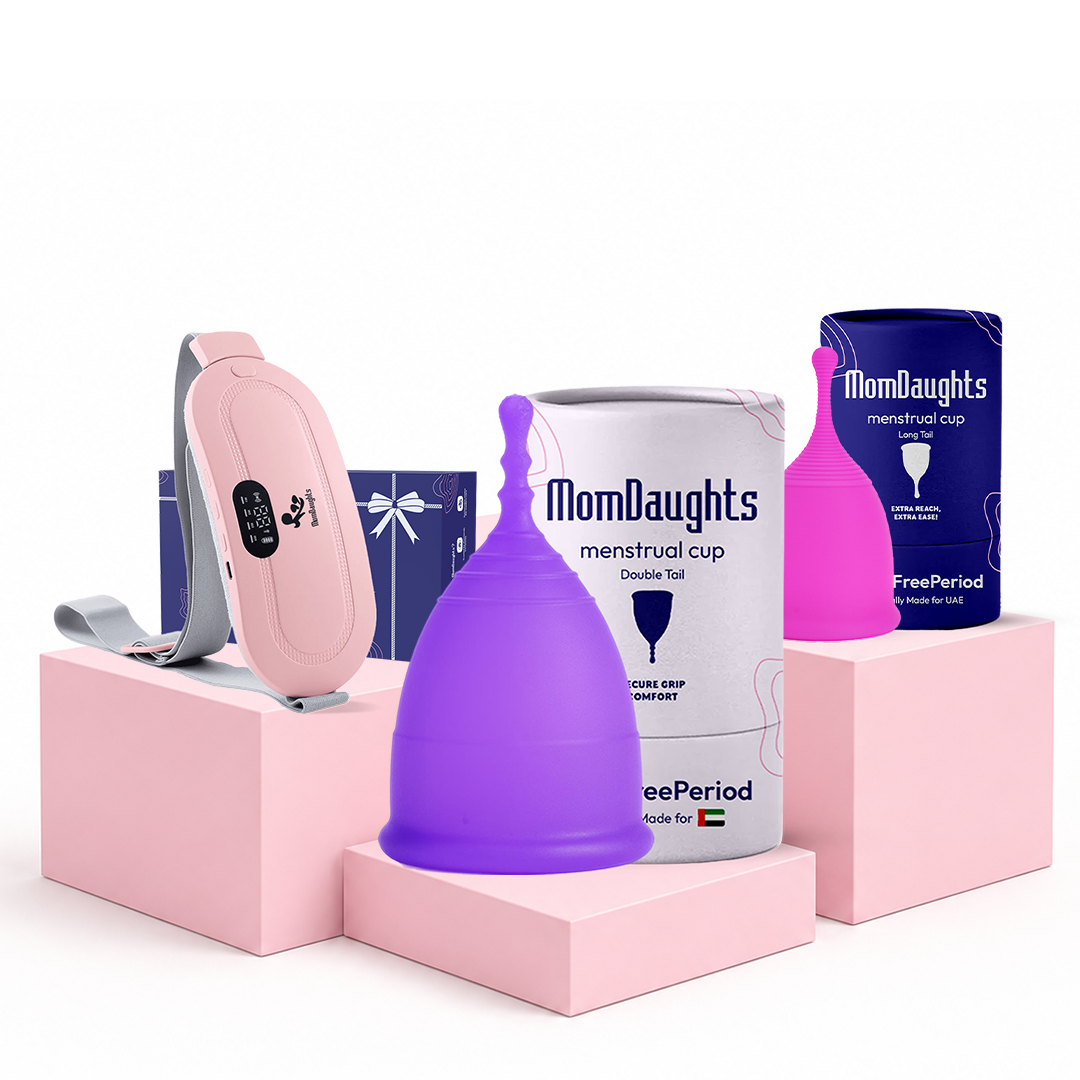
Explore different folding techniques and find which one works best for you. Sometimes, a more flexible cup might simplify the process. Try our MomDaughts' Collapsible Menstrual Cup With Cute Storage Case, which provides flexibility for easier insertion.
Problem 2: Leakage Issues
Learning to prevent leaks with a period cup can feel daunting, but it's largely about ensuring proper placement and getting accustomed to your body's flow.
Solution:
Ensure the cup is fully opened after insertion by running a clean finger around its base. A longer tail might help you position the cup correctly. Consider the MomDaughts' Long Tailed Menstrual Cup, designed for comfort and reassurance against leaks.
Problem 3: Difficulties with Cleaning and Maintenance
Sanitizing your period cup is crucial for hygiene but can be a hassle without the right tools.
Solution:
Use a sterilizer that's made for menstrual cups. Our MomDaughts' Foldable Sterilizer Cup makes the cleaning process simple and efficient, providing peace of mind so you can focus on feeling your best.
Problem 4: Menstrual Cramps
While not directly related to cup use, menstrual cramps can still dampen your experience during those days.
Solution:
Consider complementary period care solutions like a heating pad. Our Menstrual Period Heating Pad for Cramps Massage offers soothing relief to get through those tough moments.
For a comprehensive range of period care products, check out The Menstrual Collection. This collection ensures a holistic approach to menstrual health, integrating convenience with comfort.
Remember, every person’s journey to mastering period cups is unique, and it’s perfectly okay to experience bumps along the way. With the right tools and support, your period care routine can become smoother and more comfortable over time. For more information and resources, visit MomDaughts. Embrace your journey to better period care!