We have seen hundreds of first-time cup users give up after one or two attempts because insertion felt uncomfortable or impossible. In most cases, the problem was not the cup and it was not their anatomy. It was dryness. The vaginal opening is not always naturally lubricated enough for a folded silicone cup to glide in smoothly, especially on lighter flow days, during early cycles, or when nervousness causes the pelvic muscles to tighten. A water-based lubricant designed for menstrual cups removes this barrier entirely.
Why Cup Insertion Feels Uncomfortable for Many Women
A menstrual cup needs to be folded before insertion, which reduces its diameter significantly, but it still requires the leading edge to pass through the vaginal opening smoothly. Several factors can make this difficult.
Insufficient natural lubrication. The vagina produces more fluid when aroused or during heavier flow days. On lighter days, in the early phase of a period, or at the start of a cycle when flow has not yet begun fully, natural lubrication may not be sufficient for comfortable cup insertion.
Tension in the pelvic floor muscles. For new cup users, anticipating discomfort causes involuntary tightening of pelvic floor muscles. This tension directly narrows the vaginal opening and makes insertion harder. The harder insertion becomes, the more tense the muscles become, creating a cycle that makes the experience unnecessarily difficult.
First-time use. First-time cup users have typically never inserted anything of this diameter before. The learning curve is real and normal. Most women who persist beyond the first two or three cycles report that insertion becomes easy and quick. The challenge is getting through those first cycles without giving up.
Dry silicone against dry tissue. Medical-grade silicone has very low friction in most conditions, but against completely dry vaginal tissue it can catch and drag rather than glide. A small amount of lubricant on the rim or the outside of the folded cup eliminates this.
What Menstrual Cup Lubricant Is
A menstrual cup lubricant is a water-based lubricant formulated specifically for use with internal period products. It is designed to be safe for vaginal tissue, pH-neutral or close to the vaginal pH range, free from oils (which degrade silicone), and free from fragrances and irritating chemicals.
The key requirement is water-based formulation. Oil-based products, including coconut oil which is frequently suggested online, can degrade medical-grade silicone over time, shortening the lifespan of the cup. Scented or flavoured lubricants carry fragrance chemicals that disrupt vaginal pH. General purpose lubricants may contain glycerin, which at high concentrations can encourage yeast growth in the vaginal environment. A purpose-built menstrual cup lubricant avoids all of these issues.
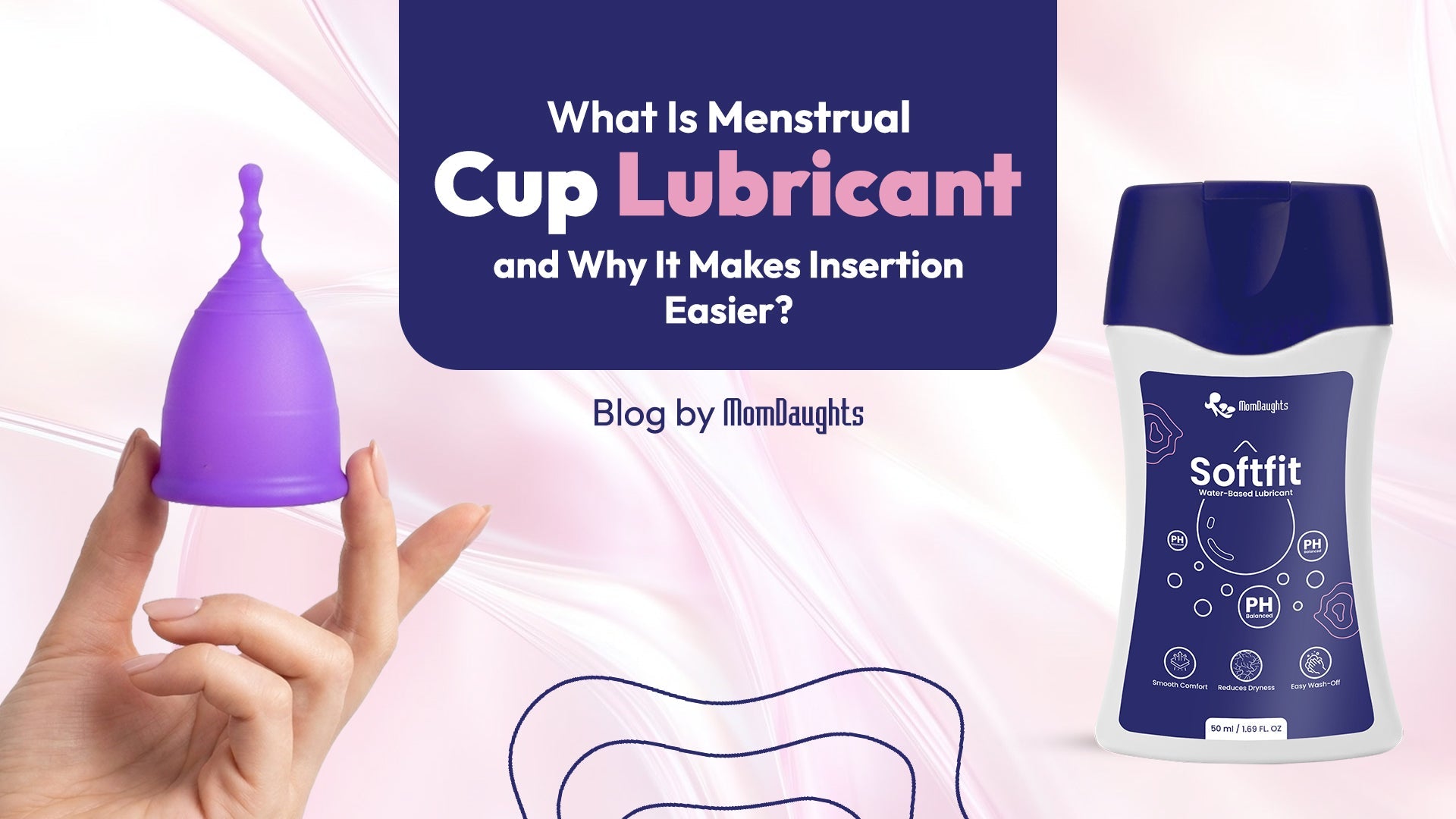
About the MomDaughts Softfit Lubricant
The MomDaughts Softfit Lubricant for Menstrual Cup is the only menstrual cup lubricant specifically formulated and available in Pakistan for this purpose. It is a 50ml water-based formula, designed exclusively for use with menstrual cups and discs, ensuring safe, comfortable insertion without compromising the silicone material or vaginal environment.
It is recommended by MomDaughts as part of the standard cup onboarding process, particularly for first-time users, users on lighter flow days, and anyone who has found cup insertion difficult or uncomfortable.
How to Use Lubricant With a Menstrual Cup
The process is simple and requires only a small amount of product.
Step 1: Fold the cup. Use your preferred folding method, the C-fold, punchdown fold, or 7-fold, to prepare the cup for insertion.
Step 2: Apply a small amount of lubricant. Apply a pea-sized amount of Softfit Lubricant to the rim and the outer surface of the folded cup. You do not need to coat the entire cup. The leading edge and the rim are the most important areas.
Step 3: Insert as normal. With the lubricant applied, the cup should glide in significantly more smoothly. If you feel resistance, pause, take a breath, and relax your pelvic floor muscles before continuing.
Step 4: Check the seal. Once inserted, rotate the cup gently to ensure it has opened fully and formed a seal. This step is the same as without lubricant.
A small amount of lubricant can also be applied externally to the vaginal opening, not just to the cup, to reduce friction further.
When Lubricant Helps Most
First two to three cycles of cup use. The learning curve is real. Using lubricant during the learning phase reduces discomfort, builds confidence, and allows you to focus on placement and seal rather than insertion difficulty.
Lighter flow days. The start and end of a period often have lighter flow, which means less natural lubrication. Lubricant compensates for this directly.
Mornings before flow has fully started. Many women insert a cup at the start of a cycle as a precaution. Without flow yet present, natural lubrication is low. Lubricant makes this practical and comfortable.
Teens and first-time internal product users. For younger users who have never used internal period products, lubricant dramatically reduces the initial learning barrier. The Comfort Kit includes both the Softfit Lubricant and a cup applicator together for first-timers specifically.
Users with vaginismus or pelvic floor tension. Women who experience involuntary tightening of the pelvic floor benefit significantly from lubricant because it reduces the friction that makes the tightening feel more significant. Always combine lubricant use with pelvic floor relaxation techniques for best results.
What Not to Use as a Substitute
Coconut oil or any oil-based product. Degrades silicone over time. Do not use with menstrual cups.
Regular body lotion or hand cream. Contains fragrances, preservatives, and often oils that are not safe for internal use.
Petroleum jelly (Vaseline). Oil-based, degrades silicone, and not safe for vaginal use.
Saliva. While sometimes suggested as a quick solution, saliva contains bacteria that introduce unnecessary microbial exposure to an already-cleaned cup just before insertion.
Unscented coconut oil. Still oil-based. Still degrades silicone.
The only appropriate substitute if Softfit Lubricant is not available is an unflavoured, glycerin-free, water-based lubricant with no fragrance. Purpose-built is always preferable.
Lubricant and Menstrual Cup Safety
Using a water-based lubricant does not affect the cup's ability to form a seal. The lubricant provides slip during insertion but does not prevent the cup from expanding and creating its normal suction-based seal once in position. Many women worry that lubricant will cause the cup to slide or leak once inserted. This does not happen because the seal is formed by the cup's rim against the vaginal walls, not by friction at the point of insertion.
Lubricant does not need to be rinsed off the cup before reinsertion during a cycle change. A small amount of residual water-based lubricant on a freshly rinsed cup is safe.
At MomDaughts, we believe the practical details matter as much as the product itself. Confidence in every cycle.