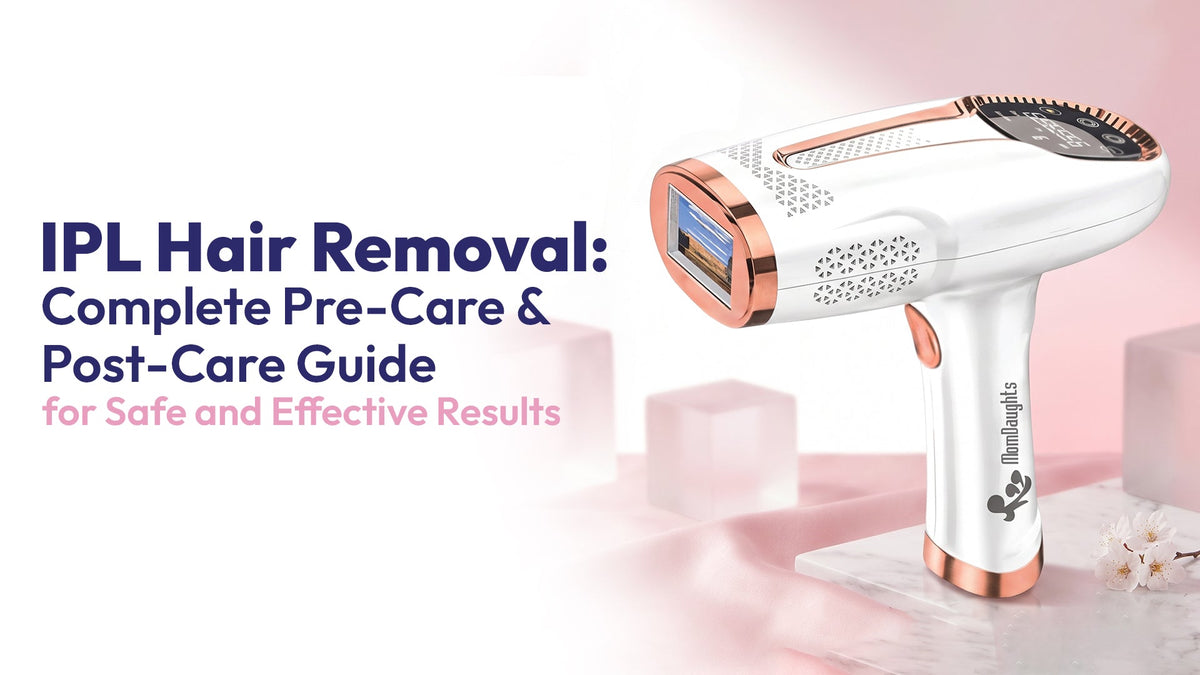
Starting IPL (Intense Pulsed Light) hair removal for the first time can feel a little overwhelming. Between figuring out how to prep your skin, wondering if it's okay to shower afterward, and trying to understand why your skin feels warm post-session — it's completely normal to have questions.
The good news? Getting IPL pre and post care right isn't complicated. It mostly comes down to a few simple habits: shaving instead of waxing, keeping your skin clean and sun-protected, and being gentle with your skin in the days after treatment.
This guide walks you through everything from the 48 hours before your session to the weeks between treatments so you can approach IPL with confidence instead of guesswork. Whether you're using a MomDaughts at-home IPL device or another brand, the fundamentals of good IPL pre care and IPL post care are largely the same, though your specific device's manual should always be your final word on settings and timing.
What Is IPL Hair Removal?
IPL uses broad-spectrum light that targets the pigment (melanin) in your hair. The light energy converts to heat at the hair follicle, which helps disable it and slow down future hair growth over repeated sessions. It's different from laser hair removal, which uses a single, focused wavelength of light IPL uses multiple wavelengths, which is part of why proper skin and hair prep matters so much for how well it works.
IPL is generally described as a hair reduction method rather than a guaranteed permanent removal method. Results vary from person to person based on hair color, skin tone, hormones, and consistency of use, so it's best to think of it as a long-term routine rather than a one-time fix.
Why Pre-Care and Post-Care Matter
IPL pre and post care isn't just a formality it directly affects both your comfort and your results.
- Before treatment: proper prep helps the light energy reach the hair follicle effectively and lowers your risk of skin irritation or an uneven reaction.
- After treatment: proper aftercare helps calm the skin, supports it while it recovers from the heat exposure, and helps protect the results you've just worked for.
Skipping these steps doesn't just risk a less effective session it can also mean more redness, sensitivity, or irritation than necessary. A little preparation goes a long way.
IPL Pre-Care: What to Do Before Your Session
A. Choose the Right Hair Removal Method: Shave, Don't Wax
This is one of the most important IPL pre care steps. Shaving is the recommended method before an IPL session. Here's why:
IPL targets the pigment inside the hair shaft, right down at the follicle beneath the skin's surface. Shaving removes the visible hair above the skin but leaves that pigmented root in place for the light to target.
Methods that remove hair from the root work against this, since there's no hair left for the light to target. Avoid these in the days leading up to a session:
- Waxing
- Epilating
- Tweezing
Most guidance suggests shaving the treatment area around 24 hours before your session close enough that hair is short, but with enough time for any minor skin irritation from shaving to settle. If you've recently waxed, epilated, or tweezed, many devices recommend waiting several weeks before starting IPL so hair follicles are back in a treatable stage. Check your specific device's manual for its recommended waiting period, since this can vary.
B. Prep Your Skin: Clean, Dry, and Product-Free
Before your session:
- Cleanse the treatment area to remove dirt, oil, and sweat.
- Remove makeup, deodorant, perfume, lotions, and oils from the area these can interfere with how the light is absorbed by the skin and, in some cases, increase the risk of a reaction.
- Make sure skin is completely dry. IPL devices are generally designed to be used on dry skin, and moisture can affect both comfort and performance.
C. Exfoliation: Timing Matters
Gentle exfoliation a day or two before your session can help remove dead skin cells and ingrown hairs, giving the light a clearer path to the follicle. However:
- Avoid exfoliating immediately before treatment, especially with harsh scrubs, as this can leave skin more sensitive right when it's about to be treated.
- Skip exfoliation altogether if your skin is already irritated, sunburned, or broken out in the treatment area.
D. Sun Exposure and Tanning
This is one of the most important safety-related steps in IPL pre care.
- Avoid sun exposure and tanning beds on the treatment area in the days to weeks before your session recommendations here vary by device and by how tanned or sun-exposed the skin currently is, so check your manual's specific window.
- Avoid self-tanning products, since they change the skin's pigment and can affect how the device reads your skin tone or reacts to the light.
- Tanned or sunburned skin has more melanin at the surface, which means the device may have a harder time distinguishing between skin and hair pigment this is generally why manufacturers advise treating only skin that hasn't been recently tanned or burned.
- Use sunscreen on exposed treatment areas in the days before your session as a general sun-safety habit, not just for IPL purposes.
If you're unsure whether your skin is tanned enough to be a concern, it's safer to wait or to do a patch test first (see below) than to guess.
E. Skincare Ingredients: Use Some Caution, Not Panic
You don't need to overhaul your entire skincare routine, but a few ingredient categories are worth being mindful of in the days before treatment, since they can make skin more sensitive to light-based treatments:
- Retinoids/retinol
- Exfoliating acids (like glycolic or salicylic acid)
- Other actives that cause peeling or increased sun sensitivity
Many clinical pre-care instructions suggest pausing these for several days before treatment. This doesn't mean every active ingredient is dangerous or must always be stopped it simply means skin that's already sensitized from actives may react more strongly to IPL. If you're using a prescription-strength active or aren't sure whether to pause a product, this is a good moment to check your device's guidance or ask a dermatologist.
F. Do a Patch Test
A patch test means treating a small area of skin at a low intensity setting and waiting to see how your skin responds (often 24–48 hours) before treating a larger area.
Patch testing is especially useful when:
- You're using IPL for the very first time
- You have sensitive skin
- You're treating a new area of the body
- Your device recommends it (many do, particularly for first-time users)
Always follow your specific device's instructions on patch testing, since recommended test sites and wait times can differ between manufacturers.
IPL Post-Care: What to Do After Your Session
Step 1: Let the Skin Cool Down
It's common for treated skin to feel warm immediately after a session — similar to mild sun warmth. If needed, you can cool the area with a clean, cool (not ice-cold) compress for comfort.
Step 2: Moisturize Gently
Once the initial warmth has settled, apply a gentle, fragrance-free moisturizer to help support the skin's comfort. Avoid heavily fragranced lotions or products with active ingredients (like acids or retinoids) on freshly treated skin.
Step 3: Protect from the Sun
Sun protection after treatment is just as important as before it.
- Avoid direct sun exposure on the treated area for the period recommended by your device (this commonly ranges from a couple of days to a few weeks, so check your manual).
- Use sunscreen on the area if it will be exposed to sunlight, once your skin has settled enough for product application.
- Avoid tanning beds and self-tanners until your skin has fully recovered.
Step 4: Avoid Excessive Heat Immediately After
Many device manufacturers advise avoiding activities that raise skin temperature right after treatment, such as:
- Hot showers or baths (lukewarm is generally the safer choice for the first day)
- Saunas and steam rooms
- Intense exercise that causes heavy sweating on the treated area
- Swimming in heavily chlorinated pools
Follow your specific device's recommended waiting window for these activities, as guidance can vary.
Step 5: Skip Harsh Products and Aggressive Exfoliation
If your skin feels sensitive after treatment:
- Hold off on exfoliating scrubs, loofahs, or exfoliating tools for a few days.
- Avoid potentially irritating actives (retinoids, acids, strong fragrances) until sensitivity has resolved.
- Stick to a simple, gentle routine: cleanse, moisturize, protect.
Step 6: What's Normal vs. What's Not
Generally normal after IPL:
- Mild redness
- A warm, slightly sunburn-like feeling
- Slight puffiness around hair follicles
These effects typically settle within a few hours to a few days.
Not normal — seek medical advice if you notice:
- Blistering
- Significant swelling that doesn't improve
- Signs of infection (increasing pain, warmth, pus, spreading redness)
- Skin discoloration that doesn't fade
- Any reaction that feels severe or doesn't improve within a few days
When in doubt, it's always better to check with a dermatologist or healthcare professional than to wait it out.
Step 7: When Can You Resume Your Normal Routine?
Most people can return to their regular skincare routine once any sensitivity, redness, or warmth has fully settled — often within a few days, though this varies by individual and by device. Reintroduce actives (retinol, acids) gradually rather than all at once, and keep an eye on how your skin responds.
What Not to Do After IPL
A quick-reference list of things to avoid post-treatment. Some of these windows vary by device, so treat the general guidance here as a starting point and check your manual for exact timeframes.
| Avoid This | Why |
|---|---|
| Waxing, epilating, or tweezing the treated area | Disrupts the hair follicle and undermines the treatment cycle |
| Excessive sun exposure or tanning | Increases risk of irritation and pigment changes on freshly treated skin |
| Self-tanning products | Can interact with sensitive, freshly treated skin |
| Harsh exfoliation or scrubbing | Treated skin can be more delicate short-term |
| Picking, scratching, or rubbing irritated skin | Can worsen irritation or lead to marks |
| Hot showers, saunas, or intense heat exposure | Can increase discomfort on already-warm skin |
| Strong actives (retinol, acids, heavy fragrance) on sensitive skin | May increase irritation while skin is recovering |
IPL Pre & Post-Care Timeline
A simple, save-worthy timeline to keep you on track.
24–48 Hours Before IPL
Do: Shave the treatment area, avoid new sun exposure, keep skin clean and product-free before your session. Avoid: Waxing, epilating, tanning, or trying new skincare actives. Expect: Freshly shaved, calm, unirritated skin ready for treatment.
Day of IPL
Do: Cleanse the area, ensure it's completely dry, remove all makeup/deodorant/lotion, do a patch test if it's your first time or a new area. Avoid: Applying any products to the area right before treatment. Expect: A quick, generally tolerable session with possible mild warmth.
Immediately After IPL
Do: Cool the skin if needed, apply a gentle moisturizer once comfortable. Avoid: Hot water, sun exposure, and strong skincare products. Expect: Mild redness or a warm, sunburn-like feeling for a few hours.
Next Few Days
Do: Keep the area protected from sun, moisturize gently, monitor for normal healing. Avoid: Exfoliation, harsh products, tanning, and picking at the skin. Expect: Redness and warmth to fade; skin gradually returns to normal.
Between Sessions
Do: Shave as needed (not wax/epilate), maintain sun protection, follow your device's recommended session interval. Avoid: Root-based hair removal methods, unprotected sun exposure. Expect: Gradual hair reduction over multiple sessions — consistency matters more than any single treatment.
Common Beginner Mistakes
- Waxing "just this once" before a session. Even one instance of root-based hair removal can leave fewer follicles for the light to target during that session.
- Skipping the patch test. It only takes a day or two but can save you from an uncomfortable surprise reaction on a larger area.
- Treating tanned or sunburned skin. It's tempting to keep up a routine even after a beach day, but this is one of the more important windows to respect.
- Using heavily fragranced or active-packed products right after a session. Sensitive, freshly treated skin usually does better with a minimal routine for a few days.
- Expecting instant, permanent results. IPL works gradually and requires consistent sessions — comparing yourself to "before and after" marketing photos after one treatment can be discouraging and isn't a realistic expectation.
- Ignoring the manual for device-specific timings. Pre- and post-care windows (like sun avoidance periods) can differ between devices, so generic advice should be treated as a starting point, not a replacement for your manual.
- Ramping up intensity too fast. Many devices recommend starting at a lower setting and increasing gradually rather than jumping to the highest level right away.
When Should You Seek Professional Advice?
While most people tolerate IPL well, it's a good idea to check with a dermatologist or healthcare professional if:
- You have a skin condition, are on medication, or have a medical history that could affect how your skin responds to light-based treatments
- You're unsure whether IPL is suitable for your skin tone or hair color and your device's guidance doesn't clarify this
- You experience blistering, significant swelling, signs of infection, or any reaction that feels severe or doesn't improve within a few days
- You're pregnant, as many devices and clinics advise against IPL use during pregnancy out of caution
- You have a history of skin cancer, keloid scarring, or photosensitivity disorders
When uncertain, it's always safer to ask a professional before proceeding.
Final Takeaway
IPL pre and post care doesn't need to be complicated — it really comes down to a few consistent habits: shave instead of wax, protect your skin from the sun before and after, keep your routine gentle while skin is sensitive, and follow your specific device's manual for exact timings. Building these steps into your routine helps you get more comfortable, more consistent sessions — and that consistency is what makes IPL hair reduction work over time.
Ready to Start Your IPL Routine?
If you're exploring at-home IPL for the first time, having the right device paired with good pre-and-post care habits makes the process much smoother. Ready to make IPL part of your routine? Explore MomDaughts IPL devices and choose the option that fits your needs.
Safety Disclaimer
IPL suitability can vary based on individual skin type, hair color, medical history, and the specific device used. This article is intended for general educational purposes and is not a substitute for professional medical advice. Always read and follow your device's user manual for specific pre-care and post-care instructions, including recommended timings for sun exposure, session intervals, and intensity settings. If you have a skin condition, are pregnant, are on medication, or are unsure whether IPL is suitable for you, consult a qualified dermatologist or healthcare professional before beginning treatment.