We have seen women use only the blue light mode on their LED face mask for acne and not know that the red light mode is doing something fundamentally different and equally important at a deeper level of the skin. Red LED light therapy is the most clinically studied light wavelength for anti-ageing, with evidence from multiple randomised trials confirming measurable collagen stimulation, wrinkle reduction, and improved skin firmness. This article explains how it works and how to use it effectively for Pakistani skin.
What Red LED Light Therapy Is
Red light therapy, also called photobiomodulation (PBM) in clinical literature, uses low-level red light at specific wavelengths (typically 630 to 660nm) to deliver energy to skin cells, triggering biological responses without heat, UV, or chemical intervention.
The process does not damage skin. It does not burn, peel, or cause any surface change that requires recovery. Clinical research on red light therapy for skin describes it as providing cellular energy and signalling to build new collagen naturally rather than through thermal injury.
This is a fundamentally different mechanism from professional skin treatments like CO2 lasers or chemical peels that work by controlled surface injury to trigger healing. Red LED therapy triggers collagen synthesis through the body's own energy pathway, which is why it has no downtime and is safe for daily home use.
How Red Light Stimulates Collagen: The Biology
Skin cells contain photoreceptors, light-sensitive proteins that absorb specific wavelengths and convert them into cellular energy. The primary photoreceptor for red and near-infrared light in mammalian cells is cytochrome c oxidase, an enzyme involved in the mitochondrial energy production pathway (the process that generates ATP, the cell's primary energy currency).
When red light at 630 to 660nm is absorbed by cytochrome c oxidase in skin fibroblasts, it increases the rate of ATP production in those cells. Fibroblasts with higher energy availability increase their collagen and elastin synthesis. They also produce less of the matrix metalloproteinases (MMPs) that degrade existing collagen. The net result is more new collagen being produced and less existing collagen being broken down.
A 2025 clinical study published in the LWW Medicine journal on a home-use LED mask at 600 to 660nm confirmed that light at these wavelengths stimulates the cells of the dermis and epidermal tissue and is effective in wrinkle improvement and anti-ageing. The study enrolled 60 Asian-descent participants aged 30 to 65 years across Fitzpatrick types II to V, a group that includes Pakistani skin tones.
What the Clinical Evidence Shows
Multiple independent clinical trials confirm red light therapy's collagen effects.
A controlled trial published in Photomedicine and Laser Surgery by Wunsch and Matuschka, and cited across multiple LED therapy clinical summaries, treated volunteers with polychromatic red light twice weekly for 30 sessions. Treated subjects showed significantly improved skin complexion, reduced skin roughness measured by profilometry, and increased intradermal collagen density confirmed by ultrasound imaging. Blinded clinical photography confirmed visible improvement compared to untreated controls.
A 2012 study on collagen synthesis with red light reported by JCAD found that Goldberg et al confirmed red (633nm) and infrared (830nm) LED treatment on photodamaged skin reported softening of periorbital wrinkles in 80% of subjects, with histologic examination demonstrating increased number and thickness of collagen fibrils. The same review cited a 2012 study showing increased type I collagen expression and increased viable fibroblast numbers with red and IR LED light.
These are not single-study findings. Multiple independent trials consistently report collagen stimulation with red light in the 630 to 660nm range.
Why Red Light Is Relevant for Pakistani Skin
Pakistani skin experiences several specific challenges that red LED therapy directly addresses.
UV-driven collagen degradation. Pakistan's intense year-round sun activates MMPs that degrade collagen continuously. Red light therapy counteracts this by both stimulating new collagen production and reducing MMP activity. For Pakistani women who have experienced years of UV exposure without consistent sun protection, red light provides a non-invasive mechanism for partial collagen recovery.
Safe across dark skin tones. Unlike IPL and laser treatments that carry risks for darker skin tones due to melanin targeting, red LED therapy has no melanin-targeting mechanism. The 2025 clinical study specifically included Fitzpatrick types II to V, confirming safety and effectiveness across skin tones that encompass the range of Pakistani complexions. There is no increased risk from higher melanin content for red light therapy.
No photosensitisation. Many anti-ageing ingredients including retinol and certain AHAs increase photosensitivity. Red LED therapy does not. It can be used during a retinol course, alongside Vitamin C serum use, and at any point in the cycle without adding UV sensitivity concerns.
About the MomDaughts LED Face Mask Red Light Mode
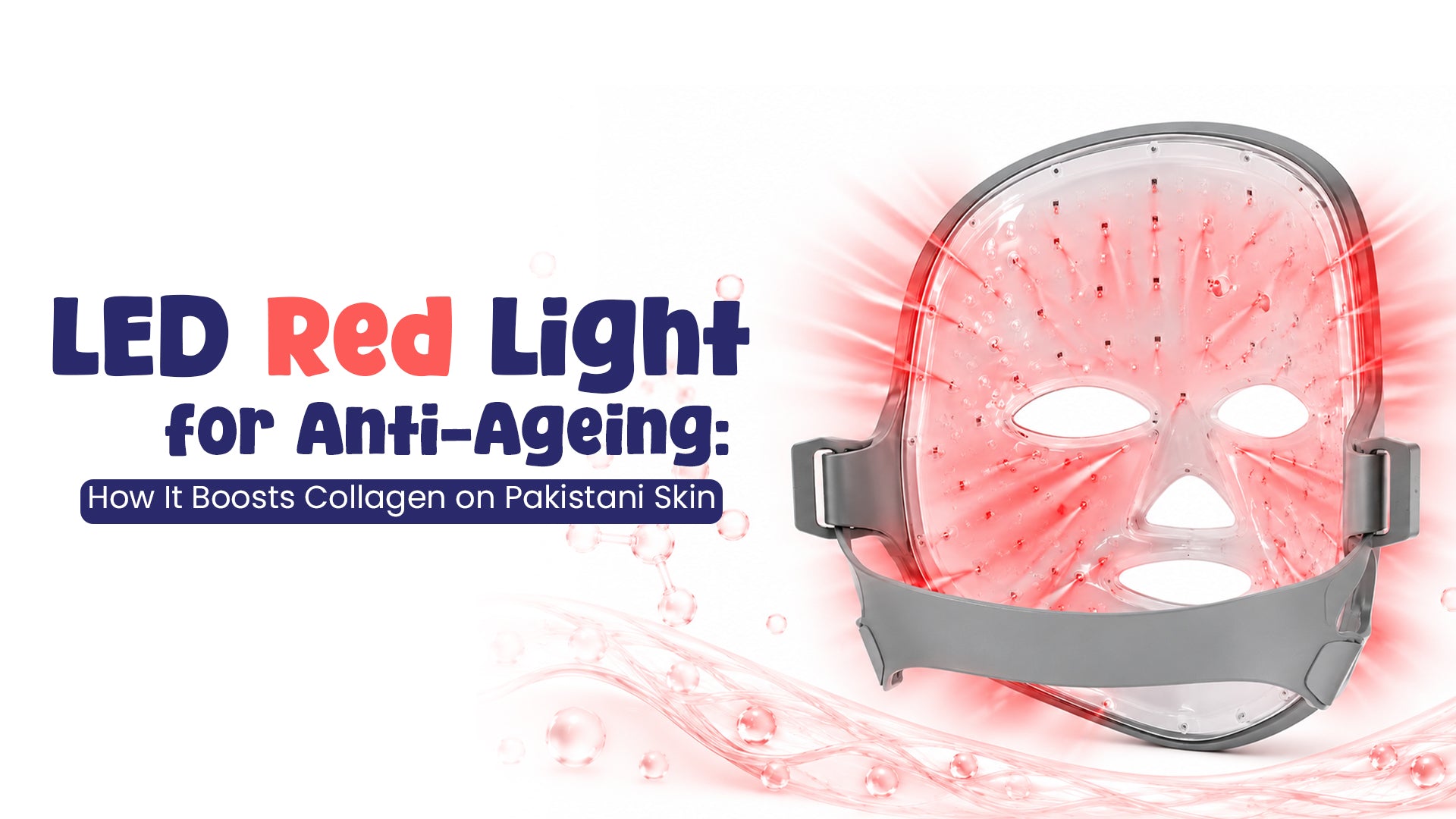
The MomDaughts LED Face Therapy Mask emits approximately 100 mW/cm² in its red light mode, consistent with clinical therapeutic parameters for collagen stimulation. The mask is FDA-cleared and covers the full face for uniform treatment of all areas simultaneously.
Red light mode is most relevant for:
-
Fine lines around the eyes, mouth, and forehead
-
Early jowl softening and jawline laxity
-
General skin firmness and texture improvement
-
Recovery after IPL sessions (red light accelerates healing)
-
Reducing post-treatment redness and supporting skin repair
Combining red and blue light: The purple mode in the LED mask combines red and blue wavelengths simultaneously. 2024 clinical data confirms that combined blue-red light is 36% more effective than blue light alone for acne. For women managing both acne and early ageing, the purple mode addresses both concerns in a single session.
How to Use Red Light Mode Correctly
Frequency: 4 to 5 sessions per week for anti-ageing. Daily use is safe and produces better cumulative results than twice-weekly use for collagen stimulation goals.
Duration: 15 to 20 minutes per session. Clinical studies on LED anti-ageing typically use 15 to 30 minute sessions at comparable intensities.
Preparation: Cleanse skin thoroughly. Apply Hyaluronic Acid serum before the mask. LED therapy transiently increases skin permeability, which enhances serum absorption during and immediately after the session.
Eye protection: Keep eyes closed during sessions. The mask covers the full face including the eye area.
Post-session care: Apply moisturiser or additional serums immediately after the session. Apply Retinol serum after the red light session in the evening for a synergistic anti-ageing routine: retinol addresses cell turnover and surface collagen, red light addresses deeper fibroblast collagen synthesis.
When to Expect Results
Collagen synthesis is a cumulative, progressive process. Unlike topical serums that address surface hydration quickly, collagen rebuilding takes weeks to produce visible structural changes.
|
Timeframe |
What to Expect |
|
Weeks 1 to 2 |
Improved skin glow and luminosity from cellular energy effects |
|
Weeks 3 to 4 |
Subtly improved texture and reduced surface roughness |
|
Weeks 6 to 8 |
Measurable improvement in fine line depth and skin firmness |
|
Weeks 10 to 12 |
Collagen density increase producing clearer improvement in skin tightness |
Consistency at 4 to 5 sessions per week produces results across this timeline. Sporadic use delays the cumulative effect significantly.
Frequently Asked Questions
Does red LED light actually build collagen? Yes. Multiple clinical trials confirm that red light at 630 to 660nm stimulates fibroblasts through the cytochrome c oxidase pathway, increasing ATP production and collagen synthesis. Studies confirm measurable increases in intradermal collagen density with consistent treatment.
How is red light different from blue light in the LED mask? Blue light targets bacteria at the skin surface (effective for acne). Red light penetrates into the dermis to stimulate fibroblasts for collagen production (effective for anti-ageing). They work through entirely different mechanisms and target different cell types at different depths.
Is red LED light safe for darker Pakistani skin tones? Yes. Red LED therapy has no melanin-targeting mechanism. Clinical studies including Fitzpatrick types II to V confirm safety and effectiveness across all skin tones relevant to Pakistani women.
Can I use red light therapy while on retinol? Yes. Red LED therapy does not increase photosensitivity and is compatible with retinol use. Apply retinol after your LED session in the evening for a complementary anti-ageing routine.
At MomDaughts, we believe science-backed tools used correctly produce results that marketing promises alone cannot. Confidence in every step.