Menstrual cups have become one of the most popular period-care options in the world — reusable, eco-friendly, and comfortable once you get the hang of them. But for many unmarried women and girls, one question comes up again and again: "Will using a menstrual cup affect my virginity?"
This question sits at the intersection of biology and faith, so this article looks at both: what medical science actually says about the hymen and virginity, and what Islamic scholars across different schools of thought (madhabs) say about internally-inserted period products like menstrual cups.
Disclaimer: This article is for general education only. It isn't medical or religious advice. For a ruling that applies to your personal situation, speak with a qualified doctor and a trusted local scholar.
Part 1: The Scientific Perspective
What is the hymen, really?
The hymen is a thin, elastic tissue membrane located a short distance inside the vaginal opening. For generations, many cultures have treated it as physical "proof" of virginity — the idea being that it stays fully intact until first intercourse, then tears and bleeds.
Modern anatomy and gynecology have moved away from this idea for a simple reason: it doesn't match how the hymen actually behaves. The hymen:
- Is naturally elastic in most women and already has an opening (to allow menstrual blood to pass)
- Varies enormously in shape, thickness, and flexibility from person to person
- Can stretch or thin gradually with age, exercise, or hormonal changes, without any tearing at all
- Can be affected by non-sexual activity such as sports, cycling, gymnastics, using a tampon, or a medical exam
Because of this variability, doctors and reproductive health organizations are clear that an intact or altered hymen is not a reliable medical indicator of virginity. Virginity is a matter of sexual history, not anatomy.
Does a menstrual cup affect the hymen?
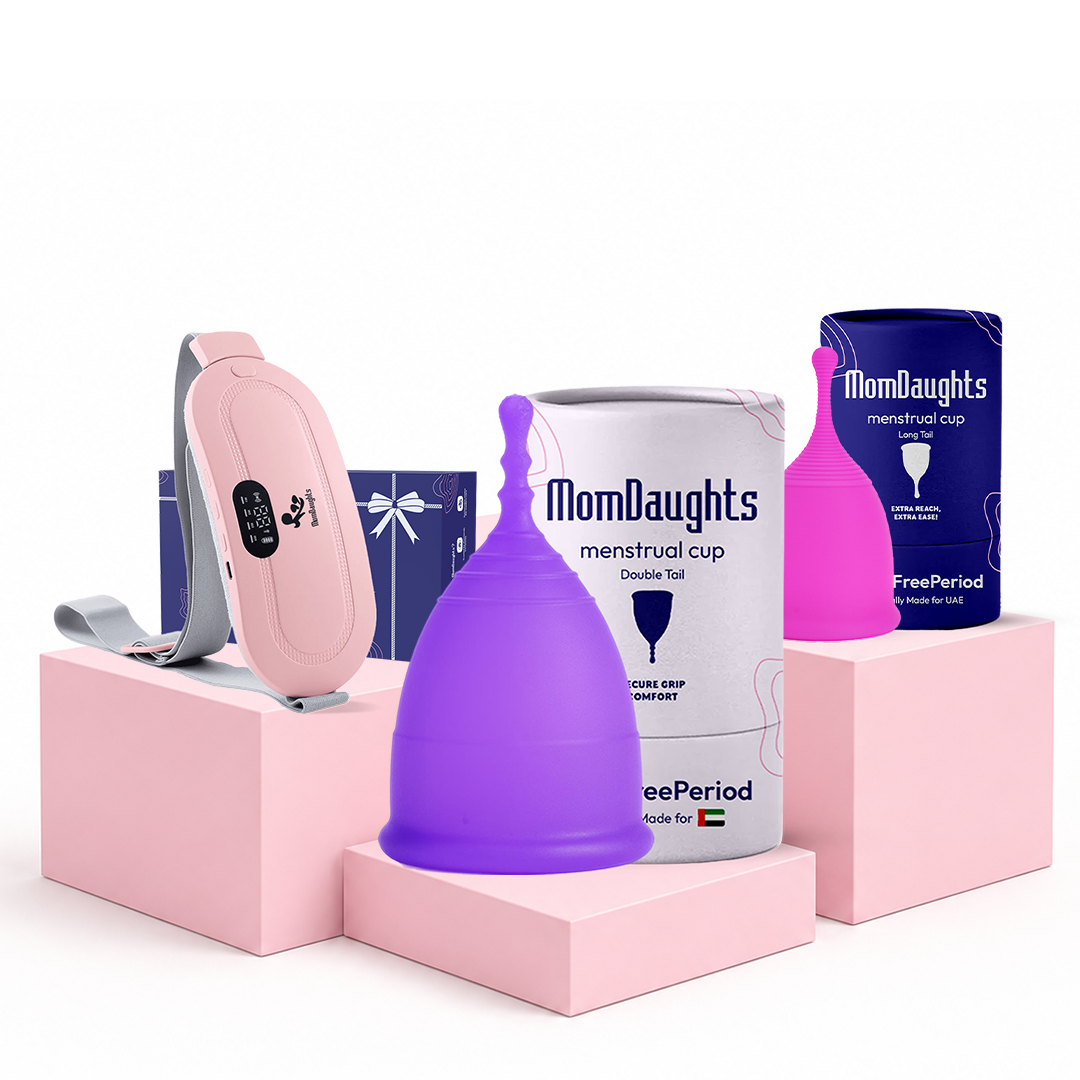
A menstrual cup is a small, flexible, funnel- or bell-shaped cup usually made of medical-grade silicone that folds for insertion and then opens up inside the vaginal canal, sitting below the cervix to collect (not absorb) menstrual blood.
Because it's inserted into the vagina, it's possible that inserting a cup could stretch or slightly change the hymen, similar to what can happen with a tampon, an internal exam, or many everyday physical activities. This is a normal, harmless anatomical change — it is not the same thing as losing virginity, and it does not affect fertility.
Large-scale reviews of menstrual cup safety have not found that cups cause harm to the vaginal tissue or flora when used and cleaned correctly. Reported complications (irritation, difficulty removing the cup, rare cases of injury) are uncommon and generally linked to incorrect sizing or technique, not to the cup itself.
Practical tips for first-time or younger users:
- Choose a smaller "virgin" or low-capacity size cup designed for those who haven't had vaginal birth or intercourse
- Use plenty of water-based lubricant on the rim for easier, more comfortable insertion
- Fold the cup into a smaller shape (the "punch-down" fold is often gentler than the "C-fold" for beginners)
- Relax the pelvic muscles tension makes insertion harder and less comfortable
- Practice removal technique carefully (pinch the base to release suction) to avoid discomfort
Part 2: The Islamic Perspective
Islamic scholars have addressed the use of internally-inserted period products (tampons and, by extension, menstrual cups) fairly directly, and the rulings differ somewhat between the major schools of Sunni jurisprudence.
1. Virginity is not defined by the hymen in Islamic law
This is the most important point scholars consistently make. Classical jurists (fuqaha) state that if a woman's hymen is affected by something other than sexual intercourse injury, sport, illness, heavy menstruation, or a medical device she is still religiously considered a virgin (bikr). The Hanafi jurist Imam al-Mawsili summarized this principle in al-Ikhtiyar li Ta'lil al-Mukhtar, stating that a woman who loses her hymen through jumping, injury, age, or strong menstrual periods is still considered a virgin. Scholars also emphasize that a husband should never assume wrongdoing simply because his wife's hymen shows no sign of "classic" tearing since this can happen for entirely innocent reasons.
In other words: from an Islamic legal standpoint, using a menstrual cup cannot make someone "not a virgin." Virginity in Islam is tied to whether intercourse has occurred, not to the physical state of a membrane.
2. Is it permissible (halal) to use a menstrual cup at all?
Here the schools diverge slightly on preference, though almost none treat it as strictly forbidden (haram):
- Shafi'i school: Scholars in this school generally hold that inserting cotton, tampons, or by extension a menstrual cup is permitted without dislike during menstruation or abnormal bleeding (istihada), and can even become necessary in some cases regardless of whether the woman is married or unmarried.
- Hanafi school: The more common view here is that using an internally-inserted product is makruh (disliked, not forbidden), and some scholars advise unmarried women in particular to avoid it out of caution, preferring external products like pads. A minority of contemporary Hanafi fatwas go further and discourage cup use for unmarried women specifically to avoid any social suspicion later, even while affirming that religiously her virginity status is unaffected.
- General fatwa bodies (such as several contemporary fatwa councils) have ruled that there is no religious obstacle to using a menstrual cup as long as it is safe, hygienic, and does not cause harm since the underlying purpose (containing menstrual blood, maintaining cleanliness/taharah) is a recognized religious benefit.
3. The unifying principle across schools: harm and necessity
Across the different opinions, scholars broadly agree on two governing principles:
- La darar wa la dirar: there should be no harm and no reciprocating harm. If a specific product is proven to cause physical harm to a particular woman, its use becomes impermissible for her, and she should choose a safer alternative.
- Necessity and benefit (maslaha): practical needs like hygiene, comfort, health conditions (e.g., allergies to pads, active lifestyles, or environmental concerns) can shift a ruling from simply "permitted" toward "recommended" or even "necessary" for some women.
This means the "correct" answer can genuinely differ from woman to woman depending on her health, her comfort, cultural context, and which school of thought she or her family follows.
So, Can a Virgin Use a Menstrual Cup?
Putting both perspectives together:
- Scientifically: Yes. A menstrual cup does not "take" your virginity. It may cause the same kind of natural stretching that many ordinary activities can cause, but this has no medical bearing on virginity, purity, or future fertility.
- Islamically: In classical fiqh, virginity is determined by whether intercourse has taken place not by the hymen. Most scholars hold that using a menstrual cup is at minimum permissible, with the Shafi'i school treating it as fully unproblematic and the Hanafi school treating it as merely discouraged (not forbidden) for unmarried women, largely as a precaution against social misunderstanding rather than a real religious prohibition.
If you are considering switching to a menstrual cup and want peace of mind, it can help to:
- Talk to a gynecologist about correct sizing and insertion technique
- If it matters to you personally, ask a scholar you trust from your own madhab, since local fatwa councils sometimes phrase guidance slightly differently
- Remember that your worth, purity, and standing — religiously and personally — were never tied to a piece of tissue in the first place
References
- SeekersGuidance, Using a Menstrual Cup — https://seekersguidance.org/answers/hanafi-fiqh/using-menstrual-cup
- Islamweb, Ruling on the Use of Menstrual Cup during Menses — https://www.islamweb.net/en/fatwa/423160/ruling-on-the-use-of-menstrual-cup-during-menses
- JKN Fatawa, Using Menstrual Cups During Periods: Permissible or Not? — https://jknfatawa.co.uk/using-menstrual-cups-during-periods-permissible-or-not/
- Taahirah – The Muslim Women's Health Companion, Period Products 101 — https://taahirah.health/period-products-101-questions-myths-and-misconceptions-2/
- Acceptability and safety of the menstrual cups among Iranian women: a cross-sectional study, PMC — https://www.ncbi.nlm.nih.gov/pmc/articles/PMC7955610/