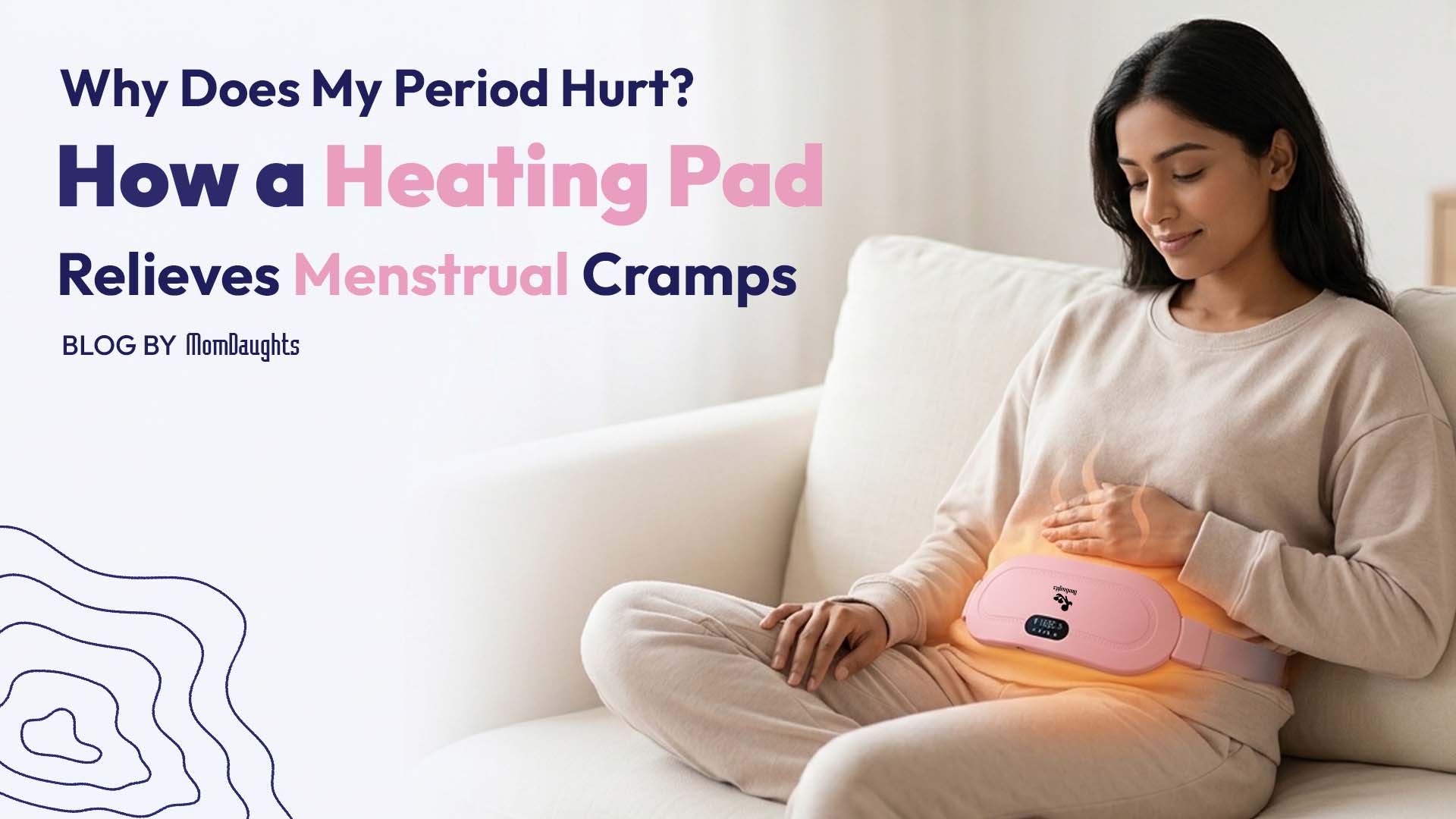
We have seen women push through period pain for years with painkillers, hot water bottles, and lying in bed. Most do not know that the pain has a specific biological cause, that heat works against that cause directly, and that a wearable heating pad is one of the only non-drug solutions with clinical evidence behind it. This article covers all of it.
Why Period Pain Happens: The Biology
Period cramps, medically called primary dysmenorrhea, are not imagined and not inevitable. They have a clear biological cause.
During menstruation, the lining of the uterus releases chemicals called prostaglandins. These prostaglandins trigger the uterus to contract in order to shed its lining. When prostaglandin levels are high, contractions become stronger and more frequent than necessary, restricting blood flow to the uterine muscle. Reduced blood flow means reduced oxygen supply to the tissue, a condition called ischemia, which is what produces the cramping pain you feel in your lower abdomen.
The pain can radiate to the lower back and upper thighs because of the proximity of the uterus to the spine and surrounding nerves. Headache, nausea, fatigue, and bloating often accompany cramps for the same hormonal reasons.
According to a systematic review published in PMC, primary dysmenorrhea is the most common gynecologic condition in women, with an estimated prevalence of 45% to 95% of all women of reproductive age. It is also the leading cause of recurrent short-term school and work absenteeism among young women.
Why Heat Works Against Period Pain
Heat therapy works against cramp pain through four mechanisms that directly address the biological cause described above.
It increases blood flow. Heat applied to the lower abdomen causes blood vessels to dilate. Increased circulation reduces the ischemia, the oxygen deprivation, that makes uterine contractions painful. Research cited by Angelini Pharma confirms that heat can improve blood circulation in the pelvis, reducing swelling and nerve compression.
It relaxes uterine muscle. Heat directly reduces muscle tension in the lower abdomen and uterus. Relaxed muscle fibres experience less severe spasm, which is the primary source of cramping pain.
It helps clear prostaglandins. Improved local circulation helps remove prostaglandins from the uterine area faster. While heat does not block prostaglandin production the way ibuprofen does, better blood flow reduces the concentration of pain-triggering chemicals in the tissue.
It raises the pain threshold. The sensation of warmth interferes with pain signal transmission through neural pathways, making the body more tolerant of the remaining discomfort. This is why heat feels immediately soothing even before the deeper effects on circulation and muscle tension have time to work.
What the Clinical Evidence Shows
Heat therapy for period pain is not folk wisdom. It is clinically studied and recommended by medical authorities including the Mayo Clinic and UpToDate, which considers it a first-line treatment for dysmenorrhea.
A systematic review published in PMC covering six randomised controlled trials found that heating pads showed favorable effects on menstrual pain compared to analgesic medication in three of those trials, with a statistically significant result (n=274, p<0.001). In one trial, heat therapy outperformed acetaminophen and showed comparable effectiveness to ibuprofen for pain cluster scores.
A 2024 survey-based study published in PMC of 9,144 women found that heat therapy was the most commonly used non-pharmacological strategy for period pain relief, used by 61.5% of respondents. The same study confirmed that heat therapy had similar efficacy to ibuprofen and was more effective than acetaminophen in reducing menstrual pain.
This is significant because ibuprofen, the standard drug recommendation for dysmenorrhea, fails to provide adequate pain relief in approximately 18% of women according to a 2025 Frontiers in Medicine systematic review. For these women, and for those who prefer to avoid frequent painkiller use, a wearable heat device is a meaningful alternative.
Hot Water Bottle vs Electric Heating Pad: Why It Matters
Many Pakistani women use a hot water bottle or heated towel for period cramps. These work to some extent but have a practical limitation: they cool down within minutes, delivering inconsistent heat that requires constant reheating.
Research reviewed by Angelini Pharma notes that the suggested temperature for effective heat therapy is 40 to 45°C, which allows heat to penetrate tissue to a depth of approximately 1 cm where uterine muscle tension originates. A hot water bottle starts above that range and drops below it quickly. Neither delivers consistent therapeutic temperature.
A purpose-built electric heating pad maintains consistent temperature throughout your session, delivers targeted heat directly to the lower abdomen where it is needed, and can be worn discreetly under clothing during daily activity.
About the MomDaughts Menstrual Heating Pad
The MomDaughts Menstrual Heating Pad is built specifically for period cramp relief, not repurposed from a general back pain device.
Key features that matter for period use:
Heats in 5 seconds. When cramps hit, you do not want to wait. The pad reaches working temperature in 5 seconds from switch-on.
Adjustable heat and vibration settings. Heat relaxes muscle; vibration massage provides an additional layer of pain relief by stimulating circulation and interrupting pain signals at the surface. Both are adjustable to your comfort level.
Cordless and wearable. The 1200mAh rechargeable battery and adjustable belt strap mean you can wear it under your clothing at home, at work, in university, or while travelling. You are not restricted to lying next to a wall socket.
USB rechargeable. Charges via any USB port, including a power bank or laptop.
Auto shut-off safety feature. Prevents overheating and burns if you fall asleep or forget to turn it off.
12-month warranty. Full coverage on a product that is used monthly.
Use 20 to 30 minutes per session. This is the recommended duration for safe, effective heat therapy without risk of skin irritation.
How to Use a Menstrual Heating Pad Correctly
Getting the most from heat therapy requires correct placement and appropriate settings.
Placement. Position the pad on your lower abdomen, centred below the navel where the uterus sits. If lower back pain accompanies your cramps, the pad can also be moved to the lower back between abdominal sessions.
Setting. Start on the lowest heat setting for your first session to assess how your skin responds. Increase gradually if needed. Never use the highest setting directly against bare skin for extended periods.
Duration. 20 to 30 minutes per session is the clinically recommended window. You can repeat sessions throughout the day as needed with short breaks between them.
Clothing layer. Wear the pad over a thin layer of clothing or the skin-soft contact surface provided. Do not apply the heated surface directly to broken or irritated skin.
Safety notes. Do not use during pregnancy without consulting a doctor. Do not fall asleep during a session without the auto shut-off feature active. Do not use on open wounds or skin infections.
Using the Heating Pad With a Menstrual Cup
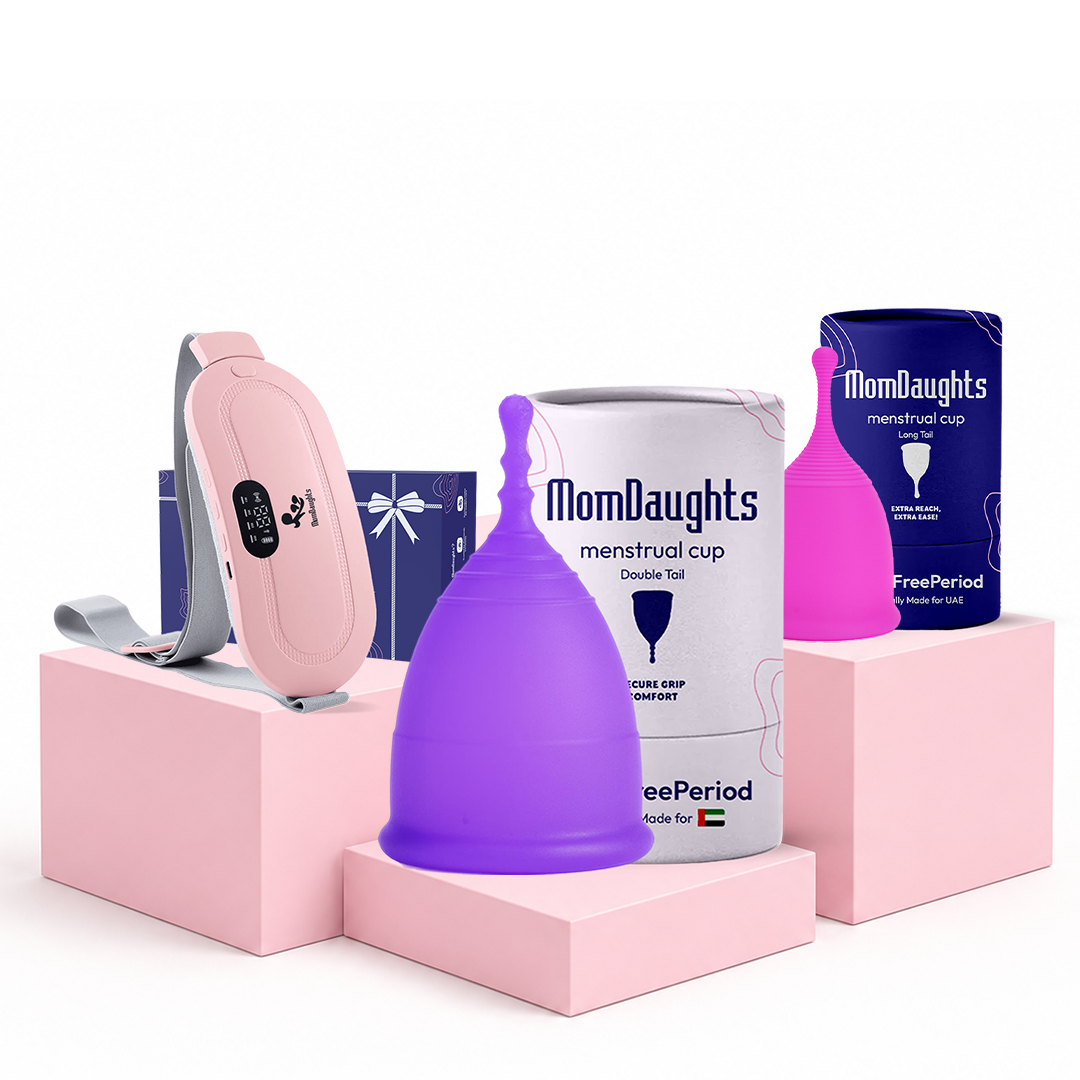
We have seen many women combine the heating pad with a menstrual cup during their cycle. The cup handles collection internally for up to 12 hours without leaks, while the heating pad addresses the cramping discomfort externally. The two products work independently with no interference, making this one of the more practical combinations for women who want complete period management without constant bathroom trips or painkiller dependency.