We have seen women spend months layering creams, oils, and moisturisers trying to fix persistent skin dryness and never identify the actual problem: their skin is not lacking fat-based products, it is lacking water. Hyaluronic acid works at the level of water retention in skin tissue, which is a completely different mechanism from most moisturisers. This article explains exactly what it does, why Pakistani skin in particular needs it, and how to use it correctly.
What Hyaluronic Acid Is
Hyaluronic acid (HA) is a glycosaminoglycan, a naturally occurring sugar molecule found throughout the human body in connective tissue, joint fluid, and skin. In skin, it sits primarily in the dermis and acts as a water reservoir, holding the tissue together and maintaining its plumpness, bounce, and suppleness.
According to PubMed research on skin hydration, HA has a high water-retaining ability and plays a central role in hydration and elasticity of skin. One gram of HA can hold up to one litre of water, making it one of the most effective humectant compounds in biology.
The problem is that the body's natural HA production declines with age. Skin can lose roughly half of its HA content by the time a woman reaches her 40s, which is a major contributor to the loss of plumpness, increased fine lines, and reduced skin resilience that comes with ageing. Topical HA serum replenishes this from the outside.
How Hyaluronic Acid Works in Skin
HA functions as a humectant. Unlike moisturisers that seal water in with an occlusive layer of oil or wax, HA draws water from the environment and from deeper skin layers into the outer skin layers, actively increasing the water content of the epidermis.
A clinical study published in PMC, covering 40 women across Fitzpatrick skin types I to VI including darker skin tones, found that a topical HA serum applied twice daily produced an immediate increase in skin hydration measurable by corneometry within 15 minutes of first application. The improvement was cumulative, with increasing results at weeks 2, 4, and 6. Importantly, the study also confirmed an increase in HA concentration on the skin surface from the serum, meaning the product was actively depositing HA rather than simply coating the skin temporarily.
Molecular weight matters in how HA works. Research published in JCAD confirms that High Molecular Weight (HMW) HA creates a protective film on the skin surface that locks in moisture and smooths texture immediately. Low Molecular Weight (LMW) HA penetrates into the epidermal layer for deeper, longer-lasting hydration. The most effective HA serums contain both molecular weights for surface and deep-level hydration simultaneously.
Why Pakistani Skin Specifically Needs HA Serum
Several factors in the Pakistani environment accelerate moisture loss from skin, making external HA supplementation more relevant than in cooler, more humid climates.
Heat and UV exposure. High temperatures increase transepidermal water loss (TEWL), the rate at which water evaporates through the skin's surface. Pakistani summers, and the year-round warmth in most cities, accelerate this process. Skin hydrated with HA retains more water despite these conditions.
Hard water. Most Pakistani urban water supplies have high mineral content. Hard water strips the skin barrier with each wash, reducing its ability to retain moisture naturally. Regular HA application helps compensate for this.
Air conditioning. Office environments, cars, and homes cooled by air conditioning dramatically reduce ambient humidity, which draws moisture out of the skin's surface. HA is most effective in humid environments, but even in dry AC air it helps maintain the water content already in the skin.
Pollution. Urban pollution triggers oxidative stress that damages the skin barrier. A compromised barrier loses water faster. HA helps maintain skin hydration even when the barrier is stressed.
Dry Skin vs Combination Skin: Who Needs HA Most
Dry skin types are the most obvious candidates. Persistent tightness, flakiness, dullness, and rough patches are all signs of insufficient skin hydration. HA serum addresses the root cause directly rather than layering oils on top of a dehydrated surface.
Combination skin is often misunderstood. The oily T-zone is frequently a response to dehydrated skin, not excess oil production. When the skin is dehydrated, sebaceous glands produce more oil to compensate. Introducing HA to a combination skin type often regulates the oily zones over time because the skin no longer needs to overcompensate with sebum.
Mature skin. As natural HA production declines with age, replenishing it externally becomes increasingly effective. A multicenter clinical study published in PubMed found statistically significant improvement (p<0.0001) in fine lines, texture, and skin dryness at both week 4 and week 8 of HA serum use.
Skin after IPL or active treatments. IPL sessions, chemical exfoliants, and retinol all temporarily stress the skin barrier and increase TEWL. HA serum applied after these treatments helps the skin recover hydration faster and reduces post-treatment sensitivity and tightness.
About the MomDaughts Hyaluronic Acid Serum
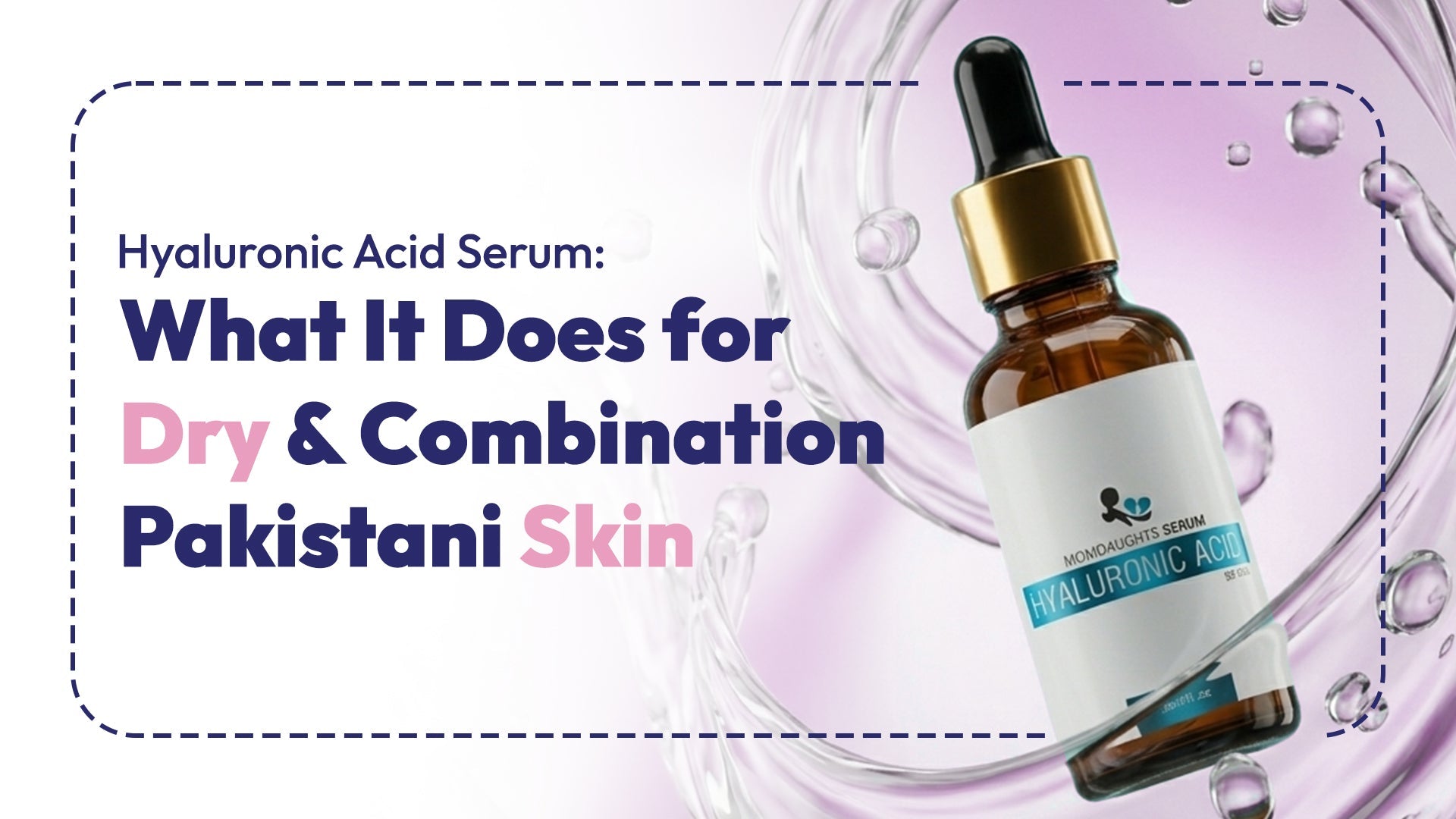
The MomDaughts Hyaluronic Acid + Vitamin B5 Serum combines two complementary hydrating ingredients in one lightweight formula.
Hyaluronic Acid draws water into the skin from both the environment and deeper skin layers, increases plumpness and bounce, and reduces the appearance of fine lines by filling the skin with moisture. Results are visible both immediately after application and cumulatively over weeks of consistent use.
Vitamin B5 (Panthenol) works alongside HA as a secondary humectant and skin barrier strengthener. Panthenol is a precursor to Vitamin B5 in the body, and topically it soothes inflammation, promotes healing in compromised skin barrier function, and helps the skin retain the moisture that HA draws in. The combination of HA and Panthenol produces hydration that lasts longer than either ingredient alone.
The formula is lightweight, non-greasy, and designed for daily use morning and evening. It absorbs quickly without leaving a sticky residue, making it comfortable to layer under sunscreen in the morning and under moisturiser at night.
How to Apply HA Serum Correctly
There is one critical mistake that reduces HA serum effectiveness significantly, and it is very common: applying HA to completely dry skin in a dry environment.
HA draws water from its surroundings. If the surrounding environment is very dry and the skin itself is very dry, HA can pull moisture from the deeper skin layers toward the surface rather than from external sources, potentially increasing dryness rather than reducing it.
The correct method:
Apply HA serum immediately after cleansing, while the skin is still slightly damp. The residual moisture on the skin surface gives the HA molecules water to bind and draw into the outer layers. Do not wait for the skin to dry completely before applying.
If your skin feels tight after washing in dry AC environments, mist the face lightly with water before applying HA, then apply the serum while the mist is still on the skin.
Apply twice daily. Morning and evening. The PMC clinical study that confirmed cumulative improvement used a twice-daily application schedule. Once-daily use produces benefits but slower results.
Layer correctly. HA serum goes on before moisturiser. After HA absorbs, apply a moisturiser to seal the water in. Without an occlusive layer on top, the HA-bound water can still evaporate in dry conditions. In humid Pakistani weather, a light moisturiser is sufficient. In air-conditioned environments or winter, a richer cream over HA extends the hydration benefits significantly.
Combine with other serums. HA is fully compatible with all other active serums including Vitamin C, Niacinamide, and Retinol. It actually enhances the performance of other serums by maintaining a hydrated, receptive skin surface. For a complete brightening routine, apply Vitamin C serum first in the morning, then HA serum, then SPF. For an anti-ageing night routine, apply Retinol serum, then HA to offset retinol-related dryness, then moisturiser.
Browse the full serums collection for the complete range.
When to Expect Results
|
Benefit |
Timeline |
|
Immediate plumping and dewiness |
Within 15 to 30 minutes of first application |
|
Reduced surface tightness and dryness |
3 to 7 days |
|
Noticeably smoother skin texture |
2 to 4 weeks |
|
Reduced appearance of fine lines |
4 to 6 weeks |
|
Cumulative hydration improvement |
Builds progressively with consistent twice-daily use |
The 6-week clinical study confirmed that improvements were cumulative, meaning the results at week 6 were measurably greater than at week 2. Consistency is the key variable.
At MomDaughts, we believe effective skincare should be simple to understand and easy to use. Confidence in every step.