We have seen retinol cause confusion more than almost any other skincare ingredient. Women either avoid it entirely because they have heard it causes burning and peeling, or they use it incorrectly and then conclude it does not work. Both outcomes are avoidable. Retinol is one of the most clinically proven skincare ingredients available, and for Pakistani skin specifically it addresses several of the most common concerns. This article explains what it is, what the science says, and how to use it correctly from the start.
What is Retinol?
Retinol is a derivative of Vitamin A. It belongs to a class of compounds called retinoids, all of which are forms of Vitamin A used in skincare and dermatology. Retinol is the over-the-counter form, accessible without a prescription and significantly gentler than prescription-strength retinoids like tretinoin, while still clinically effective.
When applied to skin, retinol is converted by skin cells into retinoic acid, which is the biologically active form that produces the anti-ageing and skin renewal effects. This conversion process is what makes retinol gentler than prescription tretinoin, which delivers retinoic acid directly. The slower release means fewer side effects while still producing meaningful results with consistent use.
What Retinol Does in the Skin: The Science
Retinol is one of the most extensively studied topical skincare ingredients in dermatology. The clinical evidence for its effects is robust across multiple independent trials.
Increases Collagen Production
Collagen is the structural protein that gives skin firmness and smoothness. Its production declines gradually from the mid-20s and accelerates with UV exposure. A PubMed clinical study found that four weeks of retinol treatment significantly upregulated genes for collagen type 1 (COL1A1) and collagen type 3 (COL3A1), with corresponding increases in procollagen protein expression. The same study showed a significant reduction in facial wrinkles following 12 weeks of retinol application.
A 2023 PubMed review confirmed that retinol enhances the dermal microenvironment by activating fibroblasts, the cells responsible for collagen production, through the TGF-β/CTGF pathway. It also increases mature collagen in aged skin and improves the blood supply to skin tissue, which further supports fibroblast activity.
Reduces Fine Lines and Wrinkles
A 2025 network meta-analysis published in Scientific Reports, covering 23 randomised controlled trials with 3,905 participants, ranked retinol as the second most effective topical agent for fine wrinkle improvement (OR=14.10), behind only prescription-strength isotretinoin. For women seeking an accessible, over-the-counter solution to early signs of ageing, retinol's evidence base is stronger than most ingredients marketed for the same purpose.
Reduces Hyperpigmentation and Dark Spots
This benefit is particularly relevant for Pakistani skin. The same 2025 meta-analysis confirmed retinol and tretinoin as superior among topical agents for hyperpigmentation. A 12-week clinical trial published in PubMed found that both 0.3% and 0.5% retinol concentrations reduced skin hyperpigmentation, unevenness, and wrinkles progressively over the course of treatment.
Retinol reduces hyperpigmentation through two mechanisms: accelerated cell turnover brings newer, more evenly pigmented cells to the surface faster, and retinol inhibits the activity of enzymes involved in melanin production.
Improves Skin Texture and Pore Appearance
Retinol increases the rate at which old skin cells are shed and replaced with new ones, a process called cell turnover. The result is a smoother skin surface, more refined texture, and a reduction in the appearance of enlarged pores over consistent use. A PMC review on retinoid efficacy confirmed that retinol produces epidermal thickening and keratinocyte proliferation comparable to prescription retinoic acid, but with significantly less irritation.
Why Retinol Is Particularly Relevant for Pakistani Skin
Three factors make retinol especially useful for Pakistani women:
-
High UV exposure year-round. Pakistan's climate delivers intense UV radiation for most of the year. UV is the primary driver of collagen degradation, hyperpigmentation, and premature skin ageing. Retinol directly counteracts UV-induced damage by inhibiting matrix metalloproteinases (MMPs), the enzymes that break down collagen following UV exposure.
-
Prevalence of post-inflammatory hyperpigmentation. Pakistani skin, like all darker skin tones, is more prone to post-inflammatory hyperpigmentation, the dark marks left after acne, minor trauma, or skin reactions. Retinol's cell turnover acceleration and melanin-inhibiting effects make it one of the most effective ingredients for fading these marks over time.
- Pollution and environmental stress. Pakistani urban environments, particularly Karachi and Lahore, have high particulate pollution levels. Environmental oxidative stress accelerates skin ageing and pigmentation. Retinol's effect on skin cell renewal helps counteract the cumulative damage from these exposures.
Who Should Use Retinol
Women in their late 20s and above. Collagen loss begins in the mid-20s. Starting retinol before visible wrinkles appear is preventive. Starting after they appear is restorative. Both are valid, but earlier is better.
Women with fine lines and early wrinkles. This is retinol's primary clinical use case. The evidence across dozens of randomised trials is clear: retinol reduces fine lines with consistent use.
Women with persistent dark spots, uneven tone, or post-acne marks. Retinol is particularly effective for hyperpigmentation. Combined with the Niacinamide serum in a split morning/evening routine, the two ingredients address hyperpigmentation from different pathways and work more effectively together than either does alone.
Women with rough skin texture or enlarged pores. Retinol's cell turnover effect smooths surface texture and reduces pore appearance more reliably than most surface exfoliants.
Who Should Approach Retinol With Caution
Pregnant or breastfeeding women. Retinol and all retinoids are contraindicated during pregnancy and breastfeeding due to potential risk to the developing baby. Discontinue use if pregnant and consult a doctor.
Women with very sensitive or reactive skin. Retinol increases skin sensitivity, particularly in the first 4 to 6 weeks of use. If your skin reacts strongly to most actives, introduce retinol at the lowest frequency possible (once per week) and build very gradually.
Women with broken or actively inflamed skin. Do not apply retinol to skin that has open cuts, active rashes, or significant inflammation. It will cause irritation in the affected area and does not speed healing.
About the MomDaughts Retinol Serum
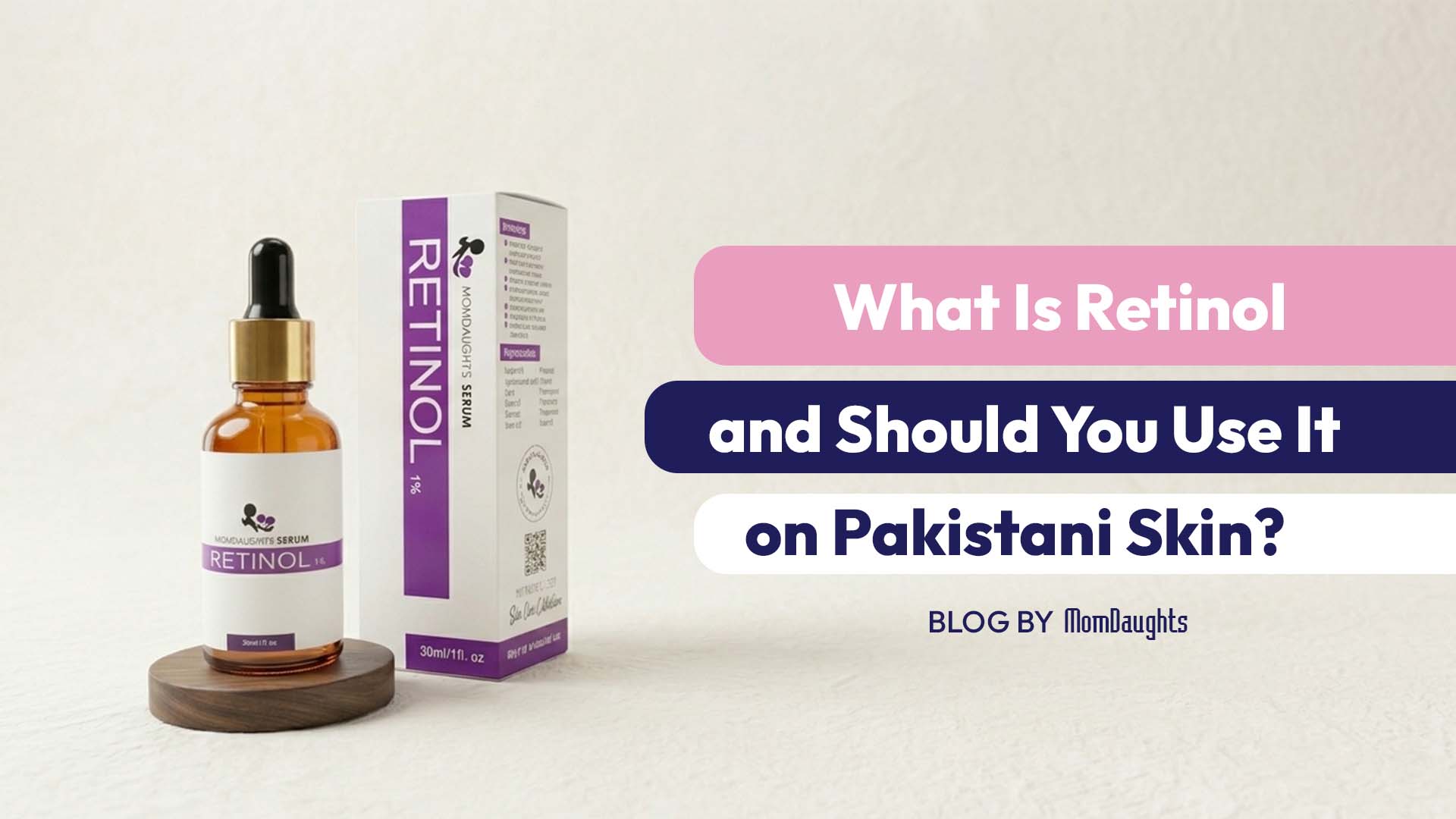
The MomDaughts Retinol Skin Serum is formulated with 1% Retinol alongside a full supporting cast of ingredients designed to reduce the common side effects of retinol use.
1% Retinol. A therapeutic concentration that delivers clinical benefits while remaining suitable for at-home use.
Hyaluronic Acid 1%. Retinol can cause dryness and tightness, particularly in early use. Hyaluronic acid draws moisture into the skin and counteracts this effect, keeping the skin hydrated throughout the process.
Ceramide. Ceramides are structural lipids that form the skin barrier. Retinol temporarily disrupts the skin barrier while increasing cell turnover. Ceramide in the formula actively repairs and supports the barrier to reduce sensitivity, redness, and moisture loss.
Vitamin C and Vitamin E. Antioxidants that work synergistically with retinol to protect against UV-induced free radical damage and support collagen synthesis.
Panthenol (Vitamin B5) and Allantoin. Both are skin-calming, healing ingredients that reduce the mild irritation and peeling that some women experience in the first two weeks of retinol use.
Nighttime use. Apply after cleansing, before moisturiser. Retinol degrades in sunlight and increases photosensitivity, so evening application is essential.
How to Start Retinol Without Side Effects
The most common retinol mistake is starting too aggressively. Here is the correct approach.
Week 1 to 2: Apply once per week on a clean, dry face. Allow to absorb for 2 minutes, then apply moisturiser. This gives the skin time to adjust to the ingredient without overwhelming it.
Week 3 to 4: Increase to twice per week, on alternating nights.
Week 5 to 8: Increase to every other night if your skin has tolerated the twice-weekly use without significant redness or peeling.
Week 9 onwards: Daily nighttime use, which is the optimal frequency for results.
Patch test. Before first use, apply a small amount to the inner forearm. Wait 24 hours. If no adverse reaction occurs, proceed with facial use starting at once per week.
Always use SPF the following morning. Retinol increases photosensitivity. Daytime sun exposure without SPF on the day after retinol application will cause redness and worsen the hyperpigmentation retinol is trying to reduce. Use minimum SPF 30 every morning without exception during your retinol course.
Moisturiser is not optional. Apply moisturiser over retinol every night. For women who find even this causes dryness in the first few weeks, the sandwich method helps: apply a thin layer of moisturiser before the retinol, then another layer on top.
When to Expect Results
|
Concern |
Expected Timeline |
|
Smoother skin texture |
4 to 6 weeks |
|
Reduced skin roughness |
6 to 8 weeks |
|
Faded post-acne marks and dark spots |
8 to 16 weeks |
|
Visible reduction in fine lines |
12 to 16 weeks |
|
Improved firmness and density |
16 to 24 weeks |
Retinol is a slow-build ingredient. The clinical trials that demonstrate its results run for 12 to 24 weeks. This is not a sign of low effectiveness. It is a sign that the mechanism of action, rebuilding collagen and accelerating cell turnover, takes time to produce visible change in the deeper layers of the skin.
Browse the full serums collection for the complete range of serums available by skin concern.
At MomDaughts, we believe effective skincare should be explained clearly so that every woman can make informed decisions about her own routine. Confidence in every step.