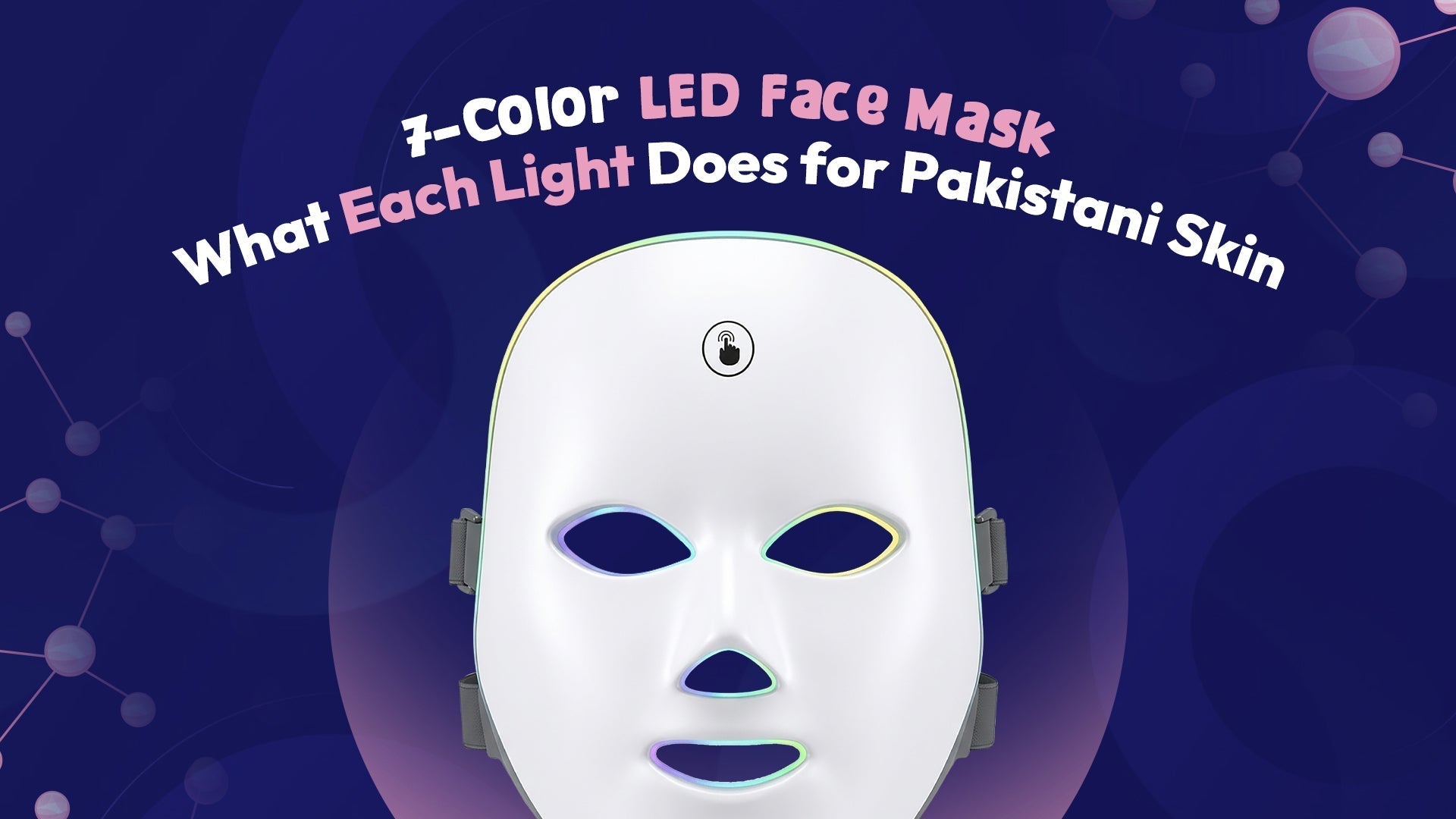
We have seen women buy LED face masks without understanding what the colours actually do, use only the red light because it looks most impressive, and miss the other six modes entirely. LED therapy works by delivering specific light wavelengths that trigger different biological responses in skin cells. Each colour corresponds to a different mechanism and a different skin concern. This article explains all seven, how LED therapy works, and which modes are most relevant for common Pakistani skin concerns.
How LED Light Therapy Works
LED stands for Light Emitting Diode. When specific wavelengths of light are directed at skin at the correct intensity, they are absorbed by skin cells and trigger measurable biological responses. This process is called photobiomodulation.
Different wavelengths penetrate the skin to different depths. Red light, with a longer wavelength, penetrates deeper into the dermis where fibroblasts and collagen-producing cells are located. Blue light, with a shorter wavelength, works primarily in the epidermis where sebaceous glands and acne bacteria are active. Near-infrared light penetrates deepest, reaching subcutaneous tissue.
The MomDaughts LED Face Therapy Mask is FDA-cleared and emits specific wavelengths at confirmed intensities: approximately 100 mW/cm² for red light and approximately 40 mW/cm² for blue light. These intensities sit within the therapeutic range confirmed by clinical research for photobiomodulation while remaining safe for home use.
Sessions are 15 to 20 minutes daily. The mask is wireless, lightweight, and fits all face shapes.
The 7 LED face mask colors: What Each Mode Does
Red Light: Collagen and Anti-Ageing
Red light is the most studied LED wavelength for skin. At wavelengths of approximately 630 to 700nm, red light penetrates into the dermis and is absorbed by fibroblasts, the cells responsible for producing collagen and elastin.
Red light therapy stimulates fibroblasts to increase collagen production, reduces the activity of matrix metalloproteinases (the enzymes that break down existing collagen), and improves blood circulation in treated skin. The visible results over consistent use are firmer skin, reduced fine lines, improved texture, and a warmer, more even tone.
For Pakistani skin, which is subject to year-round UV exposure that accelerates collagen degradation, regular red light sessions provide a non-invasive collagen support mechanism. Use red light mode 4 to 5 times per week for anti-ageing and skin firming goals.
Blue Light: Acne and Bacteria
Blue light, at wavelengths of approximately 405 to 420nm, targets Cutibacterium acnes (formerly Propionibacterium acnes), the bacteria primarily responsible for inflammatory acne.
Blue light is absorbed by porphyrins, compounds produced by acne bacteria. This absorption generates reactive oxygen species that destroy the bacteria from within without damaging surrounding skin cells. Blue light also has a mild anti-inflammatory effect on sebaceous glands, reducing the overactive oil production that contributes to clogged pores.
The MomDaughts mask emits approximately 40 mW/cm² of blue light, consistent with intensities used in clinical blue light therapy studies. For acne-prone Pakistani skin, blue light 3 to 4 times per week reduces active breakouts without the dryness associated with topical acne treatments. It pairs well with Niacinamide serum applied before sessions.
Green Light: Pigmentation and Redness
Green light targets melanocytes and reduces the overproduction of melanin in pigmented areas. It also calms surface redness by acting on blood vessel hyperactivity in the epidermis.
For Pakistani skin with sun-triggered pigmentation, post-acne marks, or uneven tone, green light sessions 2 to 3 times per week complement topical brightening ingredients by working from the inside. Combined with a Vitamin C serum applied before sessions, green light and Vitamin C address pigmentation through two independent mechanisms simultaneously.
Yellow Light: Skin Soothing and Lymphatic Drainage
Yellow light, at approximately 570 to 590nm, stimulates lymphatic drainage and promotes skin renewal at the surface level. It is used for redness, inflammation, and general skin sensitivity reduction. Yellow light is particularly useful for skin that has undergone recent treatment or is experiencing seasonal sensitivity.
Use yellow light mode after IPL sessions, chemical exfoliation, or any treatment that temporarily increases skin sensitivity. It helps calm treated skin and speeds up recovery.
Purple Light: Acne + Anti-Ageing Combination
Purple light combines red and blue wavelengths simultaneously, addressing both active acne and collagen regeneration in the same session. It is useful for women with acne-prone skin who also want anti-ageing benefits, allowing both concerns to be addressed without switching between modes.
Cyan Light: Calming and Barrier Repair
Cyan light, at approximately 490 to 510nm, calms inflammation and supports skin barrier function. It reduces the sensitivity and irritation that can result from overactive skincare routines or environmental stress. Cyan light is useful for women with reactive or combination skin that alternates between oiliness and tightness.
White Light: Comprehensive Treatment
White light combines multiple wavelengths and is used for comprehensive cell activation and general skin rejuvenation. It is the broadest-spectrum mode and is useful as a maintenance setting when no specific concern is being targeted.
Which Modes Are Most Relevant for Pakistani Skin
Pakistani skin concerns, in order of prevalence, are hyperpigmentation and dark spots, acne and post-acne marks, and early ageing from UV exposure. The most relevant modes for these concerns are:
|
Concern |
Primary Mode |
Supporting Mode |
|
Dark spots and uneven tone |
Green |
Red (collagen support) |
|
Active acne and oily skin |
Blue |
Purple (dual benefit) |
|
Post-acne marks (PIH) |
Green |
Yellow (inflammation) |
|
Fine lines and skin firmness |
Red |
White (maintenance) |
|
Sensitive or reactive skin |
Yellow |
Cyan |
|
Comprehensive routine |
White or rotate all modes |
- |
How to Use the LED Face Mask
Step 1: Cleanse thoroughly. Remove all makeup and cleanse skin before each session. LED light passes through clean skin more effectively. Apply any serums before the mask as LED can enhance serum absorption.
Step 2: Select your mode. Choose the wavelength matching your current concern. For anti-ageing and general maintenance, start with red. For acne, use blue. For pigmentation, use green.
Step 3: Wear for 15 to 20 minutes. The mask is wireless and lightweight. Lie back, relax, and allow the light to penetrate the skin during the session. Do not look directly at the LEDs without the mask in position.
Step 4: Apply moisturiser after. Post-session, the skin is slightly more receptive to active ingredients. Apply a moisturiser or hydrating serum after each session. The Hyaluronic Acid serum works particularly well post-session for hydration.
Step 5: Frequency. Daily use for 15 to 20 minutes is the recommended frequency. Most users see initial skin changes within 3 to 4 weeks of consistent daily use.
Safety Notes
The mask is FDA-cleared and suitable for most skin types. However, three groups should consult a dermatologist before use:
Women with photosensitivity. Certain medications (including some antibiotics, retinoids, and anti-inflammatories) cause photosensitivity. LED therapy at these intensities may cause reactions in photosensitised individuals.
Women with melasma. Melasma can be worsened by heat and light in some cases. If you have active melasma, consult a dermatologist about which LED modes are appropriate for your specific situation.
Women with epilepsy. The light cycling pattern of LED devices can trigger photosensitive epilepsy. Consult a neurologist before using any LED therapy device.