We have seen women spend months trying to fade dark spots with fairness creams that contain undisclosed ingredients, only to see the spots return or worsen. We have also seen women discover alpha arbutin and achieve steady, visible brightening without irritation, rebound, or skin damage. The difference is in understanding how the ingredient actually works. This article explains alpha arbutin from the mechanism up, so you can make an informed decision about whether it belongs in your routine.
What Alpha Arbutin Is
Alpha arbutin is a synthetic derivative of hydroquinone, a glucose molecule chemically bonded to hydroquinone in a specific configuration. It is found naturally in bearberry, pear, and cranberry plants, though the alpha form used in skincare is typically produced through enzymatic synthesis for stability and consistency.
The alpha designation matters. Alpha arbutin is a different molecular configuration from beta arbutin (the naturally occurring form often labelled simply as arbutin). Research comparing the two found that alpha arbutin inhibited tyrosinase activity derived from murine melanoma cells 10 times more potently than beta arbutin, with concentrations needed being 0.48 mM versus 4.8 mM. When shopping for brightening serums, alpha arbutin is the more effective form.
How Alpha Arbutin Works: The Mechanism
Skin colour comes from melanin, a pigment produced in skin cells called melanocytes. The key enzyme driving melanin production is tyrosinase. More tyrosinase activity means more melanin, which means darker spots and uneven tone.
Alpha arbutin interferes with tyrosinase at a specific step in melanin synthesis. According to a comprehensive PMC review on arbutin as a skin depigmenting agent, alpha arbutin directly inhibits melanosomal tyrosinase activity, hampering the melanogenesis process. Crucially, it does this without suppressing tyrosinase gene expression or damaging the melanocyte cells themselves.
This distinction from hydroquinone is significant. Hydroquinone disrupts melanin production but also causes cytotoxicity to melanocytes at higher concentrations, carries a risk of rebound hyperpigmentation when stopped, and has been banned from cosmetics in the European Union. Alpha arbutin achieves a similar anti-pigmentation outcome through a gentler mechanism with no reported rebound effect and no cytotoxicity at standard concentrations. The European Union's Scientific Committee on Consumer Safety (SCCS) has assessed concentrations up to 2% in face creams as safe for consumer use.
The Vitamin C in the MomDaughts formula adds a second independent mechanism: PMC research on Vitamin C's effects on melanin confirms that Vitamin C inhibits tyrosinase at a different binding site and additionally neutralises the free radicals that trigger melanin overproduction in the first place. Together, alpha arbutin and Vitamin C address hyperpigmentation from two separate angles simultaneously.
Why Pakistani Skin Specifically Benefits From Alpha Arbutin
A 2025 randomised controlled trial published in PMC, covering 30 participants with melasma over 12 weeks, noted that Fitzpatrick skin phototypes III and IV (which includes most Pakistani skin tones) appear to be the most commonly affected population for melasma and pigmentation disorders. This is because darker skin tones contain more active melanocytes that respond more intensely to UV exposure and inflammation.
Pakistani women face three recurring sources of hyperpigmentation that alpha arbutin directly addresses.
UV-triggered dark spots. Year-round intense sunlight in Pakistan continuously activates tyrosinase. A 2024 study published in MDPI found that alpha arbutin inhibited UV-induced skin inflammation, reducing inflammatory markers IL-1β, IL-6, and TNF-α in UV-damaged skin while simultaneously promoting COL-1 collagen expression. This means it not only blocks the melanin trigger but also reduces the inflammatory response that causes post-inflammatory hyperpigmentation.
Post-inflammatory hyperpigmentation (PIH). Any skin trauma, including acne, waxing, threading, or minor abrasions, triggers inflammation that activates melanocytes in darker skin. The dark marks that remain after a breakout or a waxing session is PIH. Alpha arbutin is particularly well-suited for this because it works without irritation, making it safe to use on skin that is already recovering from inflammation.
Melasma. Hormonal pigmentation, common in Pakistani women due to pregnancy, sun exposure, and PCOS-related hormonal fluctuations, responds well to alpha arbutin used consistently with daily SPF. The 12-week RCT cited above demonstrated statistically significant improvement in the melanin index (MI) and Melasma Area Severity Index (mMASI) scores in participants using alpha arbutin.
About the MomDaughts Alpha Arbutin Serum
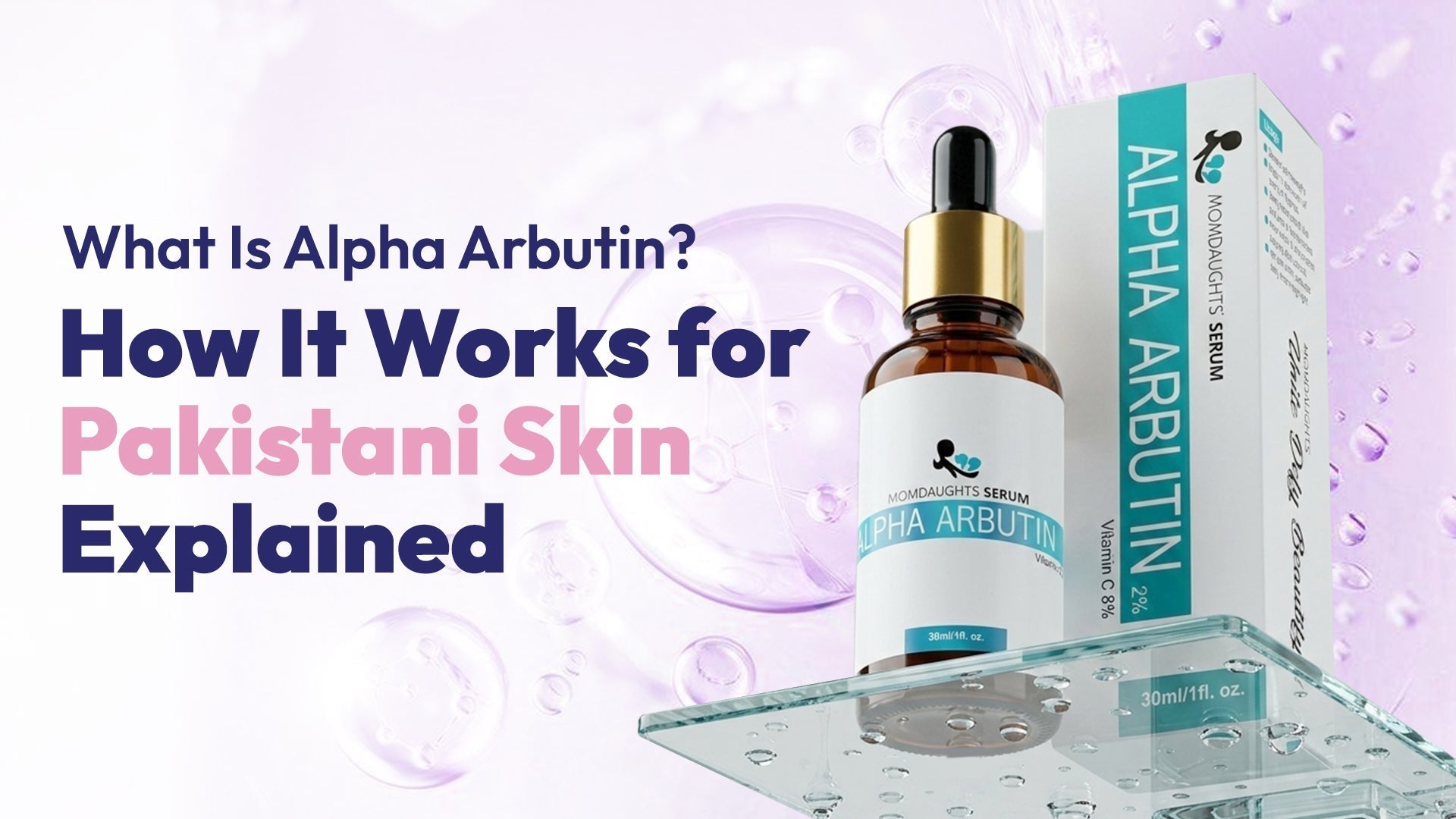
The MomDaughts Alpha Arbutin + Vitamin C Serum combines both brightening pathways in one formula, 30ml, designed for daily morning and evening use.
Alpha Arbutin inhibits tyrosinase directly at the melanogenesis step, preventing new melanin from forming. Existing dark spots fade through the skin's natural cell turnover cycle as pigmented cells are replaced by newer, evenly toned cells. This is a slow, steady process: results appear over weeks and months, not days.
Vitamin C adds antioxidant protection against the free radicals that trigger melanin overproduction from UV and pollution exposure. It also independently inhibits tyrosinase at a second binding site, amplifying the brightening effect. The combination makes the serum effective against both existing pigmentation and new spots forming from daily sun exposure.
The formula is designed for morning and evening application on slightly damp skin, making it simple to integrate into any routine.
Who Needs Alpha Arbutin
Women with dark spots from sun exposure. Sun spots and solar lentigines respond well to consistent alpha arbutin use with SPF. The ingredient prevents new melanin from forming in overactive areas while natural cell turnover gradually replaces the existing pigmented cells.
Women with post-acne marks. The dark marks left after a breakout is PIH, and it is one of the most common skin concerns in Pakistan. Alpha arbutin fades these marks gradually and is gentle enough to use on skin that is still experiencing occasional breakouts. It pairs particularly well with Niacinamide serum, which reduces active inflammation and inhibits melanosome transfer, addressing PIH from a different step in the process.
Women with melasma. Hormonal pigmentation requires long-term management rather than a quick fix. Alpha arbutin used consistently for 12 to 24 weeks with daily SPF produces measurable improvement in melasma without the irritation risks of prescription-strength hydroquinone.
Women who have tried fairness creams without results. Many over-the-counter fairness products do not disclose their active ingredients clearly or contain concentrations too low to produce results. Alpha arbutin's mechanism is well-documented and its effectiveness at standard concentrations is confirmed through clinical research.
Women with sensitive skin who cannot tolerate Vitamin C alone or Retinol. Alpha arbutin is one of the gentlest brightening actives available. It does not cause the tingling of high-concentration Vitamin C or the purging of retinol. It is suitable for sensitive skin, all Fitzpatrick skin types, and year-round use.
How to Use Alpha Arbutin Serum Correctly
Apply on slightly damp skin. After cleansing, while the skin still has a slight residual moisture, apply 3 to 4 drops of serum to the face and neck. The residual moisture helps the serum spread evenly and absorb effectively.
Morning and evening. Alpha arbutin is photostable, meaning it does not degrade in sunlight the way Vitamin C and Retinol can. Morning use is appropriate and particularly effective for anti-pigmentation purposes because it works throughout the day as the skin is exposed to UV.
SPF is non-negotiable. Alpha arbutin slows melanin production. UV exposure actively triggers melanin production. These two processes work in opposite directions. Without daily SPF, UV stimulation of new melanin can completely cancel out the effects of alpha arbutin, regardless of how consistently the serum is applied. Use a minimum SPF 30 every morning over the serum.
Layer with Vitamin C in the morning. The alpha arbutin serum already contains Vitamin C, making it a complete brightening system on its own. If you are also using a standalone Vitamin C serum for its ferulic acid and photoprotection benefits, apply Vitamin C first, allow to absorb, then apply alpha arbutin serum.
Patch test before first use. Apply a small amount to the inner forearm for 24 hours before full-face use.
Alpha Arbutin vs Vitamin C vs Niacinamide for Dark Spots
All three address hyperpigmentation but through different mechanisms. They are complementary, not competing.
|
Ingredient |
Mechanism |
Best For |
Timeline |
|
Alpha Arbutin |
Inhibits tyrosinase at melanogenesis step |
All types of hyperpigmentation, melasma |
6-16 weeks |
|
Vitamin C |
Antioxidant; independent tyrosinase inhibition; free radical neutralisation |
UV-triggered spots, general brightening |
4-12 weeks |
|
Niacinamide |
Inhibits melanosome transfer from melanocyte to keratinocyte |
Acne PIH, pore appearance, oiliness |
4-8 weeks |
Browse the full serums collection to see all brightening options by concern.
When to Expect Results
Alpha arbutin is a slow-build ingredient by design. It works by slowing the production of new melanin. Existing dark spots fade only as the skin's natural cell turnover cycle replaces pigmented cells with lighter ones, a process that takes approximately 28 days in younger skin and progressively longer with age.
Most women notice a subtle evening of skin tone after 6 to 8 weeks. Deeper pigmentation from melasma or long-standing post-acne marks can take 3 to 6 months of consistent daily use. This is not a sign of poor efficacy. It is the nature of a mechanism that addresses the cause at the cellular level rather than bleaching the surface.
At MomDaughts, we believe skincare results start with understanding what you are actually putting on your skin. Confidence in every step.